
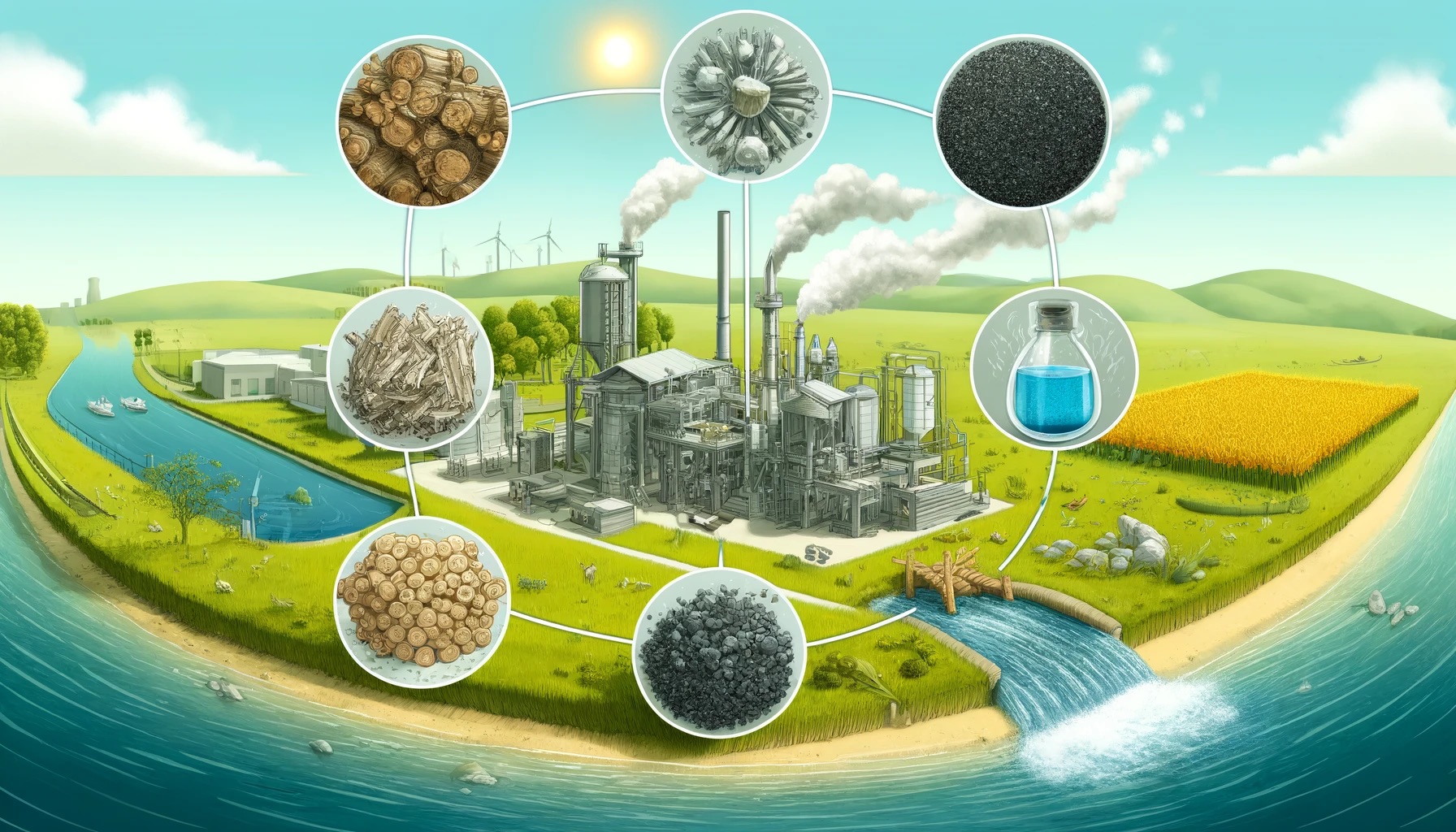

The conversion of lignocellulosic biomass (LCB) into biochar offers a sustainable method for managing biowaste and mitigating environmental pollution. LCB, composed primarily of cellulose, hemicellulose, and lignin, is an abundant and renewable resource. Its transformation into biochar not only helps in waste valorization but also aids in carbon sequestration, contributing to reduced greenhouse gas emissions.
Biochar, produced through various thermal and chemical processes, is gaining attention for its application as a nano-adsorbent. This material’s effectiveness in removing pharmaceuticals and other emerging pollutants from wastewater has been highlighted. By reducing biochar to nanoscale particles and modifying their surface properties, its adsorption capabilities are significantly enhanced. These engineered biochars are particularly effective in capturing dyes, heavy metals, and endocrine-disrupting compounds.
The review article emphasizes the importance of different preparation and activation methods for biochar. Techniques like chemical activation with agents such as phosphoric acid and potassium hydroxide increase the porosityPorosity of biochar is a key factor in its effectiveness as a soil amendment and its ability to retain water and nutrients. Biochar’s porosity is influenced by feedstock type and pyrolysis temperature, and it plays a crucial role in microbial activity and overall soil health. Biochar More and surface area of the biochar, making it more efficient at pollutant removal. Additionally, pyrolysisPyrolysis is a thermochemical process that converts waste biomass into bio-char, bio-oil, and pyro-gas. It offers significant advantages in waste valorization, turning low-value materials into economically valuable resources. Its versatility allows for tailored products based on operational conditions, presenting itself as a cost-effective and efficient More and gasificationGasification is a high-temperature, thermochemical process that converts carbon-based materials into a gaseous fuel called syngas and solid by-products. It takes place in an oxygen-deficient environment at temperatures typically above 750°C. Unlike combustion, which fully burns material to produce heat and carbon dioxide (CO2), gasification More are common thermochemical processes that transform biomass into highly porous biochar.
Future research prospects include further exploration of biochar’s environmental applications, particularly in wastewater treatment. The development of lignocellulose-based nano-adsorbents holds promise for more efficient and sustainable pollution remediation technologies. This approach not only addresses waste management issues but also contributes to broader environmental and sustainability goals.





Leave a Reply