
Luo, Q., Deng, Y., Li, Y. et al. Effects of pyrolysisPyrolysis is a thermochemical process that converts waste biomass into bio-char, bio-oil, and pyro-gas. It offers significant advantages in waste valorization, turning low-value materials into economically valuable resources. Its versatility allows for tailored products based on operational conditions, presenting itself as a cost-effective and efficient More temperatures on the structural properties of straw biocharBiochar is a carbon-rich material created from biomass decomposition in low-oxygen conditions. It has important applications in environmental remediation, soil improvement, agriculture, carbon sequestration, energy storage, and sustainable materials, promoting efficiency and reducing waste in various contexts while addressing climate change challenges. More and its adsorption of tris-(1-chloro-2-propyl) phosphate. Sci Rep 14, 25711 (2024). https://doi.org/10.1038/s41598-024-77299-5
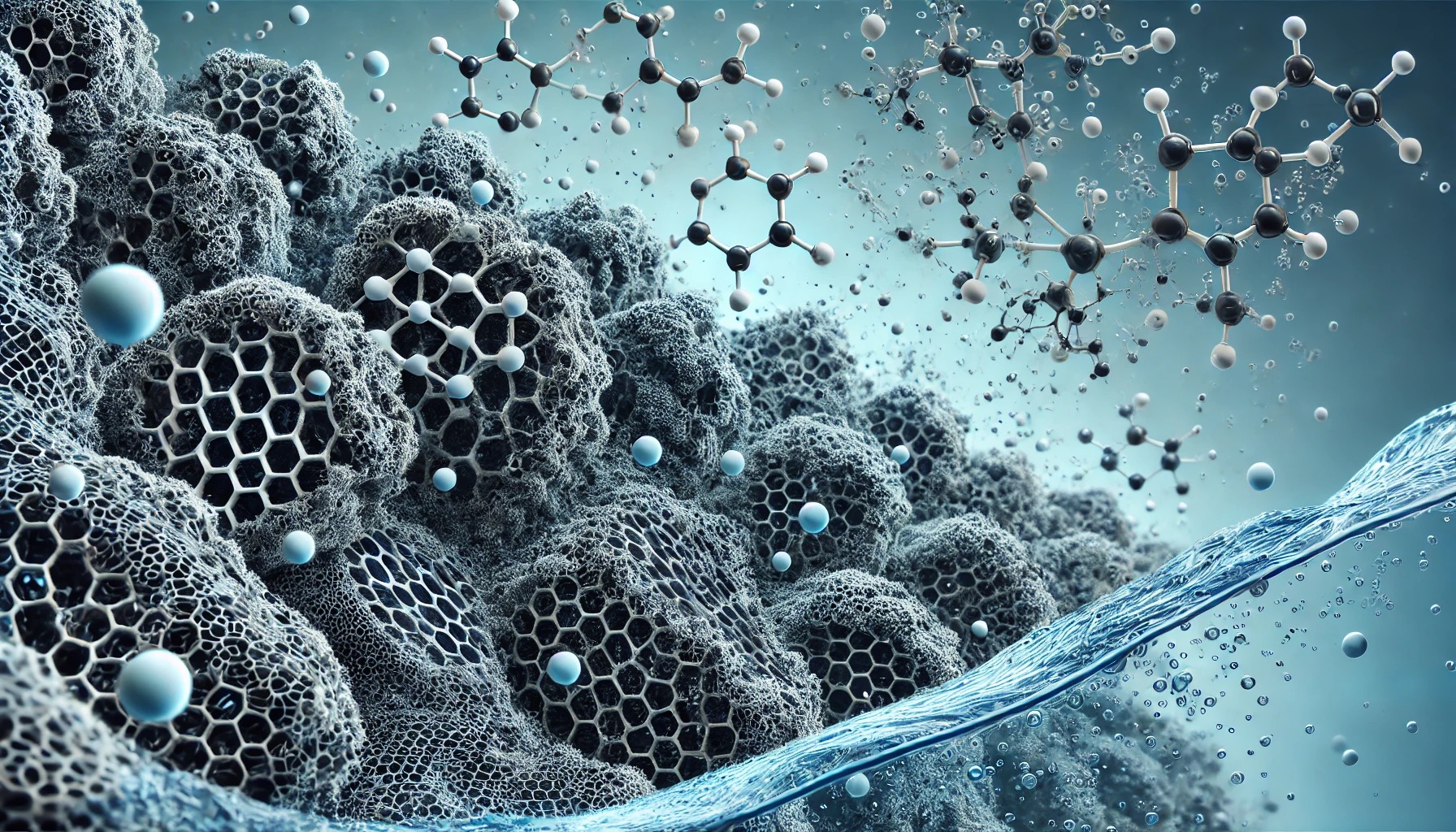
A recent study explored how pyrolysis temperature affects biochar’s properties and its ability to remove the environmental pollutant tris-(1-chloro-2-propyl) phosphate (TCIPP) from water. Using corn stover, biochar samples were prepared at temperatures ranging from 250°C to 700°C, then tested for adsorption of TCIPP. Researchers observed that increasing pyrolysis temperature significantly altered the biochar’s surface characteristics and chemical composition.
Key findings include that biochar’s specific surface area expanded from 3 to 435 m²/g as temperature increased, while pHpH is a measure of how acidic or alkaline a substance is. A pH of 7 is neutral, while lower pH values indicate acidity and higher values indicate alkalinity. Biochars are normally alkaline and can influence soil pH, often increasing it, which can be beneficial More levels shifted from acidic to highly alkaline. Higher temperatures also boosted carbon content and enhanced biochar’s aromaticity and hydrophobicity, contributing to improved adsorption of TCIPP.
Adsorption experiments indicated that biochar’s TCIPP adsorption fits a pseudo-second-order kinetic model, suggesting a chemical adsorption process, with temperature-dependent adsorption dynamics. The study identified multiple adsorption mechanisms, such as pore filling, hydrogen bonding, P-π interactions, and hydrophobic interactions, with pore filling and hydrophobic interactions becoming more influential as temperature rose. The highest temperature biochar (700°C) demonstrated the greatest adsorption capacity at 2.26 mg/g, a significant increase from the 0.88 mg/g observed at 250°C.
These results suggest that high-temperature biochars, particularly those with enhanced surface area and hydrophobicity, could be more effective for environmental remediation of TCIPP and similar pollutants. This work provides insight for optimizing biochar production for environmental applications.


Leave a Reply