
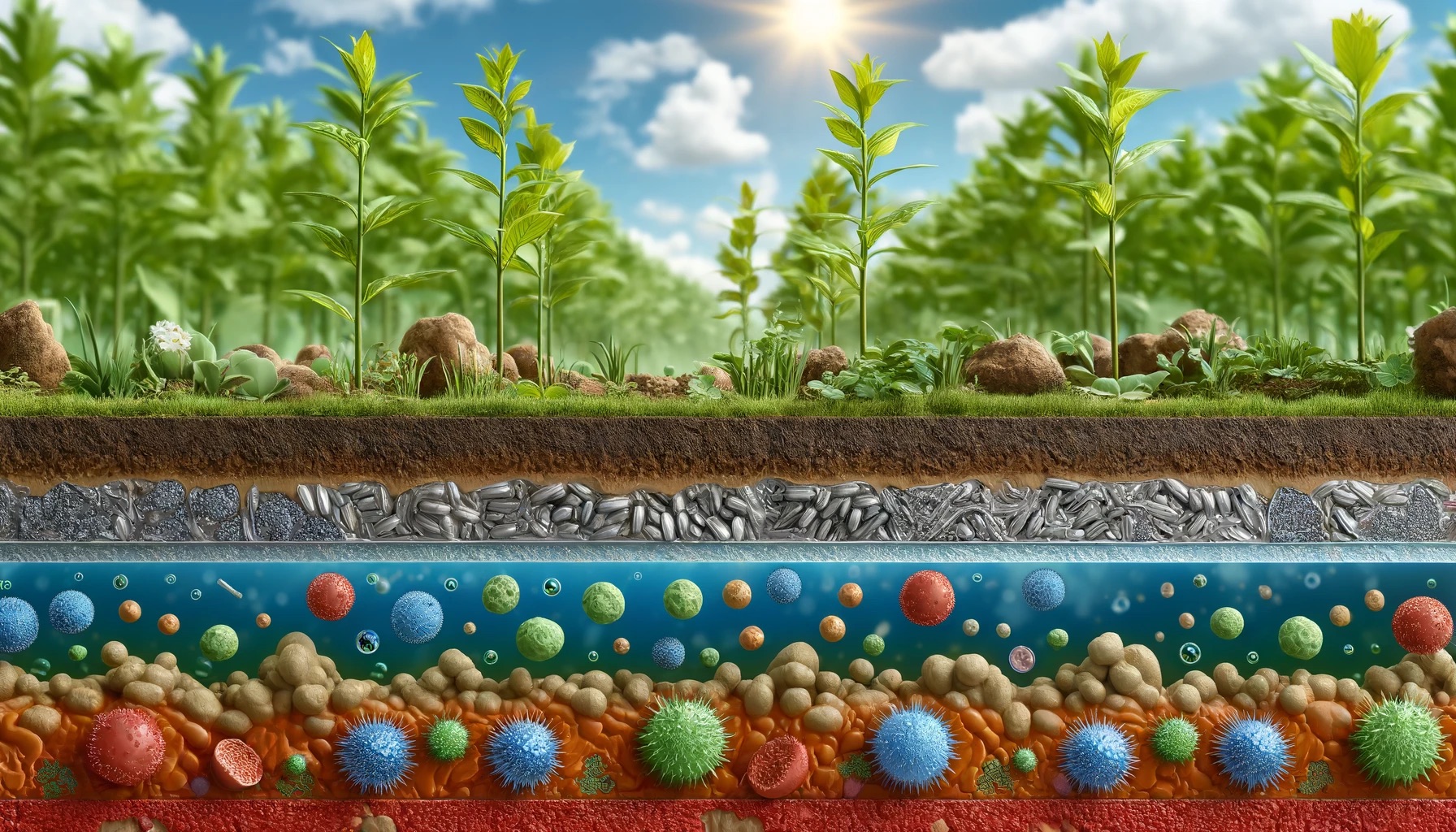
Ran, et al (2024) Synergistic remediation of electroplating wastewater contaminated soil and reduction of risk of groundwater contamination by biocharBiochar is a carbon-rich material created from biomass decomposition in low-oxygen conditions. It has important applications in environmental remediation, soil improvement, agriculture, carbon sequestration, energy storage, and sustainable materials, promoting efficiency and reducing waste in various contexts while addressing climate change challenges. More and Pseudomonas hibiscicolastrain L1. International Biodeterioration & Biodegradation. https://doi.org/10.1016/j.ibiod.2024.105926
As industrial activities like electroplating expand, they generate large amounts of wastewater containing harmful heavy metals such as nickel (Ni), chromium (Cr), copper (Cu), and zinc (Zn). These pollutants, when not managed properly, can contaminate soil and groundwater, posing significant environmental risks. Traditional methods of soil remediation, such as physical removal or chemical treatments, can be costly and have potential side effects. Thus, eco-friendly and efficient remediation strategies are increasingly being sought. A recent study explores the synergistic use of biochar and Pseudomonas hibiscicola strain L1 (BL1) to reduce the risk of groundwater contamination by stabilizing heavy metals in electroplating wastewater-contaminated soil.
The Role of Biochar and Microbial Strain L1
Biochar, a porous carbon-rich material, offers a range of benefits in soil remediation. It improves soil structure, increases water retention, and provides a habitat and nutrients for microbial communities. In this study, biochar not only served as a carrier for the Pseudomonas strain but also directly contributed to the immobilization of heavy metals.
The microbial strain L1, previously isolated for its metal-removal capabilities, was immobilized onto biochar to form the BL1 complex. This complex offered a dual benefit: biochar enhanced the microbial habitat and supported microbial activity, while Pseudomonas hibiscicola strain L1 actively degraded ammonia nitrogen and helped in the immobilization of heavy metals.
Key Findings
- Heavy Metal Stabilization: The study showed that BL1 significantly reduced the concentration of Ni(II), Cu(II), Cr(VI), and Zn(II) in the soil. When biochar was used alone, it effectively reduced the leachingLeaching is the process where nutrients are dissolved and carried away from the soil by water. This can lead to nutrient depletion and environmental pollution. Biochar can help reduce leaching by improving nutrient retention in the soil. More of heavy metals by up to 55%, compared to untreated soil. However, when combined with strain L1, the removal efficiency improved dramatically, with some metals, such as Cu(II) and Cr(VI), becoming undetectable in leachate by the 21st day of treatment. This indicates that the biochar and strain L1 combination enhanced the immobilization of heavy metals, promoting their transformation into more stable, less bioavailable forms.
- Improvement in Soil Physicochemical Properties: The addition of BL1 led to significant improvements in soil quality. The biochar increased soil pHpH is a measure of how acidic or alkaline a substance is. A pH of 7 is neutral, while lower pH values indicate acidity and higher values indicate alkalinity. Biochars are normally alkaline and can influence soil pH, often increasing it, which can be beneficial More, cation exchange capacity (CEC), and total organic carbon (TOC), all of which are crucial for soil health and the reduction of heavy metal bioavailability. The soil pH shifted from acidic to slightly alkaline, which further enhanced microbial activity and promoted the formation of heavy metal precipitates like carbonates and hydroxides, reducing their mobility.
- Enhanced Enzymatic Activity: Soil enzymes, such as urease and catalase, are indicators of microbial health and soil recovery. The study found that BL1 significantly increased the activity of these enzymes, helping in the breakdown of urea and the transformation of ammonia nitrogen. Higher urease activity, for instance, contributed to the increase in soil pH and promoted the immobilization of heavy metals through carbonate precipitation.
- Microbial Community Diversity: Using high-throughput DNA sequencing, the study observed that the addition of BL1 increased microbial diversity in the soil. Particularly, nitrifying and denitrifying bacteria were enriched, which played a vital role in the removal of ammonia nitrogen and the stabilization of heavy metals. The relative abundance of the Pseudomonas genus increased, confirming the successful colonization of strain L1 in the soil.
Mechanisms of Remediation
The combined action of biochar and Pseudomonas hibiscicola strain L1 provided multiple remediation benefits. Biochar’s porous structure improved soil water retention and permeability, creating a favorable environment for microbial activity. The functional groups on the surface of BL1, such as hydroxyl (-OH) and carboxyl (-COOH), complexed with heavy metals, transforming them into stable compounds. X-ray diffraction (XRD) and Fourier transform infrared (FTIR) spectroscopy confirmed the formation of these stable metal complexes.
The synergistic use of biochar and microbial strains like Pseudomonas hibiscicola strain L1 offers a promising approach for remediating soils contaminated by electroplating wastewater. This method not only stabilizes harmful heavy metals but also enhances soil health by improving its physical structure, enzymatic activity, and microbial diversity. Future research could focus on understanding the long-term effects of this treatment and exploring the genetic mechanisms behind microbial metal stabilization.





Leave a Reply