

Mensah, et al (2024) Fire behaviour of biochar-based cementitious composites. Composites Part C: Open Access. https://doi.org/10.1016/j.jcomc.2024.100471
Fire-resistant Concrete with Reduced Carbon Footprint
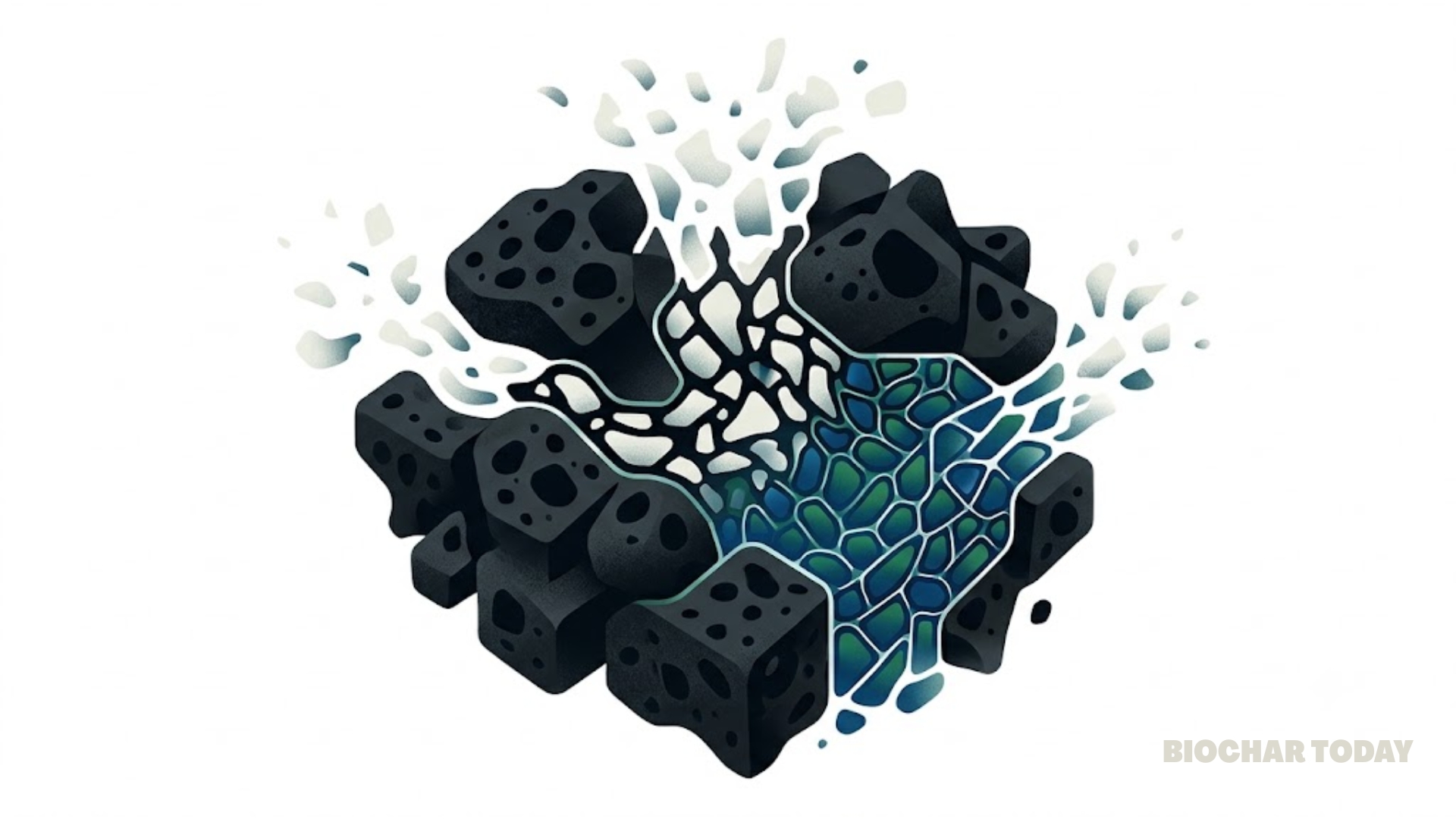
Recent research published in “Composites Part C” explores the potential of biocharBiochar is a carbon-rich material created from biomass decomposition in low-oxygen conditions. It has important applications in environmental remediation, soil improvement, agriculture, carbon sequestration, energy storage, and sustainable materials, promoting efficiency and reducing waste in various contexts while addressing climate change challenges. More to enhance the fire resistance and sustainability of concrete. Despite high expectations, the study found that biochar has a limited impact on improving concrete’s fire behavior. However, it unveiled promising findings on biochar’s contribution to sustainable construction.
Biochar, a carbon-rich material derived from pyrolyzed organic waste, was tested as a partial replacement for both cement and aggregates in concrete. The experiments incorporated varying proportions of fine and coarse biochar to observe changes in fire resistance and mechanical properties.
Key findings revealed that concrete with up to 20% biochar substitution for aggregates can safely withstand temperatures up to 600°C, while the same percentage as a cement replacement remains stable up to 200°C. Although the mechanical strength of biochar-concrete decreased at extremely high temperatures (1000°C), it showed comparable compressive strength to traditional concrete under moderate heat.
A significant takeaway is biochar’s role in reducing the carbon footprint of concrete production. The study found a 50% reduction in CO2 emissions with increased biochar content, highlighting its potential in eco-friendly construction practices. This reduction is critical for aligning with global sustainability goals, given the cement industry’s substantial contribution to carbon emissions.
While biochar’s ability to enhance fire resistance may be limited, its environmental benefits and ability to maintain structural integrity under moderate fire conditions make it a valuable additive in the quest for sustainable construction materials. As research progresses, biochar-concrete could play a crucial role in reducing the environmental impact of the construction industry, promoting a circular economy by valorizing organic waste.



Leave a Reply