
Afrooz, et al (2025) A novel biocharBiochar is a carbon-rich material created from biomass decomposition in low-oxygen conditions. It has important applications in environmental remediation, soil improvement, agriculture, carbon sequestration, energy storage, and sustainable materials, promoting efficiency and reducing waste in various contexts while addressing climate change challenges. More adsorbent for treatment of perfluorooctanoic acid (PFOA) contaminated water: Exploring batch and dynamic adsorption behavior. Journal of Water Process Engineering. https://doi.org/10.1016/j.jwpe.2024.106586
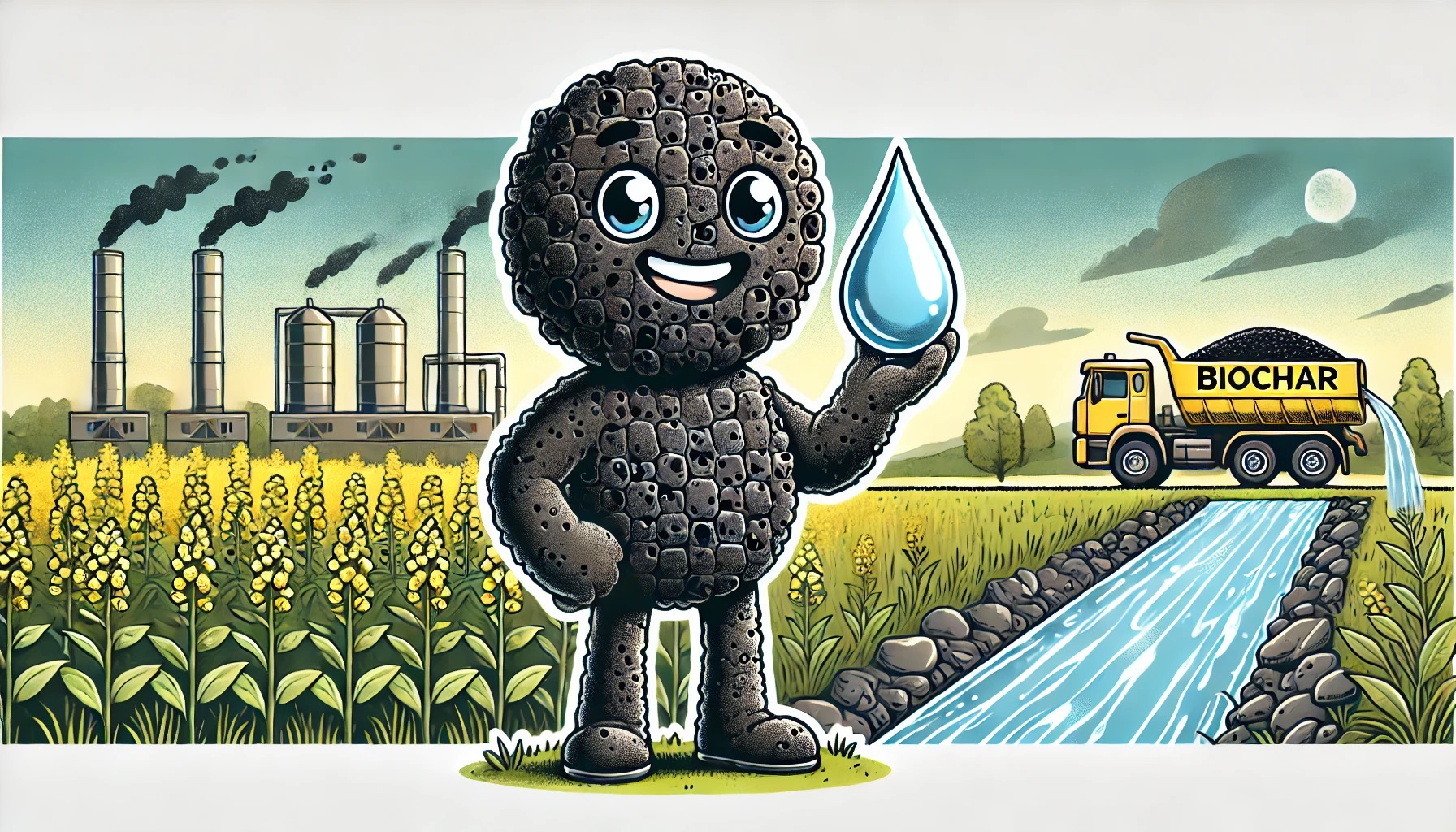
Researchers have developed a novel method to address perfluorooctanoic acid (PFOA) contamination in water using biochar derived from canola straw. By activating raw canola straw with phosphoric acid (PBC) and zinc chloride (ZnBC) under microwave-assisted pyrolysisPyrolysis is a thermochemical process that converts waste biomass into bio-char, bio-oil, and pyro-gas. It offers significant advantages in waste valorization, turning low-value materials into economically valuable resources. Its versatility allows for tailored products based on operational conditions, presenting itself as a cost-effective and efficient More, the team created biochars with significantly enhanced adsorption properties. These biochars achieved PFOA removal efficiencies of up to 92% (PBC) and 84% (ZnBC), far outperforming untreated biochar.
Key to this process was optimizing conditions such as activator concentration, microwave power, and heating time. These parameters increased surface area, porosityPorosity of biochar is a key factor in its effectiveness as a soil amendment and its ability to retain water and nutrients. Biochar’s porosity is influenced by feedstock type and pyrolysis temperature, and it plays a crucial role in microbial activity and overall soil health. Biochar More, and functional groups on the biochar, which facilitated PFOA adsorption through mechanisms like chemisorption, electrostatic interactions, and hydrophobic aggregation.
The study also examined the impact of environmental factors on adsorption. The biochars were effective across a pHpH is a measure of how acidic or alkaline a substance is. A pH of 7 is neutral, while lower pH values indicate acidity and higher values indicate alkalinity. Biochars are normally alkaline and can influence soil pH, often increasing it, which can be beneficial More range of 3 to 9 and demonstrated improved performance in the presence of divalent cations, which acted as bridges between PFOA and the biochar surface. Fixed-bed adsorption tests further confirmed the potential for scaling this approach to continuous water treatment systems.
This approach leverages agricultural waste and offers a cost-effective, sustainable method for water decontamination. However, scaling up production and conducting life cycle assessments will be crucial for real-world application.
The research demonstrates that biochar, enhanced through innovative treatment methods, can provide a viable solution to persistent water contamination challenges like PFOA.


Leave a Reply