
Huang, et al (2024) Mechanisms and valorization of selective adsorption of Sb(III) by amino-functionalized lignin-based porous biocharBiochar is a carbon-rich material created from biomass decomposition in low-oxygen conditions. It has important applications in environmental remediation, soil improvement, agriculture, carbon sequestration, energy storage, and sustainable materials, promoting efficiency and reducing waste in various contexts while addressing climate change challenges. More. Chemical Engineering Journal. https://doi.org/10.1016/j.cej.2024.156262
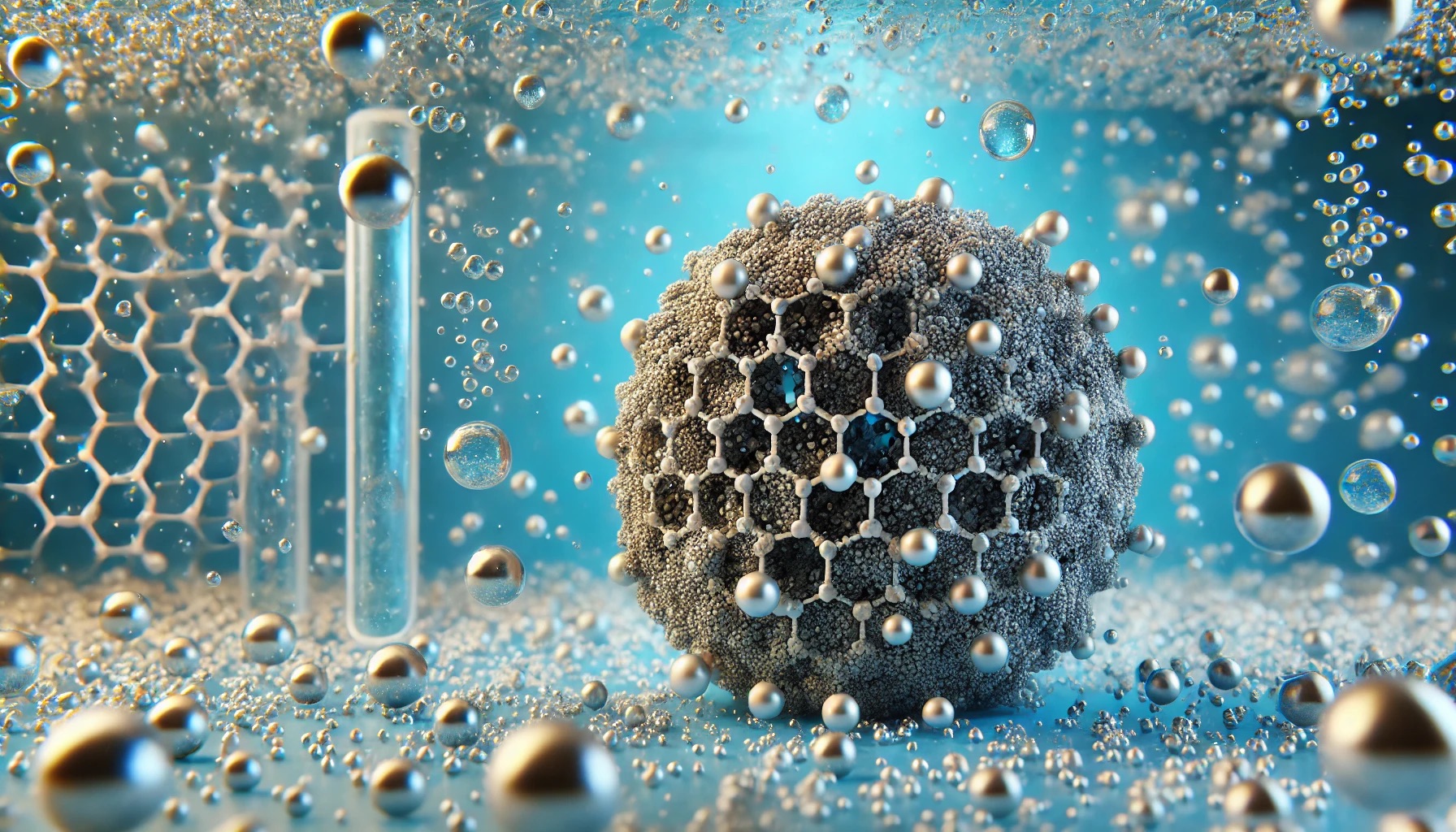
Antimony (Sb) contamination in water, particularly Sb(III), poses significant risks to both human health and ecosystems. Traditional methods struggle to remove Sb(III) effectively. This study presents an innovative solution: using biochar, derived from lignin and modified with polyethyleneimine (PEI), for selective adsorption of Sb(III).
The lignin-based biochar is first treated with phosphoric acid to create a porous structure, then further functionalized with PEI. This modification introduces amino groups (-NH2, -NH-) that show a high affinity for Sb(III). The resulting material, PEI-modified biochar (PPLB), demonstrates a maximum adsorption capacity of 371.7 mg/g. It maintains strong adsorption performance even in the presence of common anions and cations like Cl-, NO3-, Cd2+, and Pb2+, proving its selectivity and robustness. PPLB has been tested in various contaminated water sources, including river water and industrial wastewater, consistently showing high removal efficiency.
The study further explores the mechanisms behind Sb(III) removal using density functional theory (DFT) calculations, revealing that the amino groups bind with Sb(III) through complexation, ligand exchange, and hydrogen bonding. Once saturated with Sb(III), the spent biochar can be repurposed as an anode material for sodium-ion batteries, delivering a capacity of 192.4 mA h/g over 1000 cycles.
This approach not only addresses water contamination but also adds value by converting waste biochar into an energy storage material, making it a sustainable solution for environmental and industrial applications.




Leave a Reply