
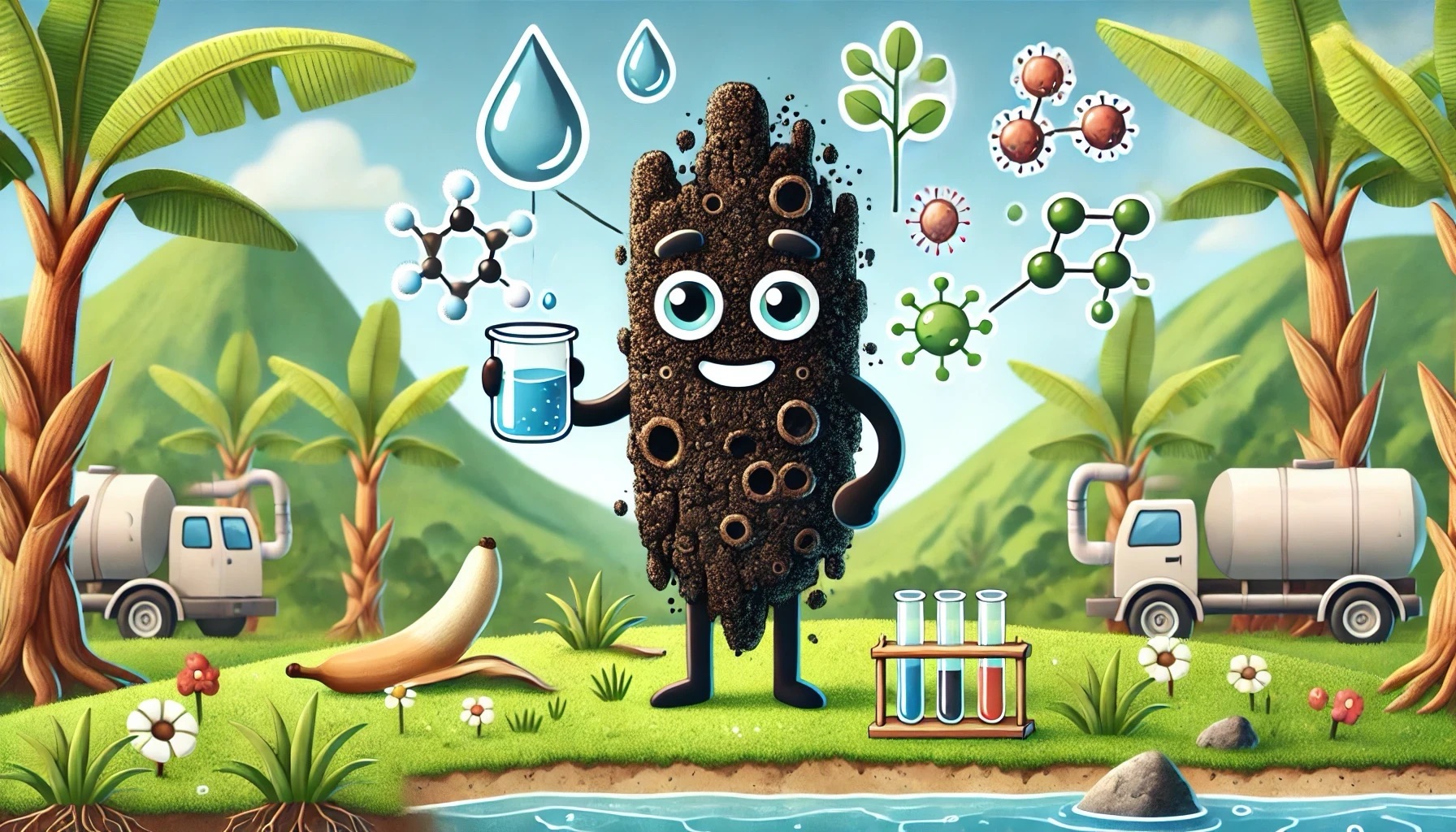

A recent study published in Separation and Purification Technology explores the effectiveness of sulfur-doped biochar (SBC) in removing the antibiotic tetracycline (TC) and TC-resistant bacteria from water. Researchers developed an SBC system that not only adsorbs TC but also activates peroxydisulfate (PDS) to enhance the degradation process. The SBC/PDS system achieved a 93.89% removal rate of TC, outperforming the non-doped biochar system by over three times. Additionally, it inactivated about 105 CFU/mL of TC-resistant Escherichia coli within 90 minutes, a 1.14 times improvement over the non-doped system.
Sulfur doping significantly improved the adsorption rate due to mechanisms like pore filling and hydrogen bonding. The PDS activation in the SBC system primarily involved nonradical oxidation dominated by singlet oxygen (^1O_2) generation, with vacancy defects acting as the main active sites. The study found a strong correlation (R^2 = 0.98) between the adsorption capacity and the degradation rate constant, indicating a synergistic effect between adsorption and oxidation.
This research highlights the potential of bifunctional materials like SBC, which can simultaneously adsorb and activate oxidants, offering an efficient solution for wastewater treatment. By using biochar derived from banana pseudo-stem, an abundant agricultural waste, this approach not only addresses water pollution but also promotes sustainable waste management. The findings provide a theoretical foundation for developing advanced oxidation processes to tackle the growing issue of antibiotic-resistant bacteria in the environment.



Leave a Reply