
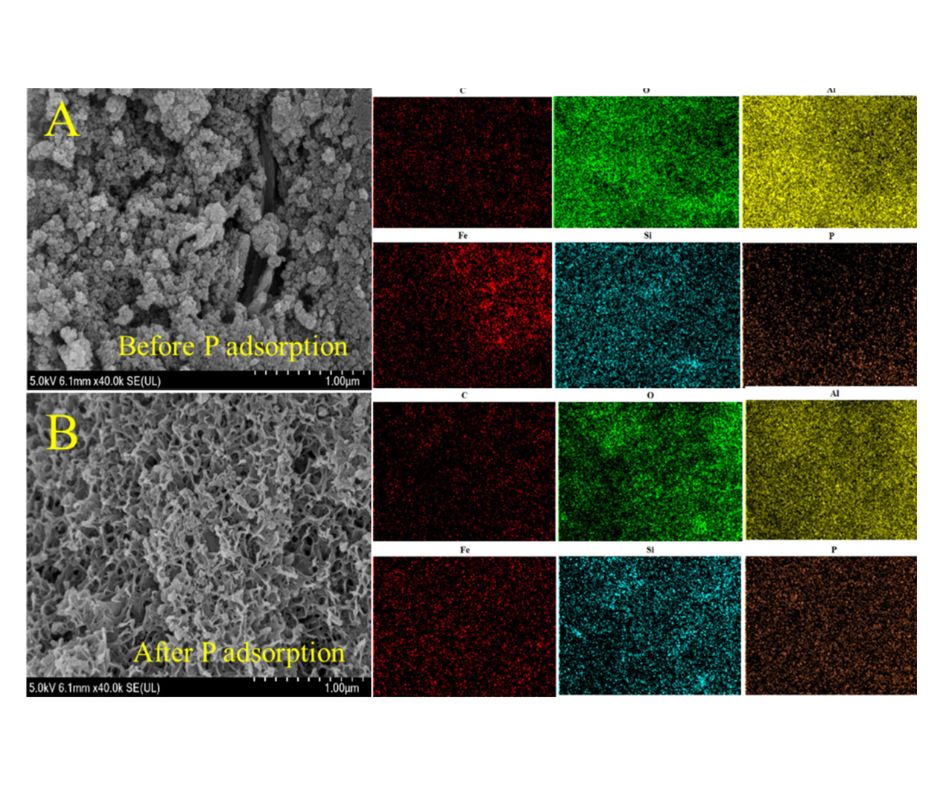
ARTICLE SUMMARY: Zhu et al. (2023) Mineral-enriched biocharBiochar is a carbon-rich material created from biomass decomposition in low-oxygen conditions. It has important applications in environmental remediation, soil improvement, agriculture, carbon sequestration, energy storage, and sustainable materials, promoting efficiency and reducing waste in various contexts while addressing climate change challenges. More produced from metal-cutting fluid sludge delivers enhanced phosphate recovery. Case Studies in Chemical and Environmental Engineering, In Press. https://doi.org/10.1016/j.cscee.2023.100602
Phosphorus, a vital element for food production, faces depletion due to extensive fertilizer use and eutrophication concerns. To address this, researchers are exploring ways to recover phosphorus from wastewater. One promising approach involves biochar, a charcoal-like material produced from organic waste.
This study focuses on a novel biochar derived from metal-cutting fluid sludge (MCFS), a waste product rich in aluminum and iron oxides. The researchers pyrolyzed MCFS at different temperatures to create biochars with varying properties. They then tested these biochars for their ability to adsorb phosphate from aqueous solutions.
The results were impressive: MCFS-derived biochar prepared at 500°C displayed an outstanding phosphate adsorption capacity of 92.58 milligrams per gram. This performance rivals existing biochar options and highlights the potential of MCFS as a readily available and sustainable source of biochar feedstockFeedstock refers to the raw organic material used to produce biochar. This can include a wide range of materials, such as wood chips, agricultural residues, and animal manure. More.
The researchers attribute the biochar’s success to its inherent mineral composition and well-developed pore structure. These features create numerous active sites that readily capture phosphate molecules. Notably, iron and aluminum hydroxides and oxides played key roles in the adsorption process.
This study holds significant promise for wastewater treatment and phosphorus recovery. It offers a cost-effective and environmentally friendly solution by utilizing waste material (MCFS) to produce a powerful adsorbent (biochar). Moreover, the findings provide valuable insights into the mechanisms behind phosphate adsorption, paving the way for further optimization and development of this technology.
Overall, this research highlights the potential of metal-rich biochar as a game-changer in phosphorus recovery efforts. By harnessing the power of waste-derived materials and understanding the underlying adsorption mechanisms, we can move closer to a more sustainable and secure future for this crucial element.




Leave a Reply