
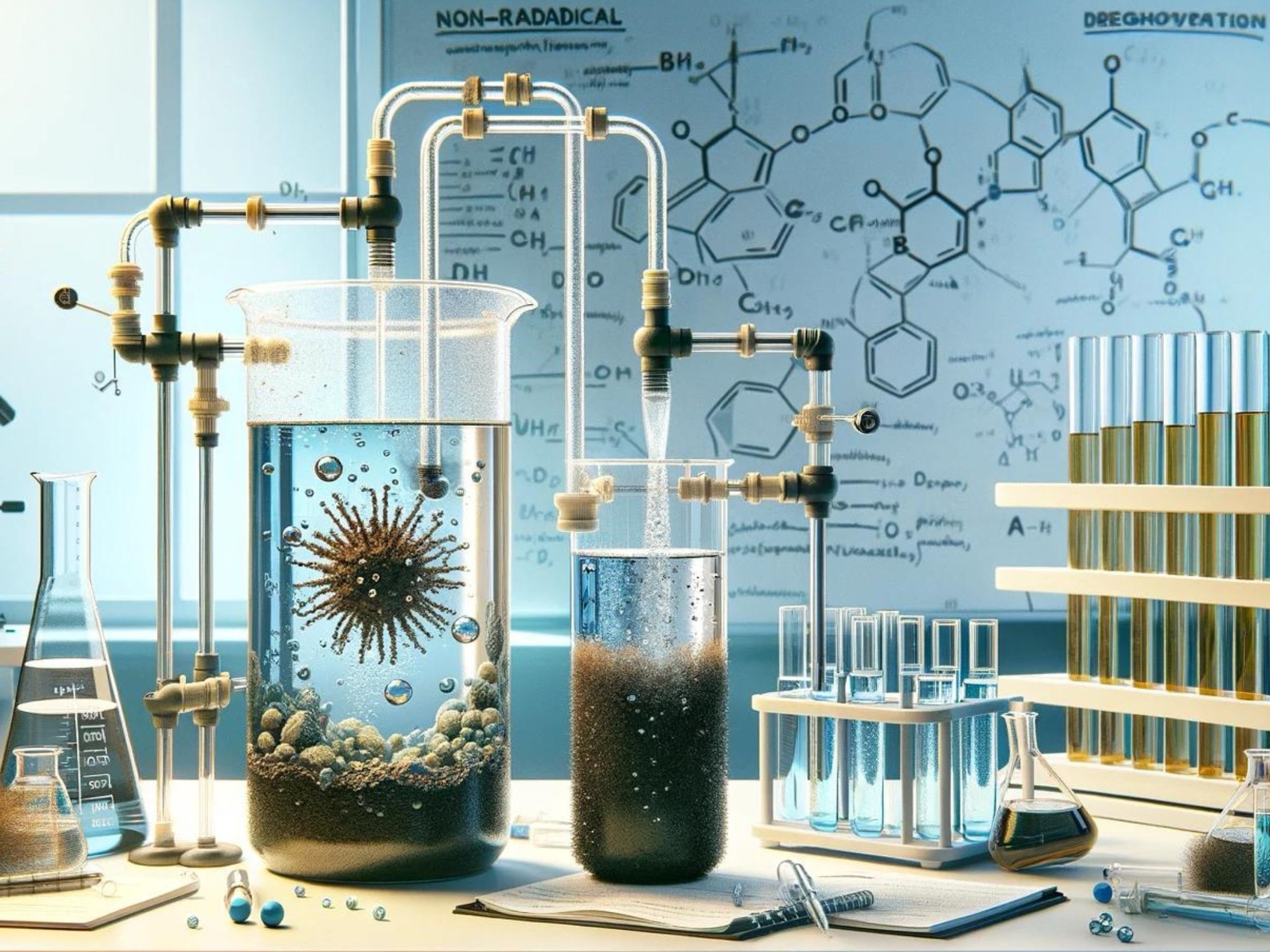

Innovative research has successfully utilized waste soybean dregs to create iron-modified nitrogen-rich biochar (Fen-BDBC) catalysts that exhibit potent water purification properties without the need for exogenous nitrogen. Developed through a green molten salt synthesis using a KCl/NaCl blend, these catalysts leverage the intrinsic nitrogen of the biomassBiomass is a complex biological organic or non-organic solid product derived from living or recently living organism and available naturally. Various types of wastes such as animal manure, waste paper, sludge and many industrial wastes are also treated as biomass because like natural biomass these More and the catalytic prowess of embedded iron.
The Fen-BDBC catalysts notably improve upon the structure of traditional biochar. By facilitating a transition from sp3 to sp2 hybridized carbon structures, these catalysts enhance hydrophobicity and electron-transfer efficiency critical for pollutant degradation. The physical and chemical integration of iron not only protects nitrogenous structures within the biochar, such as pyridinic N and pyrrolic N, but also aids in the generation of singlet oxygen and other reactive species necessary for the non-radical degradation pathways.
Highlighting its efficiency, the Fe0.1-BDBC variant with peroxymonosulfate (PMS) has achieved a 100% degradation rate of Bisphenol A (BPA), a persistent organic pollutant, through a non-radical mechanism that emphasizes electron-transfer processes and singlet oxygen generation. This system provides a decomposition breakdown where electron-transfer processes contribute 58.3%, singlet oxygenation 29.3%, and iron-induced oxidation 12.4%.
Additionally, these catalysts have been tested in practical scenarios, such as continuous flow systems, where Fe0.1-BDBC was affixed to PVDF membranes showing nearly complete BPA degradation over 36 hours. This research not only showcases the Fen-BDBC catalysts’ effectiveness but also underscores their potential as a sustainable solution to the global challenge of water contaminants, offering a new frontier in the development of biochar-based advanced oxidation processes (AOPs) for water treatment.
This work establishes a foundational understanding of the structure-activity relationships necessary for optimizing such catalytic systems, paving the way for broader application in environmental remediation.



Leave a Reply