
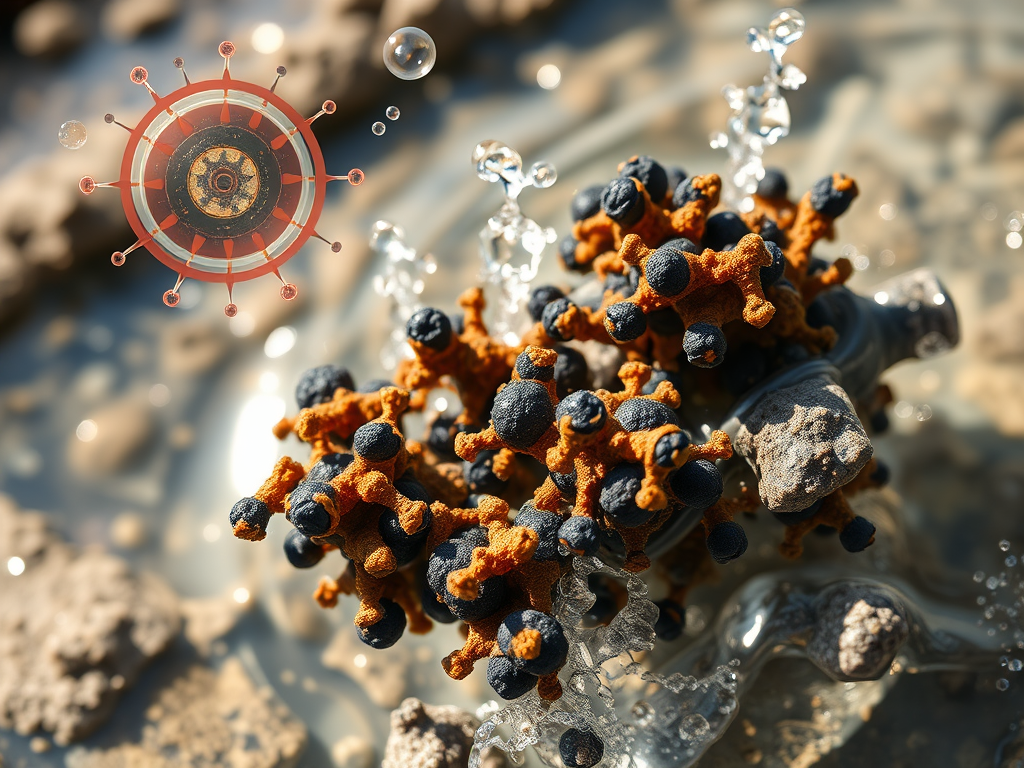
In a recent study published in Ecotoxicology and Environmental Safety, researchers explored an innovative method to remove harmful sulfonamide antibiotics, specifically sulfamethazine (SMZ), from water using manganese oxide-supported biocharBiochar is a carbon-rich material created from biomass decomposition in low-oxygen conditions. It has important applications in environmental remediation, soil improvement, agriculture, carbon sequestration, energy storage, and sustainable materials, promoting efficiency and reducing waste in various contexts while addressing climate change challenges. More (MBC) activated by periodate (PI). This approach could be a game-changer for improving water quality and tackling pharmaceutical pollutants in the environment.
The MBC/PI system proved to be highly efficient, degrading up to 99% of within just 60 minutes. The optimal conditions for this reaction were identified for this removal. The key to this success lies in the formation of active reactive oxygen species and hydroxyl radicals —that break down the antibiotic. These ROS, along with manganese’s redox cycles, play a crucial role in the degradation process.
What makes this method even more intriguing is how MBC activates PI, leading to the production of these reactive species. Manganese oxide loading enhances the surface of biochar, increasing its catalytic power. The study also discovered four transformation pathways for SMZ, including rearrangement and bond breakage, demonstrating the complexity and effectiveness of this process. The technology also showed great promise for real-world application, with no significant changes in the biochar’s structure after being reused for three cycles. This makes MBC-activated periodate an efficient, sustainable, and reusable option for purifying water and removing harmful pharmaceuticals.
In summary, this study offers a promising solution for tackling environmental pollution caused by antibiotics, and the method’s theoretical and practical implications are significant for sustainable water treatment.
Our take
Studies like this are highly relevant for removing emerging pollutants in a more sustainable and eco-friendly way, minimizing the ecological impacts of both pollutants and adsorbents. However, scaling up this type of research to real-world conditions presents a challenge. Despite this, there is significant potential for scaling these methods with rigorous research and dedicated time and effort.
SOURCE: Hu, Shuheng, et al. (2025). Oxidative degradation of sulfamethazine by manganese oxide supported biochar activated periodate: Effect and mechanism.” Ecotoxicology and Environmental Safety. https://doi.org/10.1016/j.ecoenv.2025.117700




Leave a Reply