
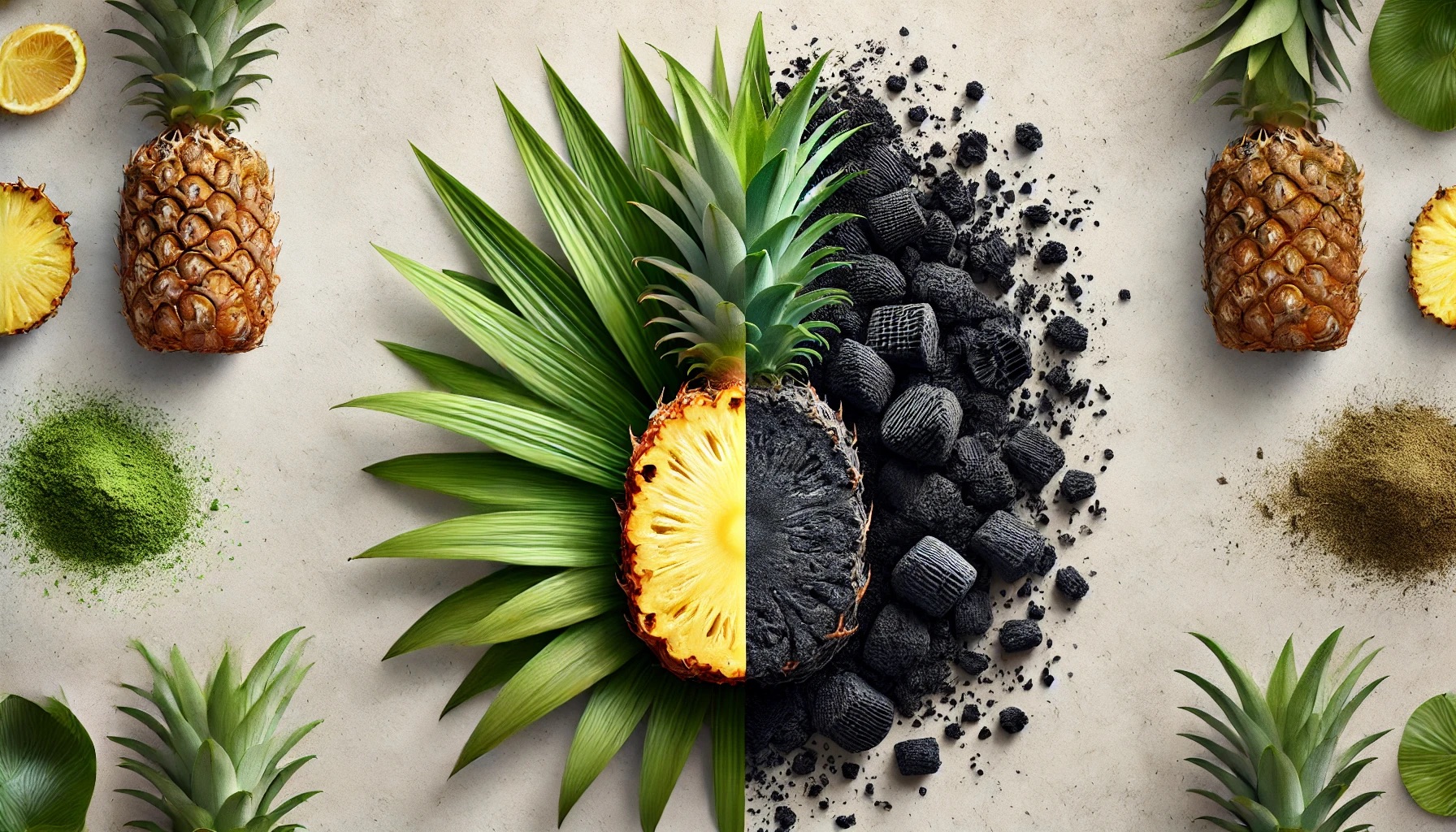
Song, et al (2024) Structural Characteristics and Adsorption of Phosphorus by Pineapple Leaf BiocharBiochar is a carbon-rich material created from biomass decomposition in low-oxygen conditions. It has important applications in environmental remediation, soil improvement, agriculture, carbon sequestration, energy storage, and sustainable materials, promoting efficiency and reducing waste in various contexts while addressing climate change challenges. More at Different PyrolysisPyrolysis is a thermochemical process that converts waste biomass into bio-char, bio-oil, and pyro-gas. It offers significant advantages in waste valorization, turning low-value materials into economically valuable resources. Its versatility allows for tailored products based on operational conditions, presenting itself as a cost-effective and efficient More Temperatures. Agronomy. https://doi.org/10.3390/agronomy14122923
Pineapple leaves, a common agricultural byproduct, can be transformed into biochar to help address issues like phosphorus runoff, which contributes to water pollution. Researchers explored the effects of pyrolysis temperatures—300°C, 500°C, and 700°C—on the properties of biochar made from pineapple leaves and its ability to adsorb phosphorus.
The study revealed significant temperature-dependent changes. At 700°C, biochar had the highest specific surface area, increasing by up to 37 times compared to lower temperatures. This temperature also enhanced the pore structure, creating micro and mesopores ideal for trapping phosphorus molecules. Higher temperatures also reduced functional groups like C=O and H-O, favoring physical over chemical adsorption mechanisms.
Phosphorus adsorption was highest in biochar prepared at 700°C, driven by increased pore size and the presence of mineral elements like calcium and magnesium. This biochar type effectively removed 7.45 mg of phosphorus per gram, outperforming those made at lower temperatures. The adsorption process involved multi-layer chemisorption, supplemented by physical adsorption and diffusion within the pores.
Interestingly, biochar prepared at 500°C offered a balance of efficiency and energy savings. It demonstrated good adsorption capacity with less energy-intensive processing compared to 700°C. This makes it a viable candidate for phosphorus adsorption in agricultural and environmental applications.
The findings underline the potential of pineapple leaf biochar as a sustainable solution for managing agricultural byproducts and improving water quality.



Leave a Reply