
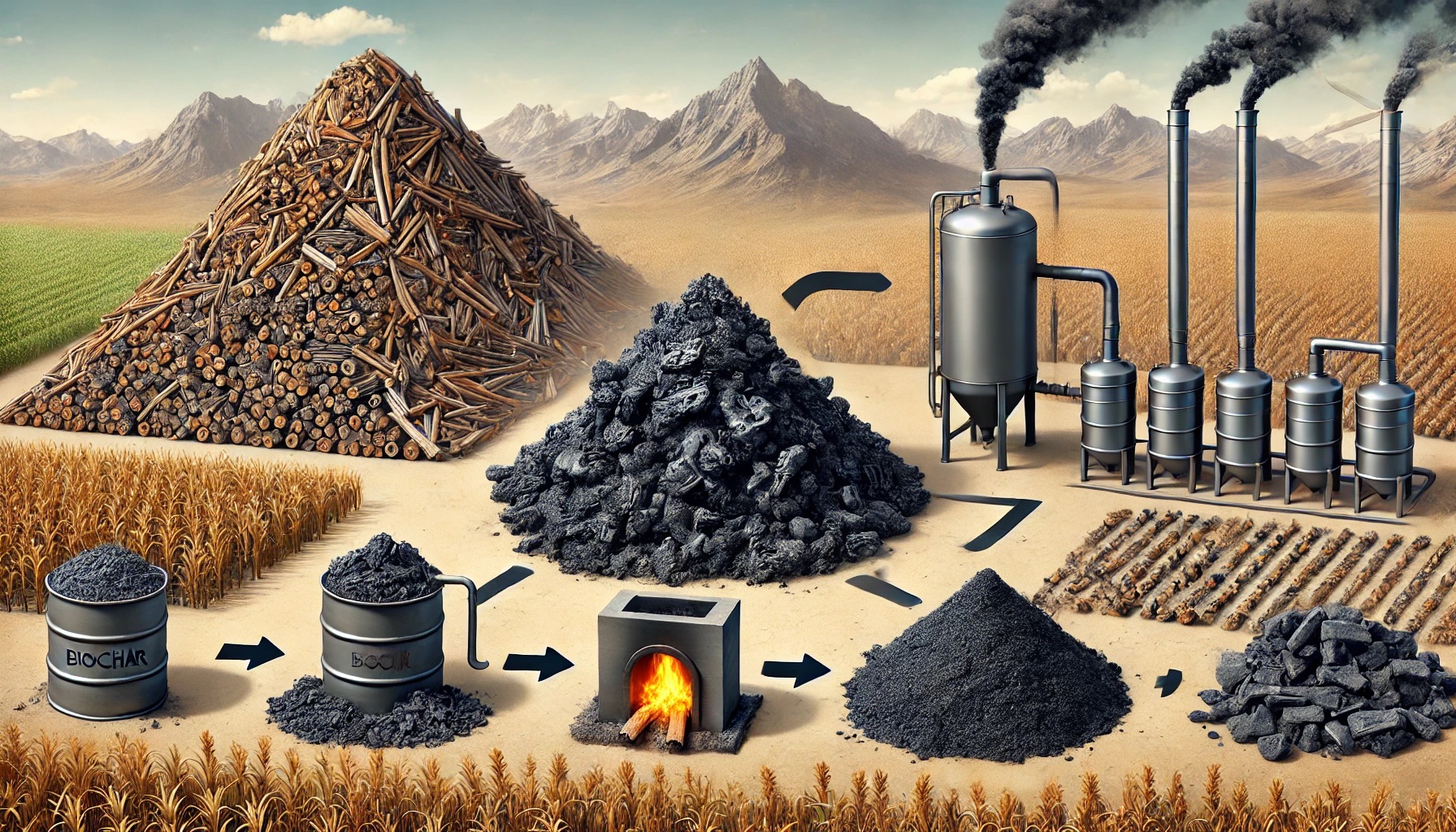
Hussain, et al (2024) Hydrothermal liquefaction for biocharBiochar is a carbon-rich material created from biomass decomposition in low-oxygen conditions. It has important applications in environmental remediation, soil improvement, agriculture, carbon sequestration, energy storage, and sustainable materials, promoting efficiency and reducing waste in various contexts while addressing climate change challenges. More production from finger millet waste: its valorisation, process optimization, and characterization. RSV Advances. https://doi.org/10.1039/D4RA03945A
Researchers have explored the potential of using finger millet waste biomassBiomass is a complex biological organic or non-organic solid product derived from living or recently living organism and available naturally. Various types of wastes such as animal manure, waste paper, sludge and many industrial wastes are also treated as biomass because like natural biomass these More (FMWB) for producing biochar through hydrothermal liquefaction (HTL), a process that converts biomass into valuable carbon-rich products under high temperatures and pressures. The study focused on optimizing key variables—temperature, time, and the solid-to-water ratio—using the Box-Behnken design method to maximize biochar yield and quality.
The optimal conditions identified were a temperature of 450°C, a solid-to-water ratio of 1:10, and a reaction time of approximately 33.5 minutes. These conditions yielded a biochar with high fixed carbon content, increased thermal stability, and a high heating value (HHV), making it a promising alternative to conventional fossil fuels.
Characterization of the optimized biochar (O-FMWBC) revealed significant changes in its chemical composition, including a decrease in moisture, ashAsh is the non-combustible inorganic residue that remains after organic matter, like wood or biomass, is completely burned. It consists mainly of minerals and is different from biochar, which is produced through incomplete combustion. Ash Ash is the residue that remains after the complete More, and volatile content, along with an increase in carbon content. Advanced analysis techniques such as FT-IR, SEM-EDX, and XRD confirmed the presence of functional groups, rough surface morphology, and a variety of inorganic compounds, respectively, indicating the biochar’s potential for environmental and agricultural applications.
This study highlights the effective use of agricultural waste in producing sustainable energy resources, contributing to waste management and environmental sustainability. Further research could explore the application of this biochar in agriculture to enhance soil quality and remove pollutants.



Leave a Reply