
Yang, et al (2024) Effect of cellulose-lignin ratio on the adsorption of U(Ⅵ) by hydrothermal charcoals prepared from Dendrocalamus farinosus. Frontiers. https://doi.org/10.3389/fenvs.2024.1451496
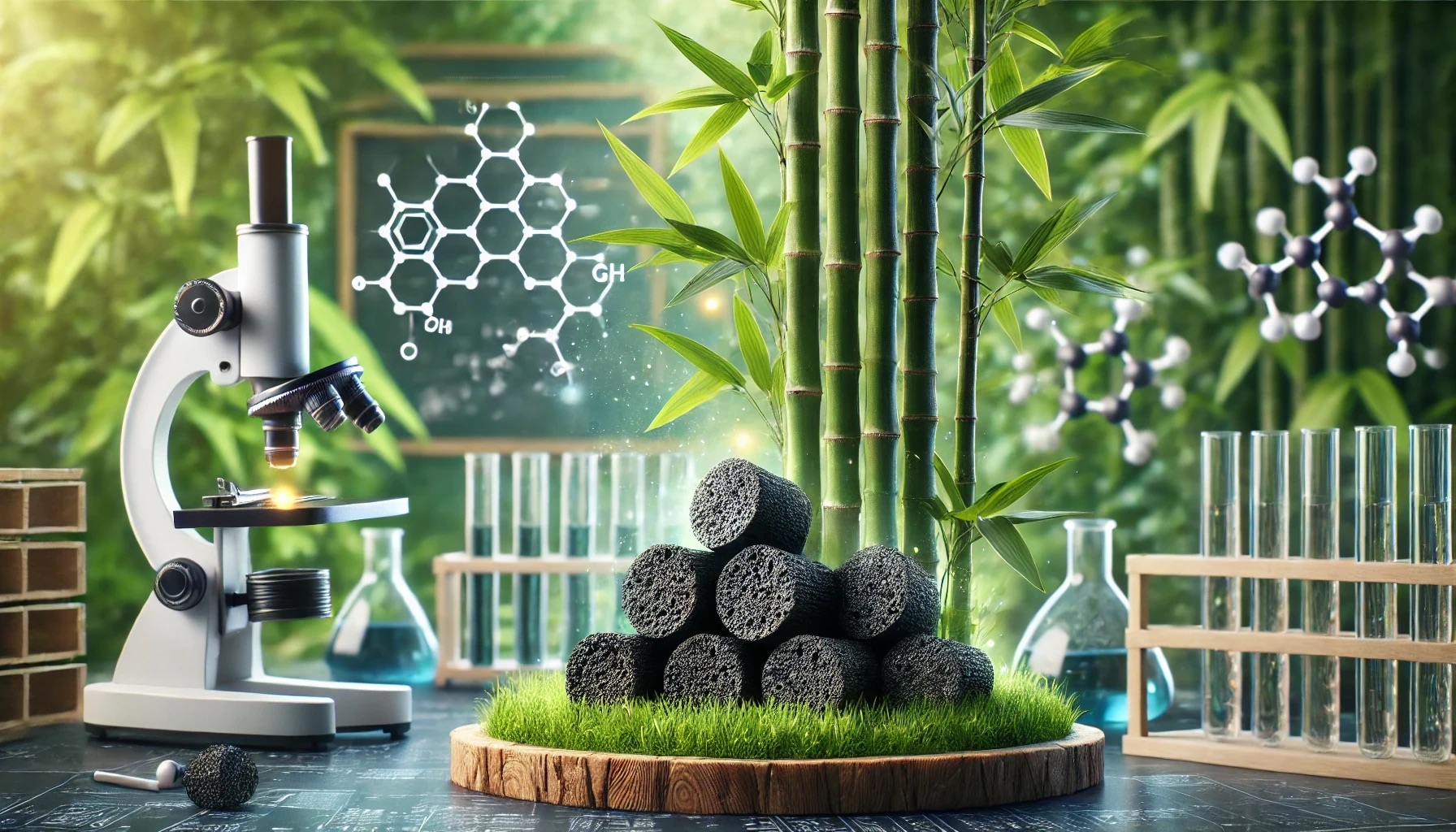
BiocharBiochar is a carbon-rich material created from biomass decomposition in low-oxygen conditions. It has important applications in environmental remediation, soil improvement, agriculture, carbon sequestration, energy storage, and sustainable materials, promoting efficiency and reducing waste in various contexts while addressing climate change challenges. More is increasingly used for environmental remediation, particularly for the adsorption of heavy metals from wastewater. A recent study focused on the effects of cellulose-lignin ratios on biochar’s capacity to adsorb uranium (U(VI)) from aqueous solutions. Researchers investigated three bamboo genotypes (Dendrocalamus farinosus) with varying cellulose-lignin ratios and their hydrothermal biochars.
The study found that decreasing the cellulose-lignin ratio significantly improved biochar’s structure, increasing both specific surface area and pore volume, which are key factors for effective adsorption. Biochar from genotype 52-B, with the lowest cellulose-lignin ratio (2.58), showed the highest uranium adsorption capacity (26.02 mg/g), while those with higher ratios, such as 215, performed less effectively.
The adsorption mechanism was analyzed using kinetic models and isotherms. The biochar from genotype 52-B followed Freundlich isotherms, suggesting multi-layer adsorption, while other genotypes exhibited single-layer adsorption behavior. The study also demonstrated that the adsorption process was primarily influenced by chemisorption involving hydroxyl and carboxyl groups.
This research highlights that adjusting the cellulose-lignin ratio in biomassBiomass is a complex biological organic or non-organic solid product derived from living or recently living organism and available naturally. Various types of wastes such as animal manure, waste paper, sludge and many industrial wastes are also treated as biomass because like natural biomass these More feedstockFeedstock refers to the raw organic material used to produce biochar. This can include a wide range of materials, such as wood chips, agricultural residues, and animal manure. More can significantly improve the adsorption performance of biochar. These findings are critical for designing more effective biochars for environmental applications, especially in nuclear waste management. Moreover, the biochars showed good reusability, retaining most of their adsorption capacity over multiple cycles, making them cost-effective and sustainable solutions for large-scale pollution control.




Leave a Reply