
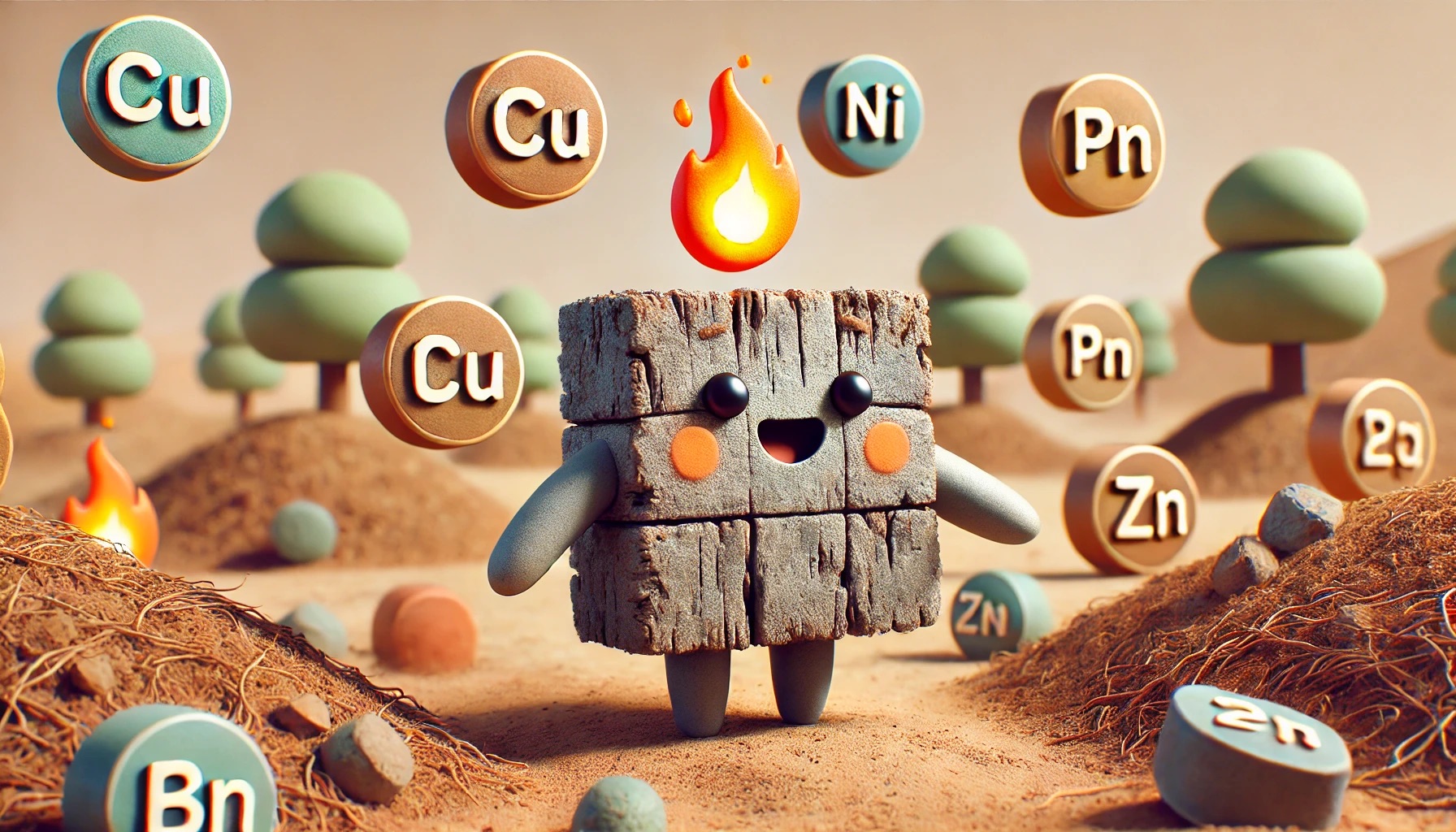

The study published in the Journal of Environmental Chemical Engineering (October 2024) investigates the complex interactions between biochar-derived dissolved organic matter (BDOM) and various heavy metals, such as copper (Cu), nickel (Ni), lead (Pb), and zinc (Zn). BDOM is generated during the pyrolysisPyrolysis is a thermochemical process that converts waste biomass into bio-char, bio-oil, and pyro-gas. It offers significant advantages in waste valorization, turning low-value materials into economically valuable resources. Its versatility allows for tailored products based on operational conditions, presenting itself as a cost-effective and efficient More of organic materials like fruit peel residues and plays a significant role in environmental processes, particularly the distribution, mobility, and toxicity of heavy metals in soils.
Researchers focused on understanding the specific binding sites and mechanisms involved in the interaction between BDOM and metal ions. Using advanced spectroscopic techniques and multidimensional chemometric analysis, they identified that Cu and Zn primarily bind to carbon-based functional groups, while Pb and Ni exhibit a stronger affinity for protein-like structures in BDOM. The study revealed that the binding process varies significantly depending on the metal, with some metals causing conformational changes in BDOM molecules.
Additionally, the study utilized novel methods like two-dimensional correlation spectroscopy (2DCOS) and moving window 2DCOS to map out the binding sequences and thresholds. These techniques allowed the researchers to gain deeper insights into the dynamic nature of metal-BDOM interactions, helping to better predict the environmental fate of heavy metals.
Overall, this research enhances our understanding of how biochar-derived organic matter influences metal behavior in ecosystems, which could aid in the development of more effective soil remediation strategies.




Leave a Reply