
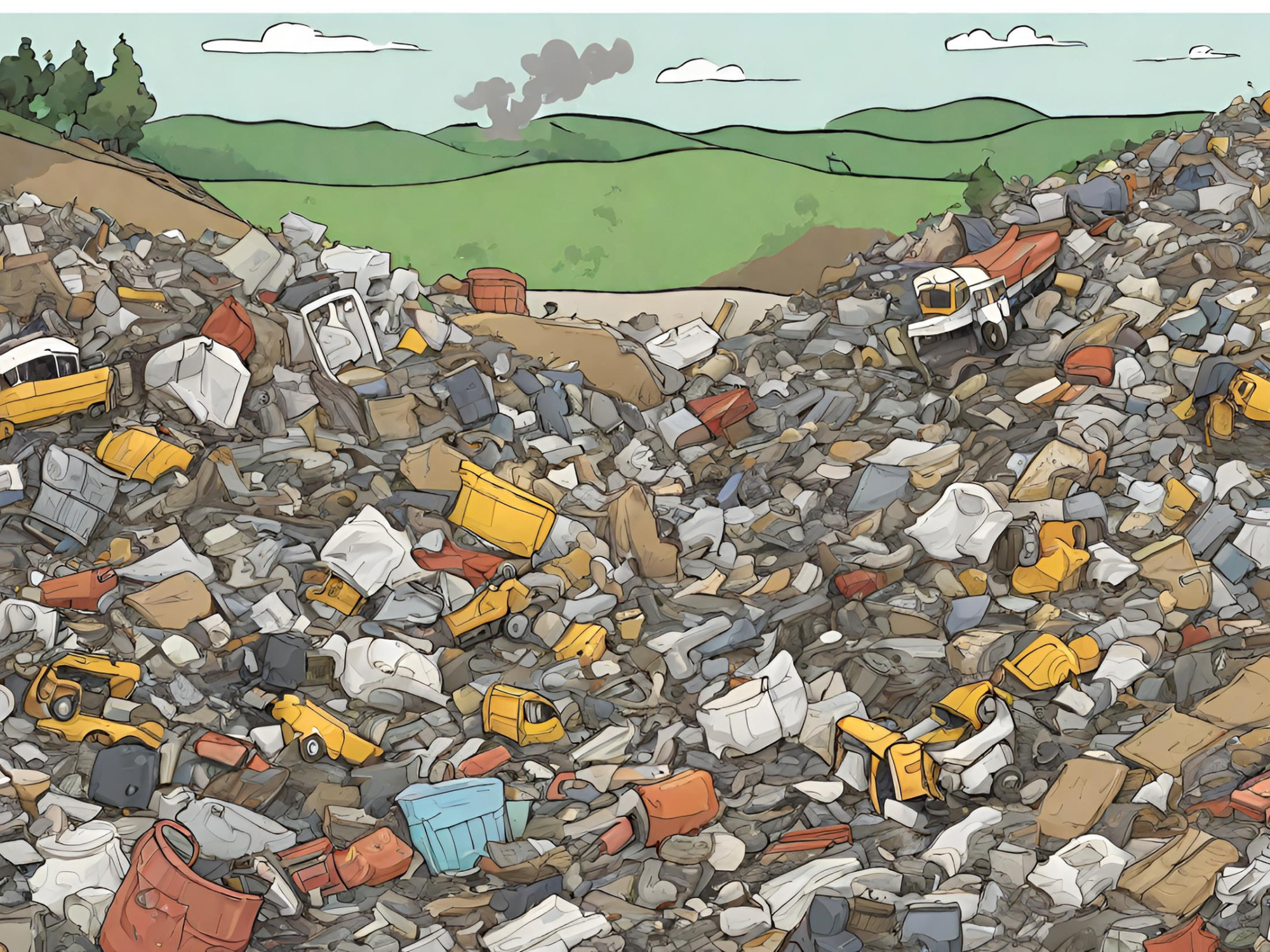

Researchers have developed an efficient landfill leachate treatment process using manganese-modified biochar. This innovative approach combines catalytic ozonation and activated sludge technology to achieve standardized discharge of landfill leachate, addressing the environmental challenges posed by this complex wastewater.
The study reveals that loading manganese onto biochar enhances its surface defects and functional groups, promoting electron transfer during catalytic ozonation. This results in the production of reactive oxygen species (ROS), particularly ··OH, ·O- 2, and ·O2- 2, which play a crucial role in the treatment process. Remarkably, the treated landfill leachate meets discharge standards after just 14 days of treatment.
Landfill leachate, characterized by its high concentration of pollutants, poses a significant environmental threat. The traditional treatment methods, whether biological or physicochemical, have limitations. Biological treatments, such as membrane bioreactors, face challenges in the presence of toxic substances, while physicochemical methods, like chemical precipitation, can lead to excessive sludge and increased operational costs.
The integration of catalytic ozonation and activated sludge treatment, utilizing sludge-based biochar, emerges as a promising solution. Biochar, derived from biomassBiomass is a complex biological organic or non-organic solid product derived from living or recently living organism and available naturally. Various types of wastes such as animal manure, waste paper, sludge and many industrial wastes are also treated as biomass because like natural biomass these More materials, provides an excellent catalyst for ozonation. The study focuses on manganese modification, which enhances biochar’s catalytic efficiency, making it a key player in the treatment process.
The research not only emphasizes the efficiency and stability of this approach but also highlights the synergy between manganese-loaded biochar and microorganisms in the activated sludge. This synergy proves essential in effectively treating landfill leachate, reducing ammonia nitrogen and COD concentrations significantly.
In conclusion, the study presents a new, sustainable approach to landfill leachate treatment. By leveraging manganese-modified biochar and combining catalytic ozonation with activated sludge technology, researchers have unlocked a solution that not only meets discharge standards but also addresses the environmental challenges associated with waste leachate treatment. This innovative method holds promise for a more sustainable and effective future in wastewater treatment.






Leave a Reply