
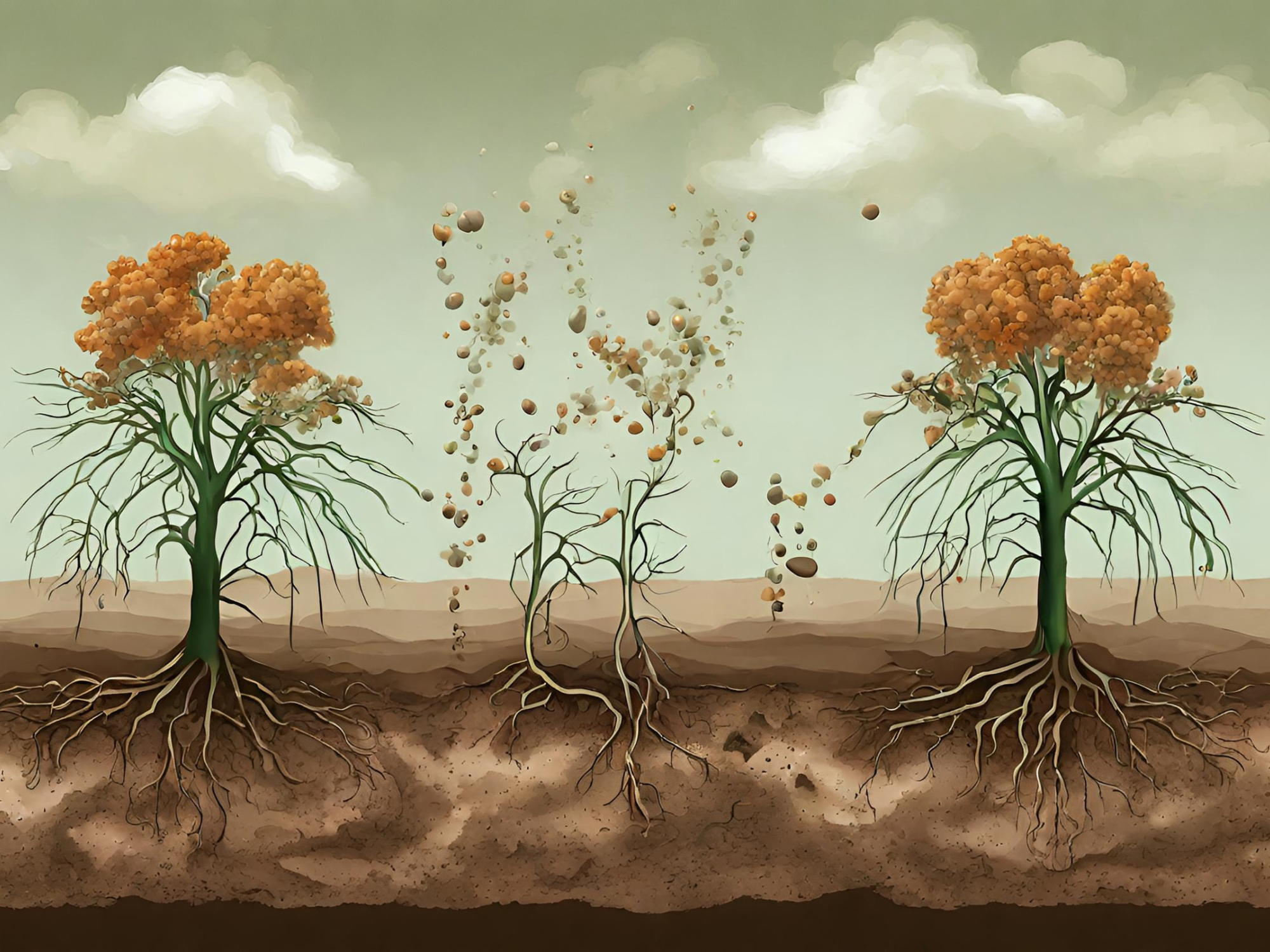

Arsenic (As) and Cadmium (Cd) contamination in agricultural soils poses a serious threat to food security and human health. This study explores the challenges associated with the distinct geochemical behaviors of As and Cd in soil.
The use of biochar in remediation strategies for heavy metal-contaminated farmland is discussed. While biochar shows promise in reducing the bioavailability and bioaccumulation of heavy metals, challenges arise due to its potential to increase As mobility when alkaline biochar is added to the soil.
Iron-modified biochar is introduced as a potential solution. The study reveals its effectiveness in decreasing the exchangeable and acid-soluble fractions of As and Cd in paddy fields, demonstrating its impact across diverse soil environments.
The study also highlights the morphological changes induced by iron-modified biochar in paddy fields, resulting in a decrease in exchangeable fractions and an increase in reducible fractions of As and Cd. This suggests a positive impact on immobilizing contaminants and reducing their mobility.
A meta-analysis of 3780 observation pairs from 92 articles clarifies the impact of biochar on As and Cd fractions in different fields. Iron-modified biochar emerges as a more effective strategy than unmodified biochar in mitigating As and Cd pollution in paddy fields.
In conclusion, this study provides crucial insights into the potential of iron-modified biochar in remedying combined As and Cd pollution in agricultural soils. The findings offer a foundation for developing effective strategies to combat heavy metal contamination, contributing to the advancement of sustainable agriculture.




Leave a Reply