
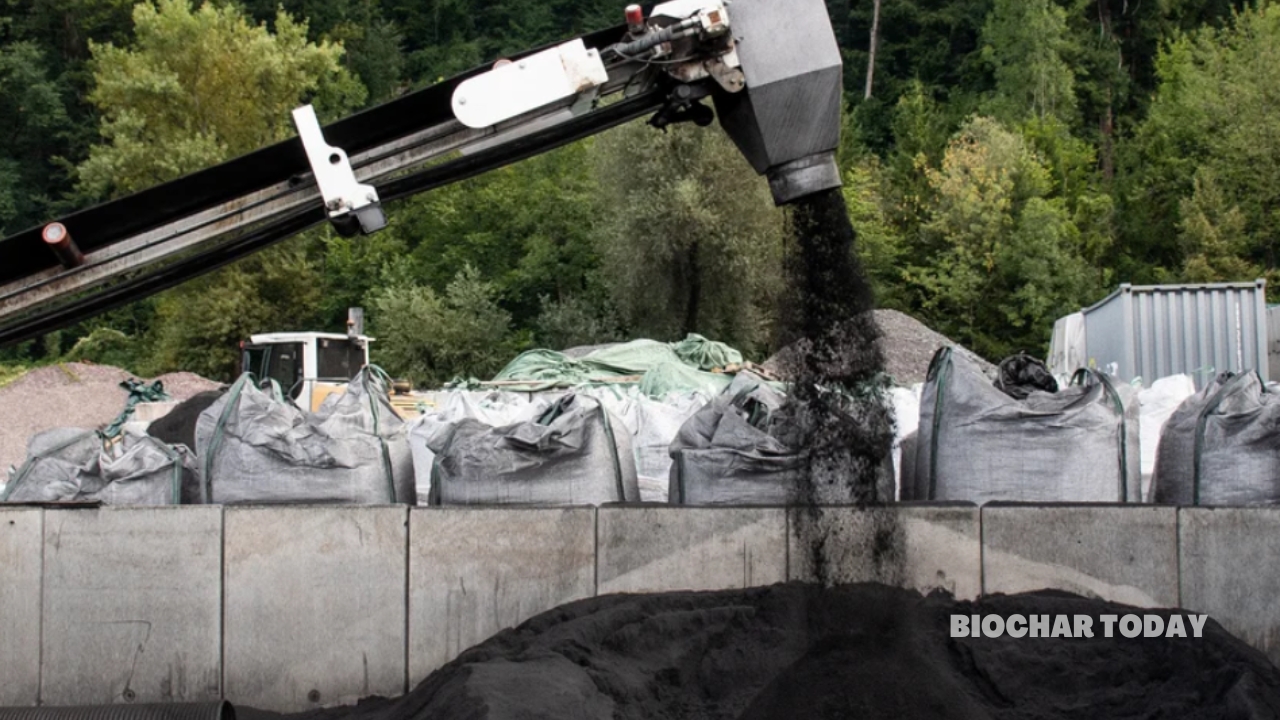
As part of the 2026 Climate Week Zurich, Inkoh, in partnership with Puro.earth, Cula, and First Climate, hosted a comprehensive industrial site visit at Inkoh’s production facility in Möriken-Wildegg, Switzerland. This event served as a practical demonstration of biocharBiochar is a carbon-rich material created from biomass decomposition in low-oxygen conditions. It has important applications in environmental remediation, soil improvement, agriculture, carbon sequestration, energy storage, and sustainable materials, promoting efficiency and reducing waste in various contexts while addressing climate change challenges. More carbon removal (BCR) within a large-scale industrial context. Inkoh, a prominent European producer operating five sites, showcased its operational framework to an audience of climate professionals and stakeholders. The program integrated the entire value chain of carbon removal, covering the transition from raw biomassBiomass is a complex biological organic or non-organic solid product derived from living or recently living organism and available naturally. Various types of wastes such as animal manure, waste paper, sludge and many industrial wastes are also treated as biomass because like natural biomass these More processing to the issuance of certified carbon removal credits.
The primary challenge addressed by these organizations is the lack of transparency and standardization in the carbon removal market, which often hinders the scaling of high-integrity climate solutions. While biochar has been recognized as a viable carbon sink, stakeholders frequently encounter difficulties in verifying the permanence of the sequestered carbon and the quality of the resulting credits. Furthermore, the industry faces the technical hurdle of integrating biochar into commercial applications, such as construction, where performance must be maintained alongside environmental benefits. Without standardized measurement and certification, the financial viability of such facilities remains precarious.
To mitigate these challenges, the partner organizations presented an integrated solution that combines advanced pyrolysisPyrolysis is a thermochemical process that converts waste biomass into bio-char, bio-oil, and pyro-gas. It offers significant advantages in waste valorization, turning low-value materials into economically valuable resources. Its versatility allows for tailored products based on operational conditions, presenting itself as a cost-effective and efficient More technology with digital monitoring and third-party certification. Inkoh demonstrated its high-temperature pyrolysis process, which converts organic matter into stable biochar while simultaneously pioneering the development of carbon-negative building materials like KLARK climate concrete. Cula provided the digital infrastructure for precise measurement, while Puro.earth and First Climate ensured the resulting credits met rigorous international standards. This end-to-end integration provides a blueprint for how biochar production can be validated and monetized through transparent, data-driven frameworks.
The outcomes of this collaboration and the subsequent demonstration highlight Switzerland’s role as a hub for climate innovation. By opening the Möriken-Wildegg facility to public and professional scrutiny, Inkoh and its partners have fostered greater confidence in the reliability of biochar carbon removal. The facility’s ability to produce carbon-negative concrete demonstrates a clear pathway for decarbonizing the heavy construction industry. Moreover, the successful synchronization of production, measurement, and certification confirms that BCR is no longer a theoretical concept but a scalable industrial reality capable of meeting the demands of global carbon markets.





Leave a Reply