
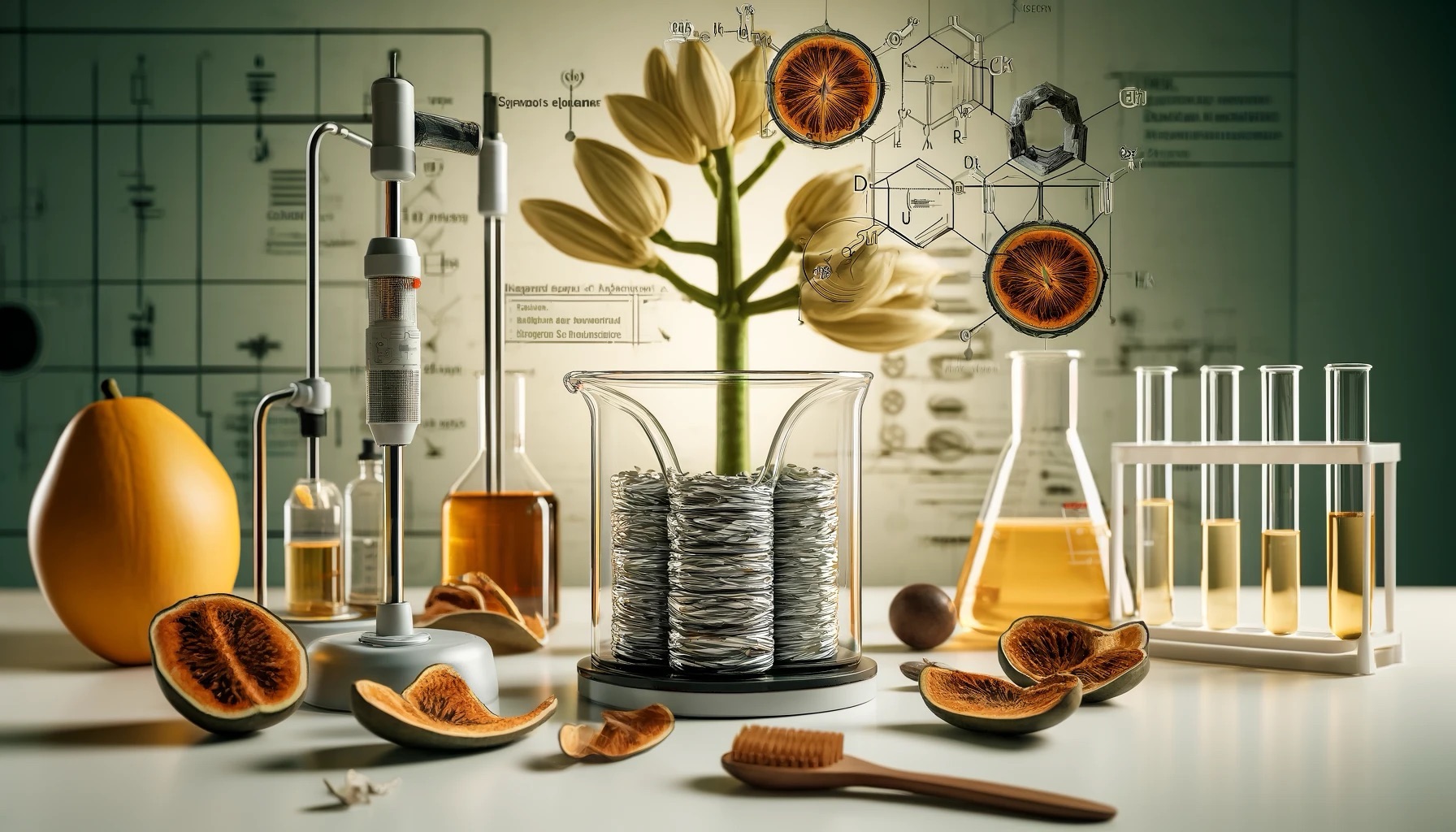

Mishra, A., Pandey, J., Ojha, H. et al. A green and economic approach to synthesize magnetic Lagenaria siceraria biocharBiochar is a carbon-rich material created from biomass decomposition in low-oxygen conditions. It has important applications in environmental remediation, soil improvement, agriculture, carbon sequestration, energy storage, and sustainable materials, promoting efficiency and reducing waste in various contexts while addressing climate change challenges. More (γ-Fe2O3-LSB) for methylene blue removal from aqueous solution. Environ Sci Pollut Res (2024). https://doi.org/10.1007/s11356-024-33477-6
In the printing and textile industries, methylene blue (MB), a commonly used cationic azo dye, poses significant environmental and health risks due to its carcinogenic properties and prevalence in industrial wastewater. Traditional methods for removing MB from discharge have various limitations, prompting researchers to explore more effective solutions.
A recent study introduces a novel magnetized biochar, γ-Fe2O3-LSB, synthesized from Lagenaria siceraria peels. The biochar was magnetized using the co-precipitation method, and its properties were thoroughly characterized using advanced techniques such as FTIR, X-ray diffraction, Raman spectroscopy, SEM–EDX, BET analysis, and vibrating sample magnetometry (VSM). The results revealed that γ-Fe2O3-LSB has a mesoporous structure with a specific surface area of 135.30 m²/g, significantly higher than the non-magnetized biochar.
The magnetized biochar demonstrated a saturation magnetization value of 3.72 emu/g, indicating its superparamagnetic nature. This property enhances its removal efficiency in wastewater treatment processes. During batch adsorption experiments, various parameters like initial MB concentration, biochar dose, pHpH is a measure of how acidic or alkaline a substance is. A pH of 7 is neutral, while lower pH values indicate acidity and higher values indicate alkalinity. Biochars are normally alkaline and can influence soil pH, often increasing it, which can be beneficial More, contact time, and temperature were optimized. The non-linear Langmuir model best explained the adsorption mechanism, with a maximum adsorption capacity of 54.55 mg/g.
Thermodynamic studies indicated that the adsorption process is spontaneous and endothermic, following pseudo-second-order kinetics. Additionally, the biochar could be regenerated and reused up to four cycles, making it a sustainable option. The cost of synthesizing γ-Fe2O3-LSB in a laboratory setting was found to be 162.75 INR/kg, cheaper than many commercial adsorbents.
This study suggests that magnetized Lagenaria siceraria biochar is an economical and effective material for industrial wastewater treatment, offering a promising solution to mitigate the environmental impact of methylene blue.


![Eucalyptus Wood Waste-Derived Biochar Achieves a Ninety-Eight Percent Removal Efficiency for Benzo[ghi]perylene in Vehicle-Wash Wastewater](https://biochartoday.com/wp-content/uploads/2026/10/SCIENCE-BLOGS-2026-2026-10-19T160523.703.jpg)

Leave a Reply