
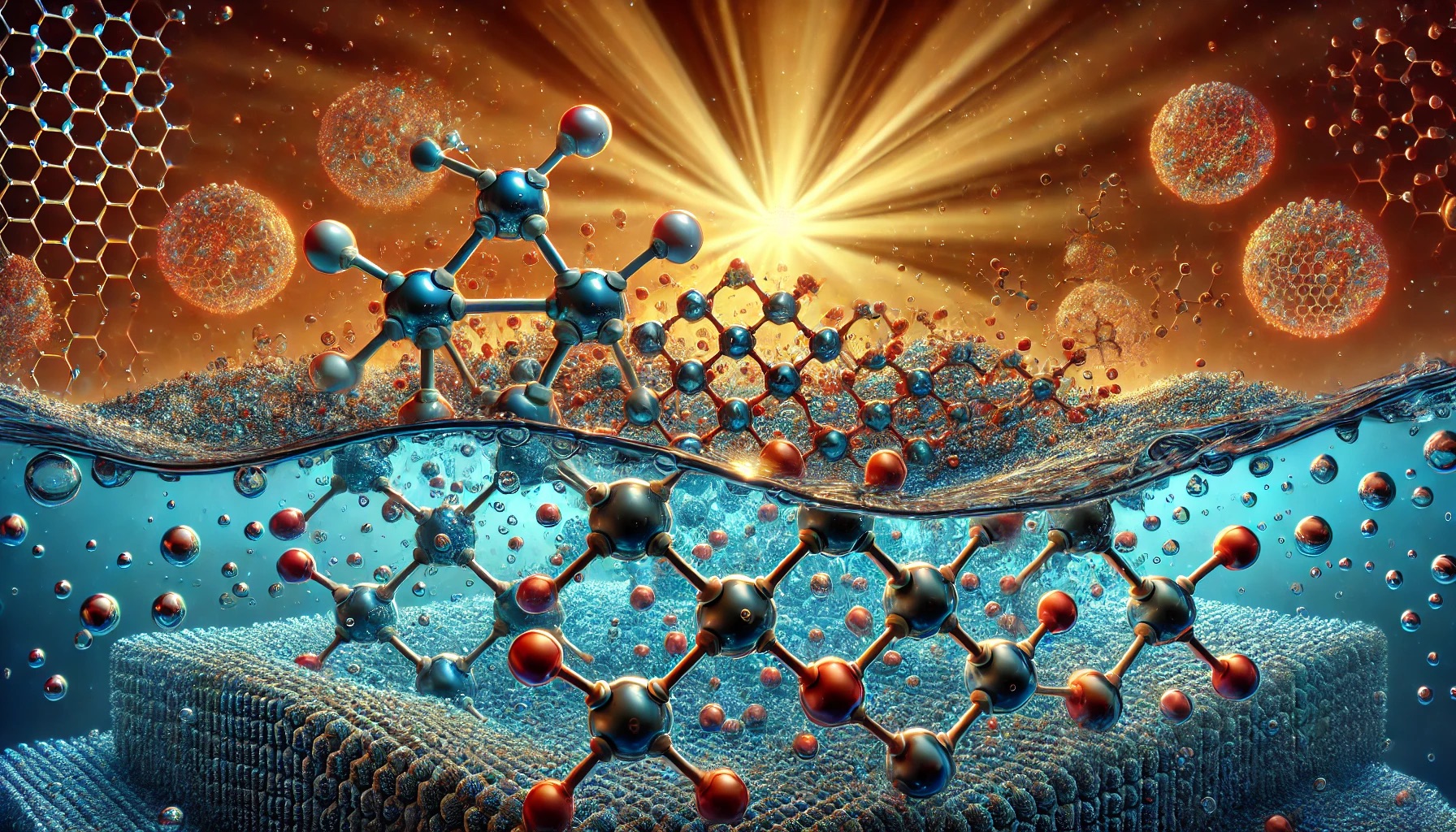

A new study has introduced a unique method for removing emerging contaminants from water using ultrasmall copper-metal organic framework (Cu-MOF) quantum dots on waste-derived biochar. This combination, termed Integrated Photocatalytic Adsorbent (IPA), effectively targets the drug pantoprazole (PTZ) and the dye Basic Blue 26 (VB). The IPA achieves remarkable removal efficiencies of 95.23% for PTZ in 80 minutes and 96.31% for VB in 50 minutes under visible light.
The research highlights the synergistic action of adsorption and photocatalysis in this system. The biochar serves as a surface for contaminant adsorption, facilitating photodegradation, which then regenerates the adsorption sites, ensuring continuous operation. This cycle reduces the risk of secondary pollution. The study validates the stability and efficiency of the IPA using various analytical methods and evaluates its cost-effectiveness, estimating the catalyst cost at $0.018/g.
Furthermore, the research delves into the mechanisms at play, demonstrating that the photogenerated electrons and holes contribute significantly to the degradation process. It also investigates the impact of environmental factors like pHpH is a measure of how acidic or alkaline a substance is. A pH of 7 is neutral, while lower pH values indicate acidity and higher values indicate alkalinity. Biochars are normally alkaline and can influence soil pH, often increasing it, which can be beneficial More, inorganic salts, and humic acid on the system’s performance. This innovative approach not only provides a cost-effective and sustainable solution for wastewater treatment but also offers a practical application for large-scale industrial use, transforming waste into valuable resources.



Leave a Reply