
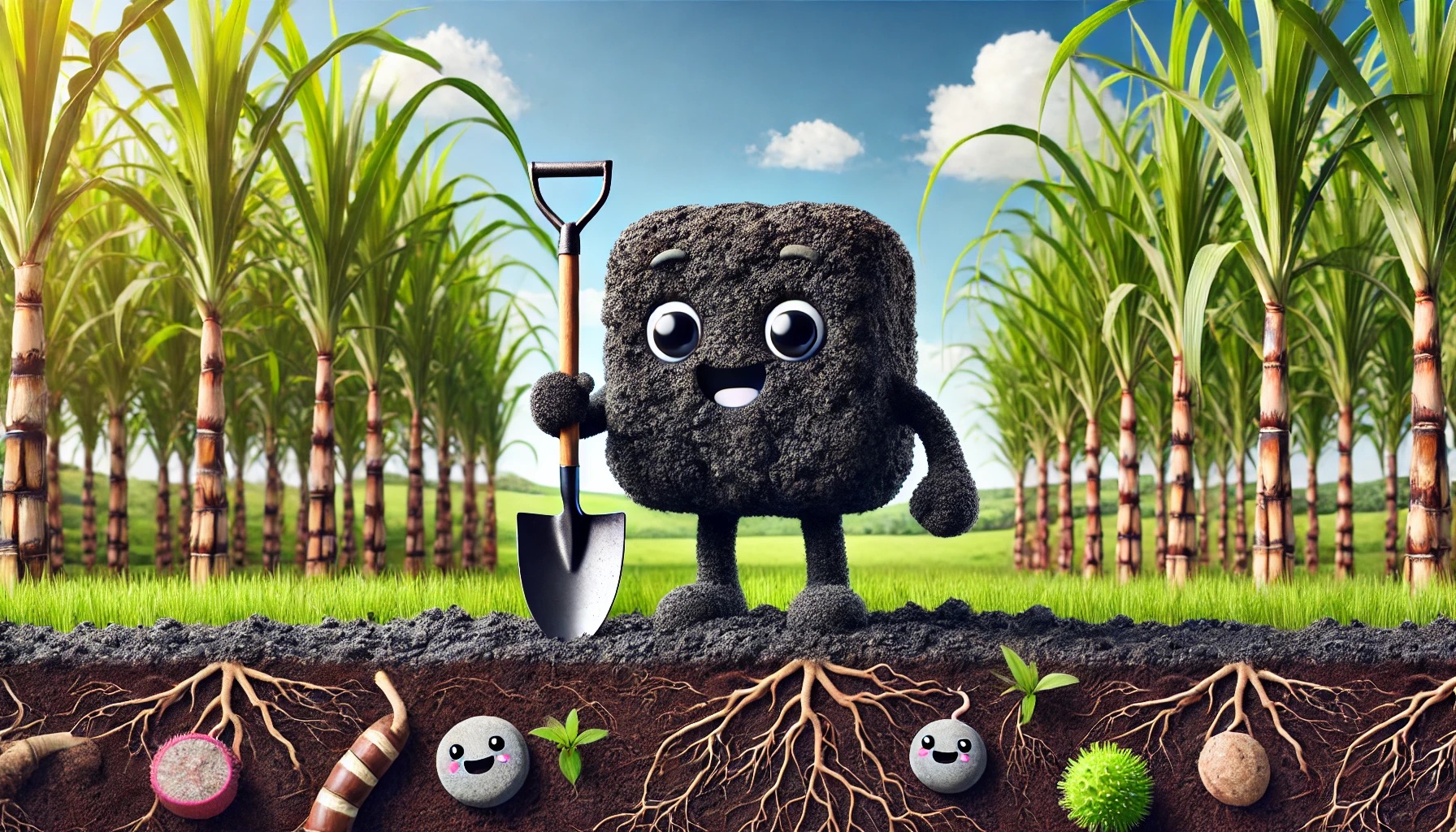
Lopes, et al (2024) BiocharBiochar is a carbon-rich material created from biomass decomposition in low-oxygen conditions. It has important applications in environmental remediation, soil improvement, agriculture, carbon sequestration, energy storage, and sustainable materials, promoting efficiency and reducing waste in various contexts while addressing climate change challenges. More alters the soil microbiological activity of sugarcane fields over time. Soils and Plant Nutrition. https://doi.org/10.1590/1678-992X-2023-0289
Biochar, a carbon-rich material derived from pyrolyzed wood waste, is gaining attention for its positive impact on soil health and crop growth. In a recent two-year study, researchers explored biochar’s effects on soil microbial activity and sugarcane growth by applying varying doses of biochar (up to 40 Mg/ha) to sugarcane fields, with and without additional nitrogen, phosphorus, and potassium (NPK) fertilizers.
The study found that adding biochar increased plant height and total organic carbon (TOC) in the soil. TOC, which measures soil’s carbon content, grew steadily with biochar doses, benefiting long-term soil fertility. Additionally, soil microbial indicators such as microbial biomassBiomass is a complex biological organic or non-organic solid product derived from living or recently living organism and available naturally. Various types of wastes such as animal manure, waste paper, sludge and many industrial wastes are also treated as biomass because like natural biomass these More carbon (Cmic), soil basal respiration (SBR), and microbial diversity improved with biochar, particularly at doses between 20 and 30 Mg/ha. This suggests that biochar supports a diverse and active soil microbiome, which is crucial for nutrient cycling and overall soil health.
Interestingly, higher doses of biochar reduced CO₂ emissions from the soil, a potential boon for carbon sequestration and reducing greenhouse gases. However, at the highest biochar doses, the benefits to microbial activity and diversity leveled off, suggesting that moderate applications are most effective.
The findings emphasize biochar’s potential as a sustainable soil amendmentA soil amendment is any material added to the soil to enhance its physical or chemical properties, improving its suitability for plant growth. Biochar is considered a soil amendment as it can improve soil structure, water retention, nutrient availability, and microbial activity. More, enhancing sugarcane growth while fostering a healthier soil ecosystem. This study supports biochar’s role in agriculture, but researchers highlight the importance of long-term monitoring to understand its full impact on soil and environmental health.




Leave a Reply