

Lopičić, Z.R., Šoštarić, T.D., Milojković, J.V., et al. Efficient Removal of Water Soluble Fraction of Diesel Oil by BiocharBiochar is a carbon-rich material created from biomass decomposition in low-oxygen conditions. It has important applications in environmental remediation, soil improvement, agriculture, carbon sequestration, energy storage, and sustainable materials, promoting efficiency and reducing waste in various contexts while addressing climate change challenges. More Sorption Supported by Microbiological Degradation. Processes 2024, 12, 964. DOI:10.3390/pr12050964
The contamination of water bodies by diesel oil (DO) and its water-soluble fraction (WSF) poses significant environmental challenges due to the toxicity and persistence of these pollutants. A recent study published in Processes highlights an innovative approach to tackling this issue using biochar derived from waste plum stones.
Researchers Zorica R. Lopičić and her team synthesized biochar from plum stones through pyrolysisPyrolysis is a thermochemical process that converts waste biomass into bio-char, bio-oil, and pyro-gas. It offers significant advantages in waste valorization, turning low-value materials into economically valuable resources. Its versatility allows for tailored products based on operational conditions, presenting itself as a cost-effective and efficient More at 500°C. This biochar exhibited high porosityPorosity of biochar is a key factor in its effectiveness as a soil amendment and its ability to retain water and nutrients. Biochar’s porosity is influenced by feedstock type and pyrolysis temperature, and it plays a crucial role in microbial activity and overall soil health. Biochar More and numerous functional groups, essential for effective pollutant sorption. Elemental analysis confirmed a significant increase in carbon content and aromaticity post-pyrolysis, enhancing its sorption capabilities.
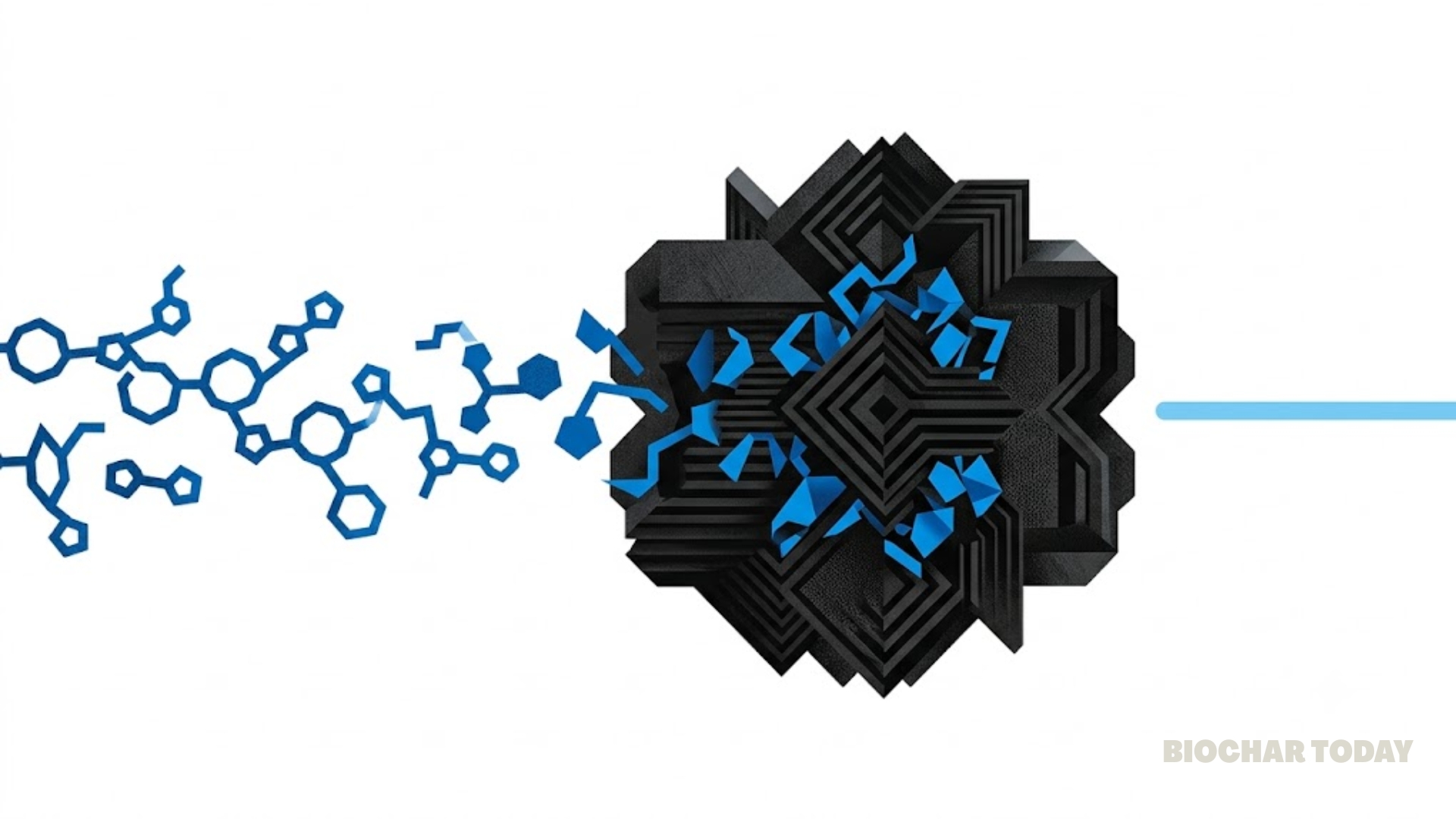
The study demonstrated that plum stone biochar could reduce diesel WSF concentrations by more than 90% in the initial treatment phase. Sorption kinetics followed a pseudo-second-order model, indicating that the process was governed by chemical bonding interactions between the biochar and diesel components. The Sips isotherm model best described the sorption equilibrium, revealing a maximum sorption capacity of 40.72 mg/g.
To further improve the removal efficiency, the residual solution post-sorption was treated with a consortium of microorganisms known for degrading hydrocarbon pollutants. This two-stage treatment process reduced the diesel WSF concentration to 0.46 mg/L over 19 days. The combined approach ensures the comprehensive breakdown of remaining pollutants, mitigating potential environmental risks.
The final water samples were tested for toxicity using the Aliivibrio fischeri bioluminescence inhibition bioassay. Results showed a substantial decrease in toxicity, confirming the effectiveness of the combined biochar sorption and bioremediation treatment.
The study underscores the potential of using plum stone biochar in conjunction with microbial degradation for efficient and eco-friendly removal of diesel oil pollutants from water. This method not only addresses pollution but also valorizes agricultural waste, promoting sustainability and circular economy principles.



Leave a Reply