
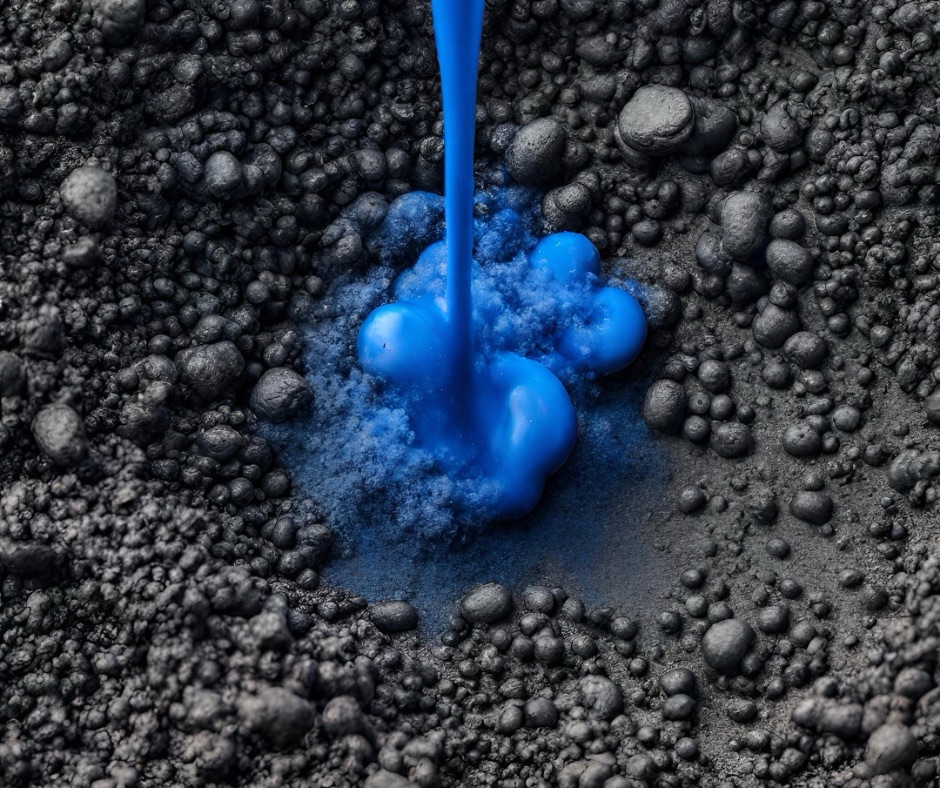
Yu, Zhang, et al. (2024) Experimental and DFT insights into the adsorption mechanism of methylene blue by alkali-modified corn straw biocharBiochar is a carbon-rich material created from biomass decomposition in low-oxygen conditions. It has important applications in environmental remediation, soil improvement, agriculture, carbon sequestration, energy storage, and sustainable materials, promoting efficiency and reducing waste in various contexts while addressing climate change challenges. More. RSVP Advances. https://doi.org/10.1039/D3RA05964B
Imagine a world where waste products like corncobs don’t just pile up, but become superheroes in the fight against pollution. That’s the exciting potential revealed by a new study on biochar, a charcoal-like material made from organic waste.
Researchers have discovered that biochar, when modified with a sprinkle of sodium hydroxide, can transform into a champion dye absorber. In this study, they focused on methylene blue, a common dye used in textiles and plastics that can be toxic to aquatic life if released into wastewater.
The modified biochar, nicknamed NaCBC300, proved to be a true dye-gobbling champ. It could remove a whopping 99.98% of methylene blue from water, a three-fold improvement over unmodified biochar! This means NaCBC300 can clean up heavily polluted water with remarkable efficiency.
But how does this magic work? Scientists believe it’s a team effort. The sodium hydroxide treatment creates more tiny holes and bumps on the biochar’s surface, giving it more space to grab onto dye molecules. Additionally, the treatment adds more hydroxyl groups (-OH), which act like tiny magnets, attracting the positively charged dye molecules.
The researchers used fancy techniques like spectroscopy and computer simulations to peek into this microscopic dance between biochar and dye. They confirmed that not only are physical attraction and magnetism at play, but also a special kind of handshake called a “pi-pi interaction” where electrons from the dye and biochar share a friendly dance.
This research is a big step forward in the quest for cleaner water and sustainable waste management. It shows that instead of throwing away corncobs, we can turn them into powerful tools for environmental protection. NaCBC300’s potential extends beyond just methylene blue; it can also be used to remove other harmful pollutants from water.



Leave a Reply