
Obia, et al (2024) BiocharBiochar is a carbon-rich material created from biomass decomposition in low-oxygen conditions. It has important applications in environmental remediation, soil improvement, agriculture, carbon sequestration, energy storage, and sustainable materials, promoting efficiency and reducing waste in various contexts while addressing climate change challenges. More dispersion in a tropical soil and its effects on native soil organic carbon. Plos One. doi:10.1371/journal.pone.0300387
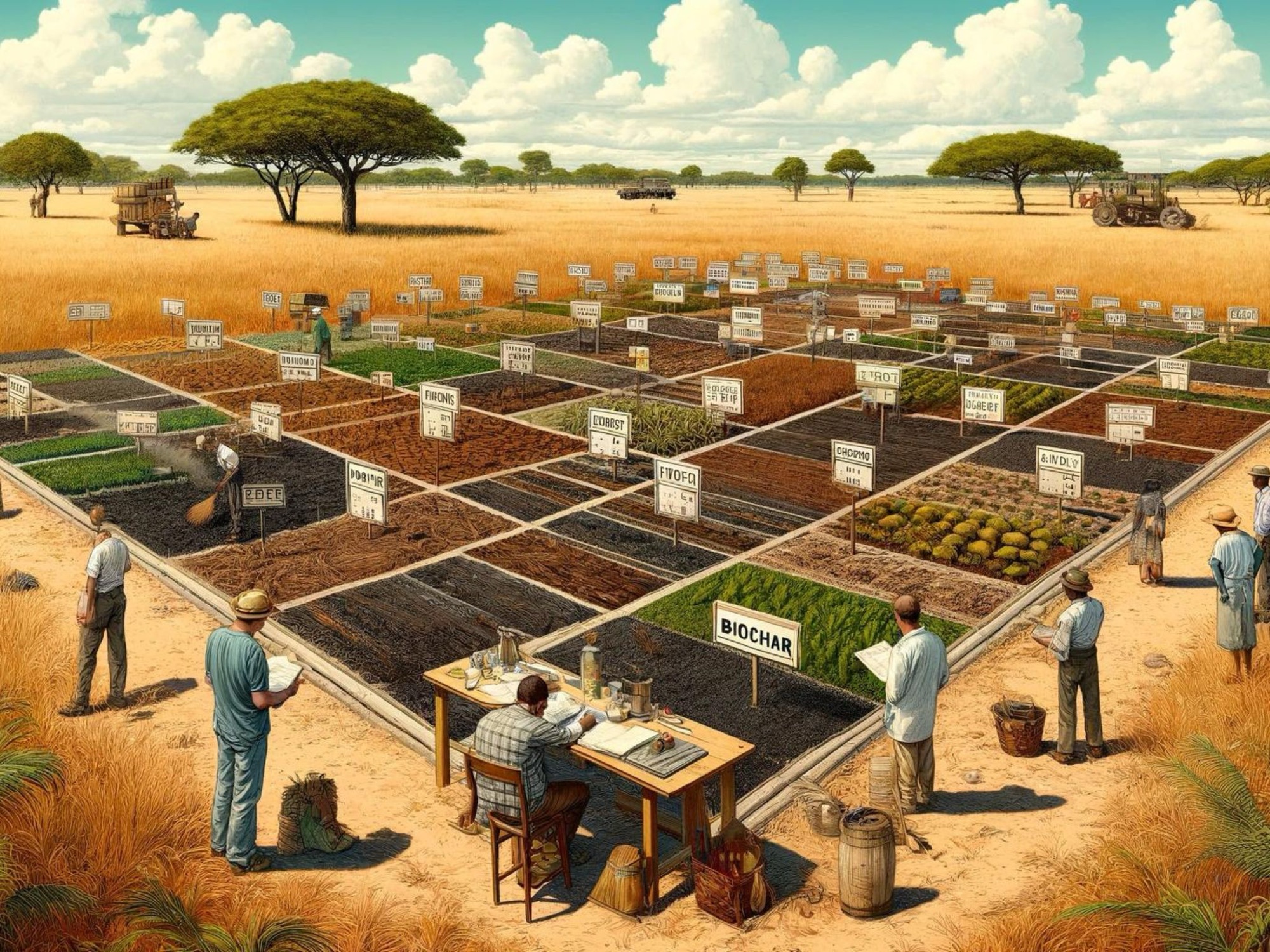
Biochar, a carbon-rich soil amendmentA soil amendment is any material added to the soil to enhance its physical or chemical properties, improving its suitability for plant growth. Biochar is considered a soil amendment as it can improve soil structure, water retention, nutrient availability, and microbial activity. More, has been lauded for its potential to enhance soil quality and crop yields. Yet, the extent of biochar dispersion in soil and its effect on native soil organic carbon (SOC) remain underexplored areas. A detailed study conducted on a loamy sandy Acrisol in Zambia provides new insights into these dynamics.
In the experiment, biochar particles of varying sizes (fine, intermediate, and coarse) were mixed into the soil’s surface layer and monitored over 4.5 years using stable isotope methods. The study revealed that a significant portion of biochar migrated from the surface to deeper soil layers (7-30 cm) and even laterally beyond the experimental plots. Remarkably, 25-60% of biochar was found to have moved laterally, suggesting significant dispersion that could undermine its effectiveness as a soil amendment.
The study’s findings are crucial for understanding biochar’s behavior in soil. Fine and intermediate-sized biochar particles showed the most substantial downward migration, particularly at lower application doses. Interestingly, these particles likely moved through the soil’s inter-particle spaces, while at higher doses, they potentially clogged these pathways, leading to increased migration of coarser particles.
Another significant aspect of the study was the impact on native SOC stocks, which showed a reduction by an average of 18.4%. This suggests a ‘positive priming’ effect, where biochar accelerates the mineralization of SOC. However, there’s an indication that over time, this could shift to ‘negative priming’, potentially increasing SOC stocks.
This comprehensive study highlights the need to consider biochar’s mobility and its variable effects on SOC when assessing its agronomic and environmental benefits. As biochar application continues to gain traction, understanding its long-term interactions with soil is essential for maximizing its benefits and mitigating any unintended consequences.





Leave a Reply