
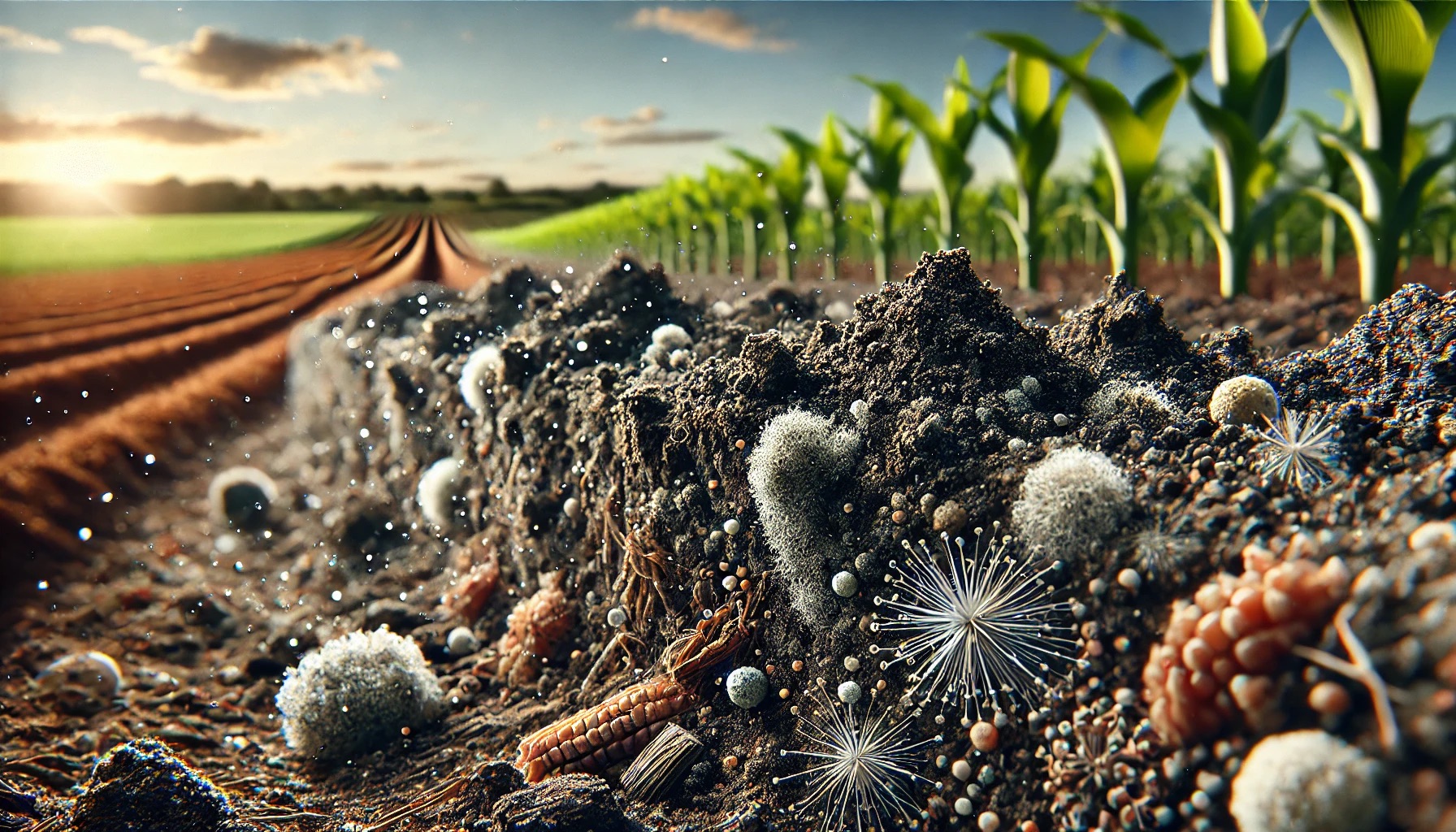

A recent study published in Science of The Total Environment investigates how combining biochar with phosphate fertilizers influences phosphorus availabilityPhosphorus is another essential nutrient for plant growth, but it can sometimes be locked up in the soil and unavailable to plants. Biochar can help release phosphorus from the soil and make it more accessible to plants, reducing the need for chemical fertilizers. More and cycling in saline-alkali soil. The research focuses on biochar derived from Phragmites australis, paired with various phosphate fertilizers—soluble, insoluble, and organic.
The study finds that adding biochar and phosphate fertilizers improves phosphorus fractions in the soil, specifically increasing the availability of labile organic phosphorus (LOP) and dicalcium phosphate (Ca2P). Simultaneously, levels of less accessible phosphorus compounds, such as hydroxyapatite (Ca10P), decrease. This shift enhances Olsen phosphorus (Olsen-P) availability, a key nutrient for crop growth in degraded soils.
Biochar also affects soil enzyme activity, including phosphatases that play a role in phosphorus cycling. Depending on the type of phosphate fertilizer used, the co-application either increases or decreases enzyme activity, influencing phosphorus transformation pathways. Furthermore, biochar alters the soil’s microbial community, notably increasing the abundance of Rhodopseudomonas, a bacteria positively associated with phosphorus mobilization.
This research highlights the potential of combining biochar with phosphate fertilizers to improve phosphorus availability in saline-alkali soils. The findings could help develop more sustainable soil management practices, particularly in areas where salinization impacts agricultural productivity. By enhancing phosphorus utilization, this approach may also mitigate the environmental impact of excessive phosphorus fertilizer use, such as water eutrophication.



Leave a Reply