
Key Takeaways
- Scientists can turn problematic farm and factory waste into highly effective carbon materials that help save water and improve soil.
- Using a specialized chemical treatment makes these materials much more powerful than standard charcoalCharcoal is a black, brittle, and porous material produced by heating wood or other organic substances in a low-oxygen environment. It is primarily used as a fuel source for cooking and heating. More by creating millions of tiny microscopic holes.
- A mathematical selection process helped identify the absolute best performing samples from dozens of different waste types.
- Materials made from rice straw and sawdust were found to be the most effective at trapping nutrients and holding moisture.
- These recycled products offer a sustainable way to fight land degradation and help farmers grow more food in dry regions.
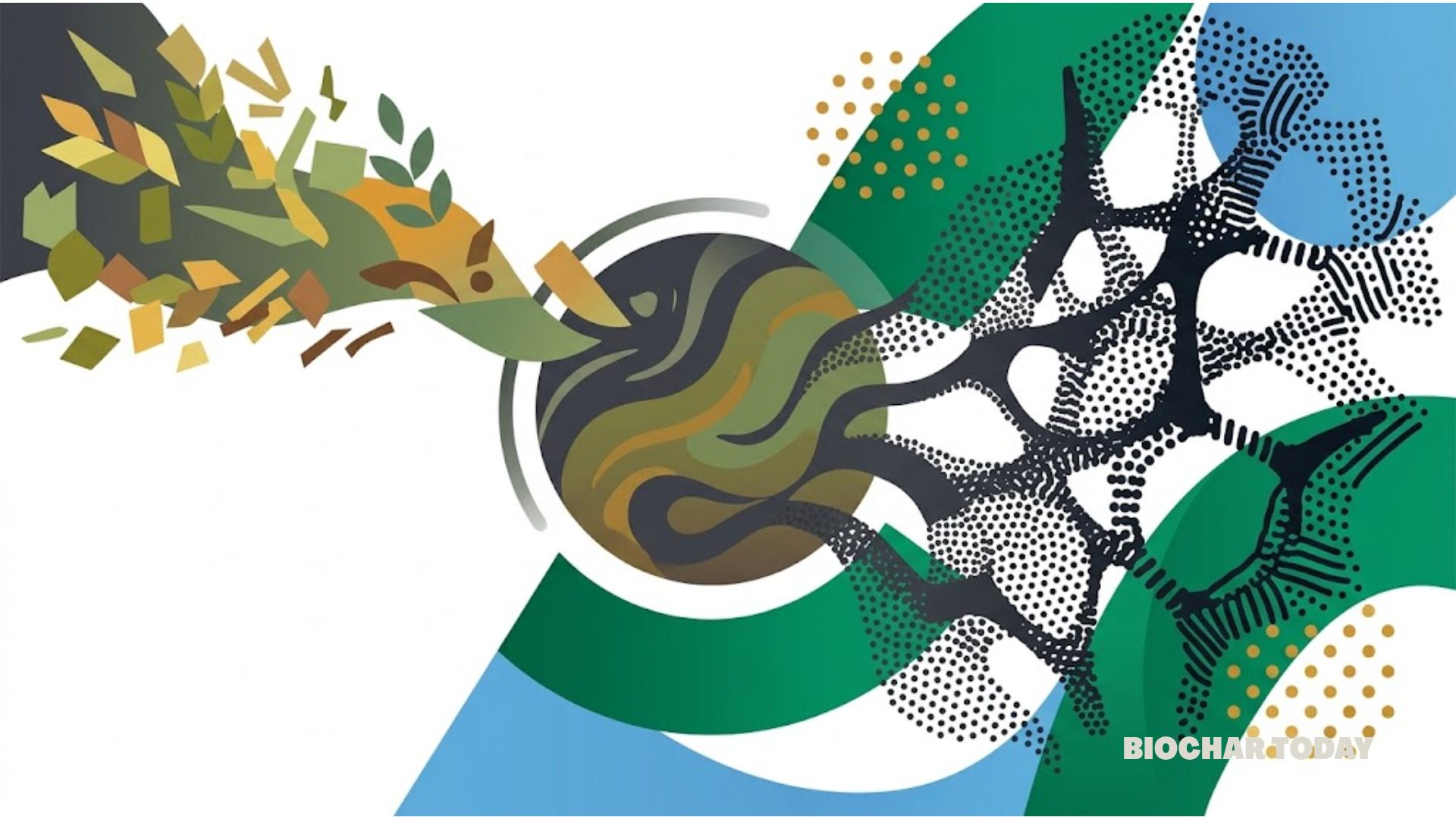
The health of our global environment depends heavily on the stability of our soil and the availability of clean water. In a significant research contribution published in the journal BiocharBiochar is a carbon-rich material created from biomass decomposition in low-oxygen conditions. It has important applications in environmental remediation, soil improvement, agriculture, carbon sequestration, energy storage, and sustainable materials, promoting efficiency and reducing waste in various contexts while addressing climate change challenges. More, lead author Seyed Hamidreza Sadeghi and an international team of researchers demonstrated how agricultural and industrial leftovers can be transformed into high-performance materials. Their work focused on creating morph-genetic porous carbon, which is essentially an upgraded form of biochar that has been chemically or physically activated to increase its utility. By processing eight different types of common waste, including vineyard prunings, rice straw, sawdust, and even tissue paper factory residues, the team developed 64 distinct samples. They then applied advanced mathematical models based on game theory to determine which of these materials would offer the greatest benefits for environmental conservation.
One of the most striking findings of the study was the massive increase in efficiency achieved through chemical activation. While standard biochar is known to help with soil fertility, it often lacks the complex internal architecture needed for high-level conservation tasks. The researchers found that by treating the biochar with potassium hydroxide, they could “unlock” its structure, creating a vast network of pores. For example, a sample derived from rice straw reached a specific surface area of 1071.47 square meters per gram. To put this in perspective, a single gram of this material has enough internal surface area to cover nearly a sixth of a professional soccer field. This vast internal space is what allows the material to trap pollutants, store nutrients, and hold onto water much more effectively than untreated wood or straw.
The team identified five priority materials that showed the best overall physical properties. These top performers came from rice straw, sawdust, palm tree prunings, vineyard prunings, and tissue factory waste. Each of these samples exhibited a specific type of porous structure known as mesoporous, characterized by holes between 2 and 50 nanometers in size. This specific pore size is ideal for agricultural applications because it allows for the capillary action necessary to retain soil moisture during dry spells while also providing enough space for beneficial soil microbes to thrive. The study highlighted that cellulosic wastes like rice straw and sawdust are particularly well-suited for this process because their natural organic richness leads to a more balanced and effective final product.
Beyond the material science, the study introduced a revolutionary way to make environmental decisions using the Condorcet algorithm. In many scientific projects, researchers struggle to choose the best material because different samples might be good at different things. One might have a high surface area but a low pore volume, while another might be the opposite. By using game theory, the researchers were able to let the materials “compete” against each other in pairwise comparisons across 12 different scientific criteria. This removed personal bias from the selection process and provided a scientifically validated ranking. The results clearly showed that chemically activated samples consistently beat out physical activation and standard biochar, proving that the extra step of activation is well worth the effort for high-stakes conservation projects.
The implications of this research are especially vital for arid and semi-arid regions that face constant threats from soil erosion and water scarcity. By converting local waste into these advanced carbons, communities can reduce the volume of trash in landfills while simultaneously restoring the productivity of their farmland. This creates a circular economy where “problematic” waste becomes a “priority” solution. The study concludes that these innovative production methods significantly improve the performance of porous materials, offering a scientific framework that bridges the gap between waste management policy and high-tech material science to ensure a more sustainable future for global agriculture and resource protection.
Source: Sadeghi, S. H., Zare, S., Gharehmahmudli, S., Younesi, H., Zhang, F., Mirzahosseini, M., Sadeghi, P. S., Homaee, M., Parvizi, Y., Nan, S., & Li, Y. (2026). Introducing priority morph-genetic porous carbon for potential applications in soil and water conservation through game theory. Biochar, 8(35).



Leave a Reply