
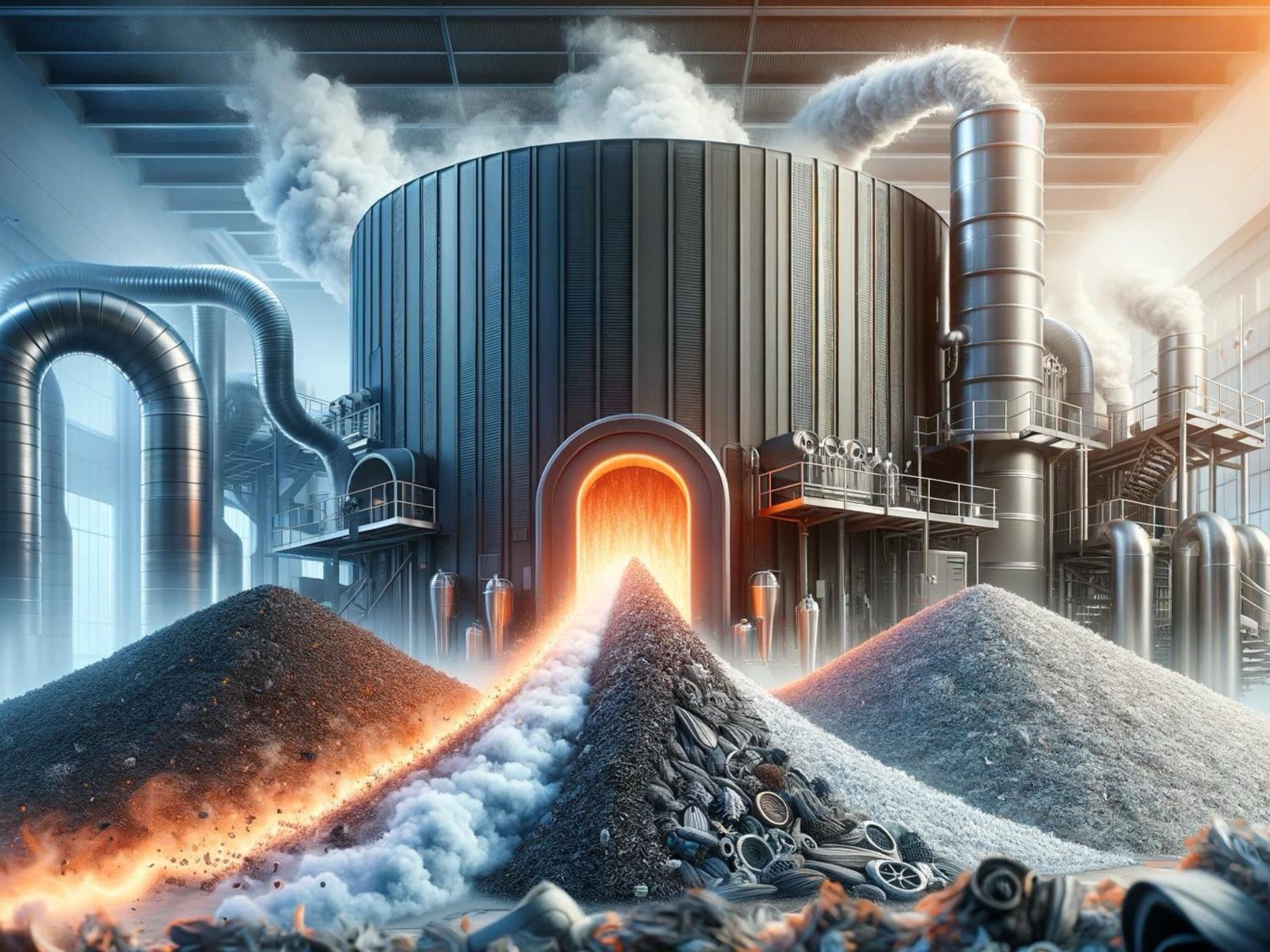
Graça, et al (2024) PyrolysisPyrolysis is a thermochemical process that converts waste biomass into bio-char, bio-oil, and pyro-gas. It offers significant advantages in waste valorization, turning low-value materials into economically valuable resources. Its versatility allows for tailored products based on operational conditions, presenting itself as a cost-effective and efficient More, a recovery solution to reduce landfilling of residual organic waste generated from mixed municipal waste. Environmental Science and Pollution Research. https://doi.org/10.1007/s11356-024-33282-1
Municipal Solid Waste (MSW)Municipal Solid Waste (MSW) is the everyday trash or garbage produced by households and businesses. It includes a variety of materials, such as food scraps, paper, plastics, and yard waste. MSW forms a potential feedstock category for biochar production provided that it should be free More management remains a critical environmental challenge globally. Despite stringent EU regulations aimed at enhancing the separation and recycling of organic waste, a substantial amount continues to be landfilled, leading to significant environmental and economic repercussions. The study focuses on the pyrolysis of biostabilised residual waste (BSRW), specifically the 10-40 mm fraction, which constitutes about 50% of BSRW produced, exploring its viability as a sustainable waste management solution.
Residual organic waste, which includes BSRW, represents a considerable proportion of MSW and is primarily treated through landfilling or incineration. These methods, although common, are fraught with issues such as potential odour release, greenhouse gases, and leachates, which the EU’s Landfill Directive and Waste Framework Directive aim to mitigate by promoting biological treatment before disposal. In contrast, pyrolysis offers a promising alternative by significantly reducing the volume of solid waste and transforming it into valuable by-products like biocharBiochar is a carbon-rich material created from biomass decomposition in low-oxygen conditions. It has important applications in environmental remediation, soil improvement, agriculture, carbon sequestration, energy storage, and sustainable materials, promoting efficiency and reducing waste in various contexts while addressing climate change challenges. More and syngasSyngas, or synthesis gas, is a fuel gas mixture consisting primarily of hydrogen and carbon monoxide. It is produced during gasification and can be used as a fuel source or as a feedstock for producing other chemicals and fuels. More.
The research investigated the potential of pyrolysis performed at 700°C to process BSRW. It demonstrated that pyrolysis could efficiently convert organic waste into hot vapour/gas, potentially making the process energetically self-sustaining. The resultant biochar, comprising 30-50% of the treated BSRW mass (after the removal of non-organic impurities such as glass and metal), holds potential for applications in soil amendmentA soil amendment is any material added to the soil to enhance its physical or chemical properties, improving its suitability for plant growth. Biochar is considered a soil amendment as it can improve soil structure, water retention, nutrient availability, and microbial activity. More and environmental remediation, despite the presence of residual impurities which may limit its use.
Furthermore, the study highlighted the variability in the application and regulatory status of BSRW across Europe. While most countries use BSRW solely for landfill cover, others market it as compost, contributing to circular economy practices. However, upcoming revisions in the EU waste framework could strip BSRW of its “recycled” status, thereby tightening restrictions and possibly increasing the costs associated with its landfilling.
The findings suggest that while pyrolysis of BSRW can reduce landfill dependency, its widespread application is contingent on overcoming challenges related to the impurities in biochar. Overall, the study advocates for the adoption of pyrolysis as a viable and sustainable MSW treatment technology that not only alleviates the burden on landfills but also contributes to resource recovery and environmental conservation.




Leave a Reply