
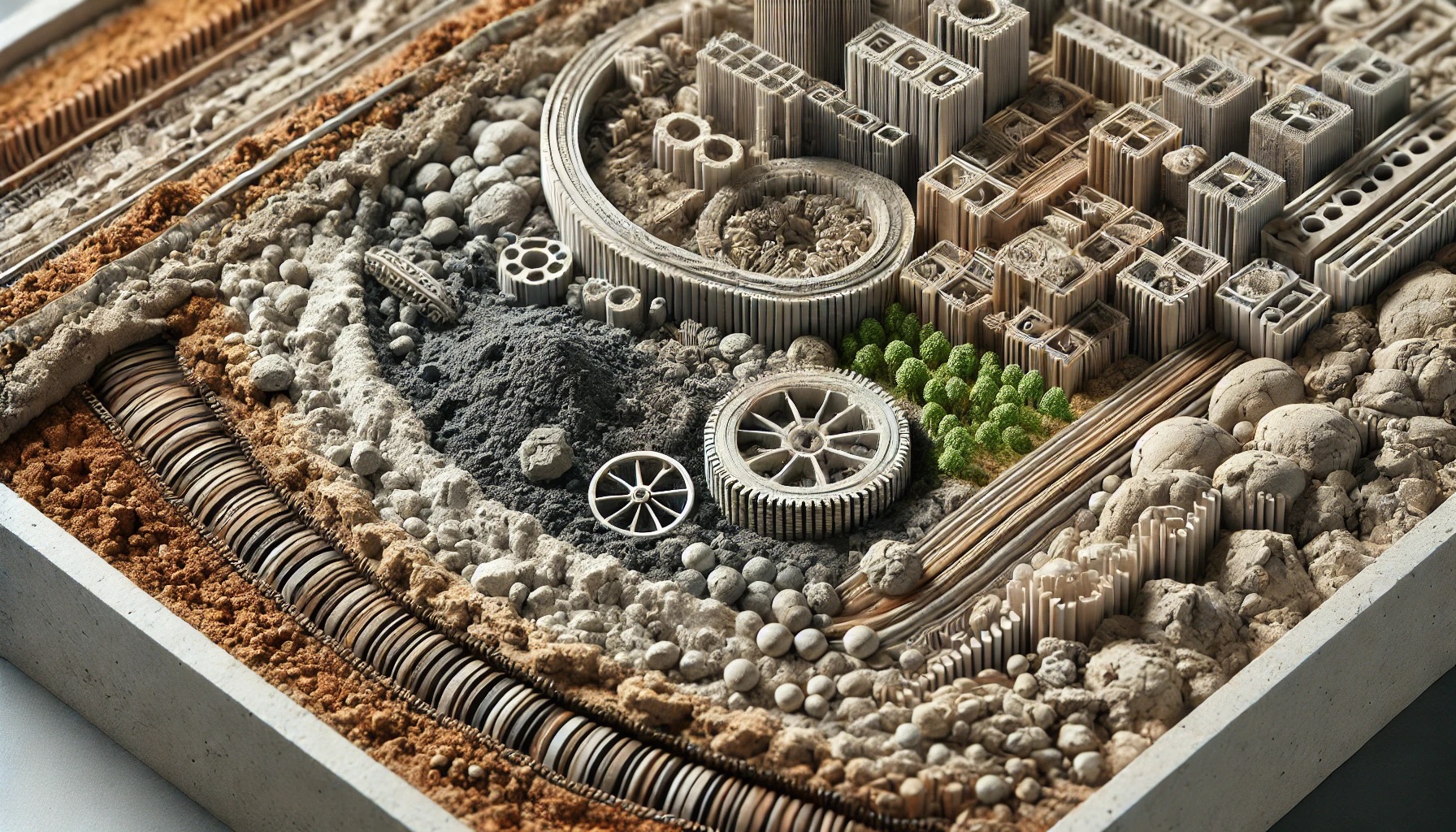
Aura (2024) Development of low-CO2 emission cementitious composites using biocharBiochar is a carbon-rich material created from biomass decomposition in low-oxygen conditions. It has important applications in environmental remediation, soil improvement, agriculture, carbon sequestration, energy storage, and sustainable materials, promoting efficiency and reducing waste in various contexts while addressing climate change challenges. More. Aalto University [Masters Thesis]. https://urn.fi/URN:NBN:fi:aalto-202409086270
Cement production is responsible for 7-8% of global CO2 emissions. In Finland, 90% of cement is used in soil stabilization due to the low shear strength of soft clays, which is crucial for urban development and infrastructure. This study aimed to create a low-emission or CO2-neutral cementitious composite suitable for soil stabilization.
The research focused on three objectives: understanding how binder types affect compressive strength and CO2 absorption, determining the impact of biochar and binder replacement rates, and measuring CO2 sequestration potential through accelerated carbonation curing (ACC).
Researchers combined soft clay soil with standard and low-emission binders, including KC50 (standard), GTC, and CEM III/B (lower CO2 intensity). Biochar from various sources, such as beetle-infested spruce trunks and waste wood, was used as a partial binder replacement. Half of the samples were carbonated with pressurized CO2. After curing for 7 or 28 days, the samples underwent compressive strength testing, pHpH is a measure of how acidic or alkaline a substance is. A pH of 7 is neutral, while lower pH values indicate acidity and higher values indicate alkalinity. Biochars are normally alkaline and can influence soil pH, often increasing it, which can be beneficial More measurement, and thermo-gravimetric analysis (TGA).
The study found that biochar from beetle-infested spruce trunks performed best in terms of strength and CO2 sequestration, especially with ACC treatment. In contrast, GTC and CEM III/B binders weakened under ACC, developing cracks that hindered curing.
A life cycle analysis highlighted that binder emissions were the largest contributor to net emissions, emphasizing the importance of low-carbon binders in reducing the environmental impact of soil stabilization projects.


Leave a Reply