
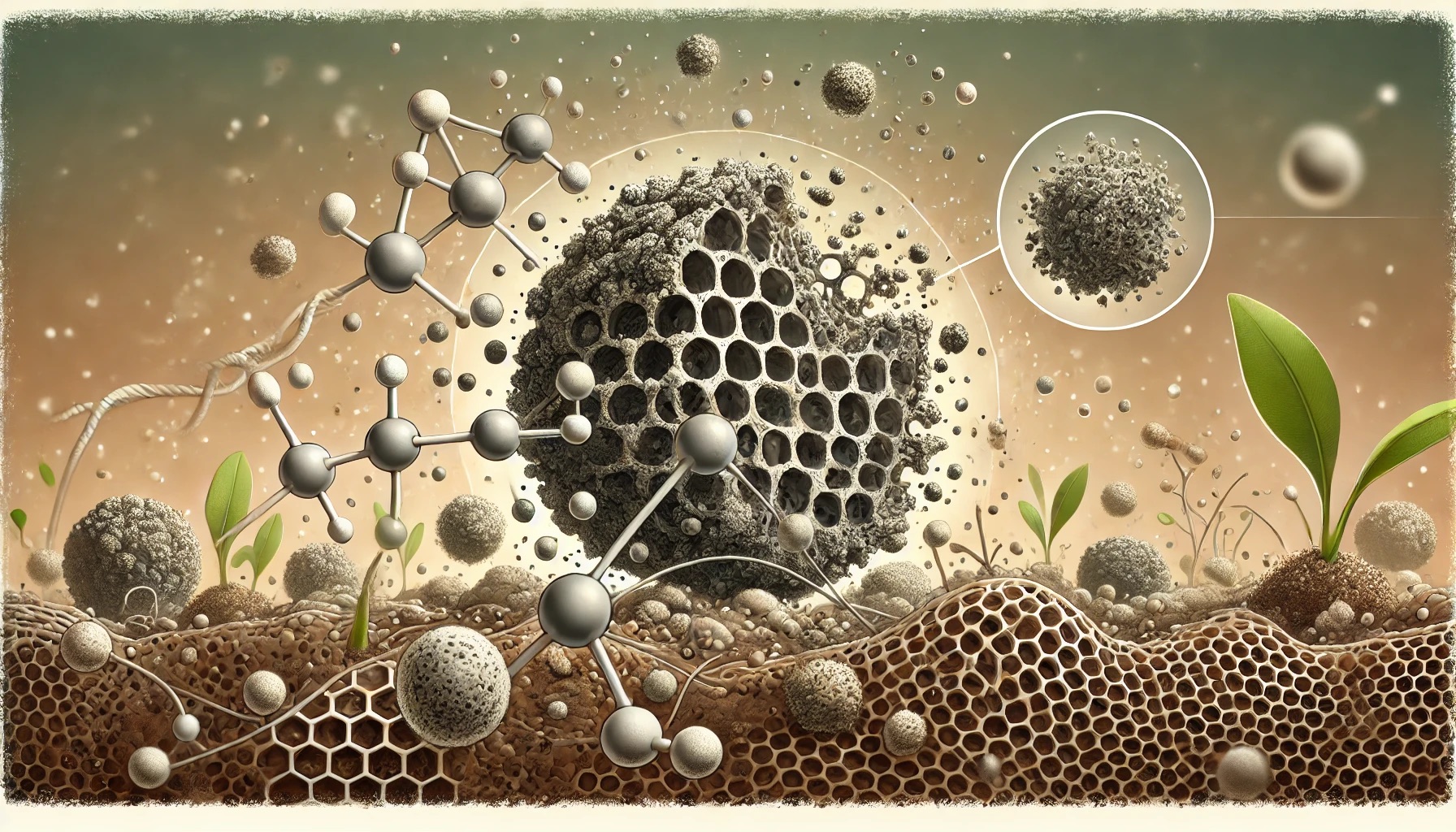
Zeng, et al (2024) Adsorption of extracellular enzymes by biocharBiochar is a carbon-rich material created from biomass decomposition in low-oxygen conditions. It has important applications in environmental remediation, soil improvement, agriculture, carbon sequestration, energy storage, and sustainable materials, promoting efficiency and reducing waste in various contexts while addressing climate change challenges. More: Impacts of enzyme and biochar properties. Geoderma. https://doi.org/10.1016/j.geoderma.2024.117082
Biochar, a carbon-rich material made by pyrolyzing biomassBiomass is a complex biological organic or non-organic solid product derived from living or recently living organism and available naturally. Various types of wastes such as animal manure, waste paper, sludge and many industrial wastes are also treated as biomass because like natural biomass these More, is widely studied for soil health, carbon sequestration, and contaminant mitigation. A recent study examined how biochar interacts with extracellular soil enzymes, critical players in organic matter decomposition. By analyzing various biochars and enzymes, researchers aimed to understand how biochar might impact soil carbon cycling and enzyme mobility.
The study focused on how four enzymes (urease, invertase, α-amylase, and protease) adsorbed to different biochar types made from various feedstocks at temperatures ranging from 300 to 600°C. Results showed that enzyme adsorption depended on the biochar’s surface chemistry and pore structure, and that electrostatic interactions were the primary mechanism behind adsorption. Lower pHpH is a measure of how acidic or alkaline a substance is. A pH of 7 is neutral, while lower pH values indicate acidity and higher values indicate alkalinity. Biochars are normally alkaline and can influence soil pH, often increasing it, which can be beneficial More levels facilitated enzyme adsorption by promoting positive charges on enzyme surfaces, which interact with biochar’s negatively charged groups. However, enzymes adsorbed less at higher pH, due to increased electrostatic repulsion.
Enzyme adsorption also varied across biochar types, with biochars pyrolyzed at higher temperatures generally showing greater adsorption capacity. Moreover, biochar’s oxidation, which mimics environmental aging, tended to increase adsorption capacity by adding more reactive sites but sometimes reduced affinity due to stronger negative charges on biochar surfaces.
The study’s findings suggest biochar’s ability to enhance or inhibit enzyme mobility could depend on its physicochemical properties, potentially altering soil carbon and nutrient dynamics. As interest in biochar as a soil amendmentA soil amendment is any material added to the soil to enhance its physical or chemical properties, improving its suitability for plant growth. Biochar is considered a soil amendment as it can improve soil structure, water retention, nutrient availability, and microbial activity. More grows, this insight could guide its use in promoting sustainable agriculture.





Leave a Reply