
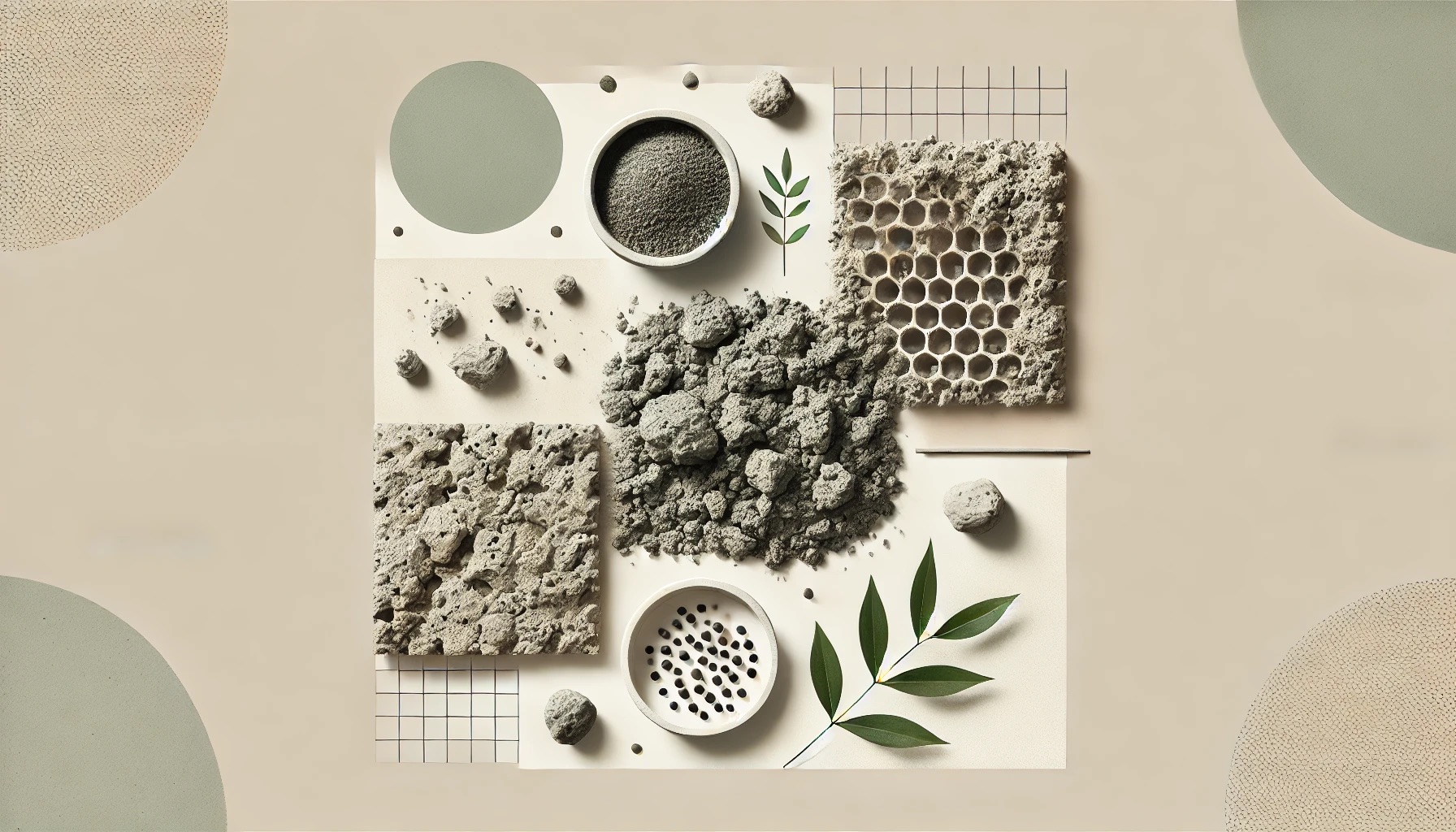
Rupasinghe, et al (2024) Carbon sequestering biocharBiochar is a carbon-rich material created from biomass decomposition in low-oxygen conditions. It has important applications in environmental remediation, soil improvement, agriculture, carbon sequestration, energy storage, and sustainable materials, promoting efficiency and reducing waste in various contexts while addressing climate change challenges. More incorporated cementitious composites: Evaluation of hygrothermal, mechanical and durability characteristics. Cement and Concrete Composites. https://doi.org/10.1016/j.cemconcomp.2024.105864
Recent research has examined the potential of incorporating wood-derived biochar into cement mortar as a partial sand replacement. This approach aims to enhance sustainability by leveraging biochar’s carbon sequestration capabilities and hygrothermal benefits. However, the trade-offs between these advantages and potential performance limitations require careful consideration.
Key Findings:
• Hygrothermal Properties: Replacing sand with 10-15% biochar improved thermal insulation and moisture control. The thermal conductivity was reduced by up to 24%, and water vapor resistance increased by 68%. These attributes make biochar-enhanced mortar suitable for indoor applications, where maintaining stable temperature and humidity is crucial.
• Carbon Sequestration: Biochar significantly enhanced the mortar’s ability to capture and store CO2. Mixes with more than 15% biochar demonstrated over double the carbon uptake compared to traditional mortar.
• Mechanical and Durability Trade-offs: While a 5% biochar mix slightly improved compressive strength, higher concentrations (10-20%) reduced strength and increased porosityPorosity of biochar is a key factor in its effectiveness as a soil amendment and its ability to retain water and nutrients. Biochar’s porosity is influenced by feedstock type and pyrolysis temperature, and it plays a crucial role in microbial activity and overall soil health. Biochar More. Additionally, resistance to sulfate attack declined, and drying shrinkage increased with biochar content above 5%.
Applications:
Biochar-infused mortar is promising for indoor building elements like wall panels and insulation, where its moisture regulation and thermal efficiency outweigh structural concerns. However, its reduced durability may limit its use in harsh external environments.
Conclusion:
Optimal biochar content (10-15%) balances hygrothermal improvements and mechanical performance, offering a sustainable alternative for specific construction applications. Tailoring biochar-mortar composites to their intended use can maximize their benefits while minimizing drawbacks.




Leave a Reply