
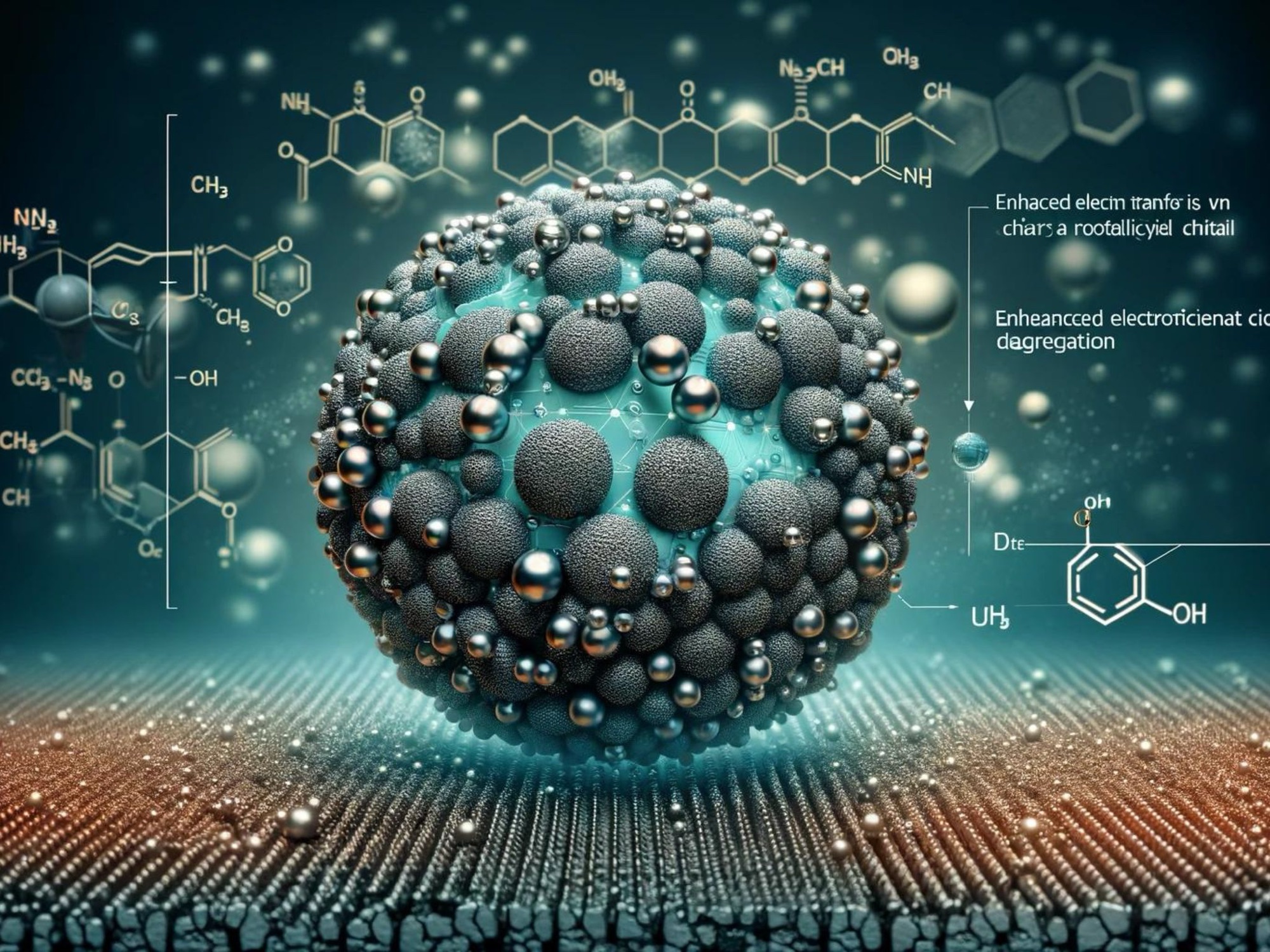

In a recent study published in “Applied Catalysis B: Environment and Energy,” researchers Honghong Lyu, Xin Wang, Pin Li, Ping Yan, and Jingchun Tang developed a new bimetallic catalyst composed of manganese (Mn) and cobalt (Co) on nitrogen-doped biochar (Mn/Co@N-biochar). This catalyst was specifically designed for the efficient degradation of sulfanilamide (SNM), an antibiotic that is notoriously difficult to break down in water systems.
The catalyst demonstrated a degradation rate of 99.3% for SNM, with a mineralization rate of 49.0%. These rates are significantly higher compared to those achieved with traditional biochar. The design of Mn/Co@N-biochar takes advantage of the interaction between the bimetallic sites and the electron-donating capacity of nitrogen-doped biochar, which facilitates improved electron transfer and photocatalytic activity.
Key features of the Mn/Co@N-biochar include the stable dispersion of metal atoms and the formation of electron channels, which are essential for producing active species like hydroxyl and superoxide radicals. These radicals are crucial for the effective breakdown of pollutants.
The study also confirms the stability and potential application of this catalyst in actual water treatment scenarios, highlighting its practicality for environmental remediation. The integration of Mn and Co on nitrogen-doped biochar not only enhances the catalyst’s performance but also promotes a more efficient electron flow, which is vital for its operation.
This advancement represents a step forward in photocatalytic technology, offering a method to tackle antibiotic contamination in water bodies effectively and potentially improving water treatment practices.



Leave a Reply