
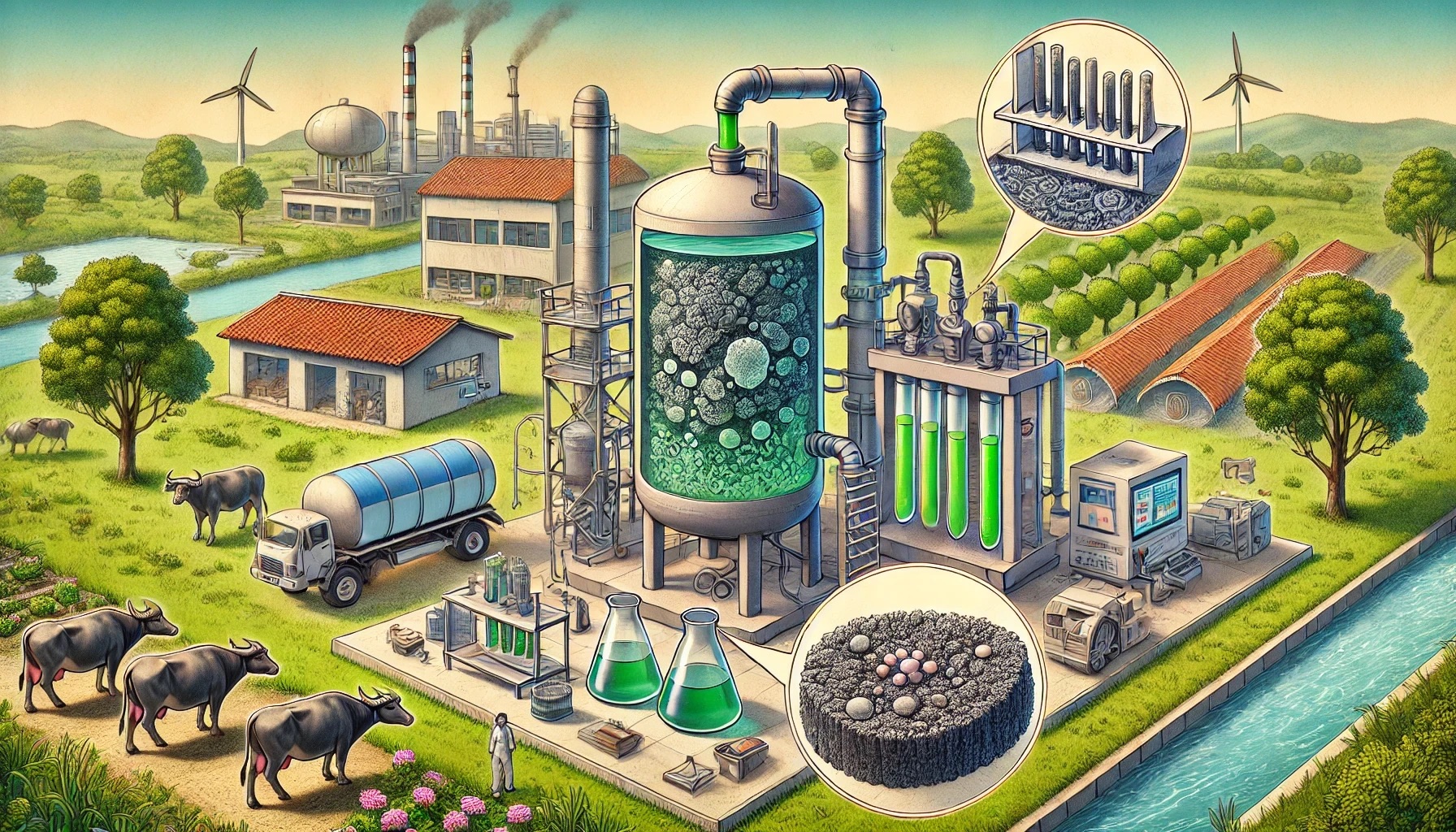
Mohamed, et al (2024) Synergistic effects (adsorption and biodegradation) of Streptomyces hydrogenansimmobilization on nano-reed biocharBiochar is a carbon-rich material created from biomass decomposition in low-oxygen conditions. It has important applications in environmental remediation, soil improvement, agriculture, carbon sequestration, energy storage, and sustainable materials, promoting efficiency and reducing waste in various contexts while addressing climate change challenges. More for further application in upflow anaerobic sludge blanket. RSC Advances. https://doi.org/10.1039/D4RA02864C
Water pollution from wastewater, particularly from organic compounds, is a critical environmental issue. This study explores a sustainable method using Phragmites australis biochar combined with the bacteria Streptomyces hydrogenans to treat wastewater from a buffalo farm. The biochar serves as a substrate for microbial colonization and supports microbial growth, while the immobilized bacteria enhance the degradation of organic matter.
Advanced techniques such as infrared spectroscopy, scanning electron microscopy, X-ray diffraction, and BET analysis were used to characterize the biochar and evaluate its performance. The study used a factorial design to optimize the conditions for maximum efficiency, focusing on biochar dose, buffalo sludge dose, pHpH is a measure of how acidic or alkaline a substance is. A pH of 7 is neutral, while lower pH values indicate acidity and higher values indicate alkalinity. Biochars are normally alkaline and can influence soil pH, often increasing it, which can be beneficial More, and bacteria type.
Results demonstrated a significant improvement in Chemical Oxygen Demand (COD) removal efficiency and biogas production. The optimal conditions—20 g/L biochar, no buffalo sludge, pH 7.5, and Streptomyces hydrogenans—achieved a COD removal efficiency of 92.7% and biogas production of 5.0 mL. The study aligns with the United Nations Sustainable Development Goals 6 (clean water and sanitation) and 12 (responsible consumption and production), indicating its potential for large-scale application in wastewater treatment.
By utilizing locally available materials and environmentally friendly processes, this approach presents a promising solution for improving wastewater treatment and supporting sustainable development.





Leave a Reply