
Yuan, et al (2024) Loading of redox-active metal Fe largely enhances the capacity of biocharBiochar is a carbon-rich material created from biomass decomposition in low-oxygen conditions. It has important applications in environmental remediation, soil improvement, agriculture, carbon sequestration, energy storage, and sustainable materials, promoting efficiency and reducing waste in various contexts while addressing climate change challenges. More to mitigate soil N2O emissions by promoting complete denitrification. Biology and Fertility of Soils. https://doi.org/10.1007/s00374-024-01823-y
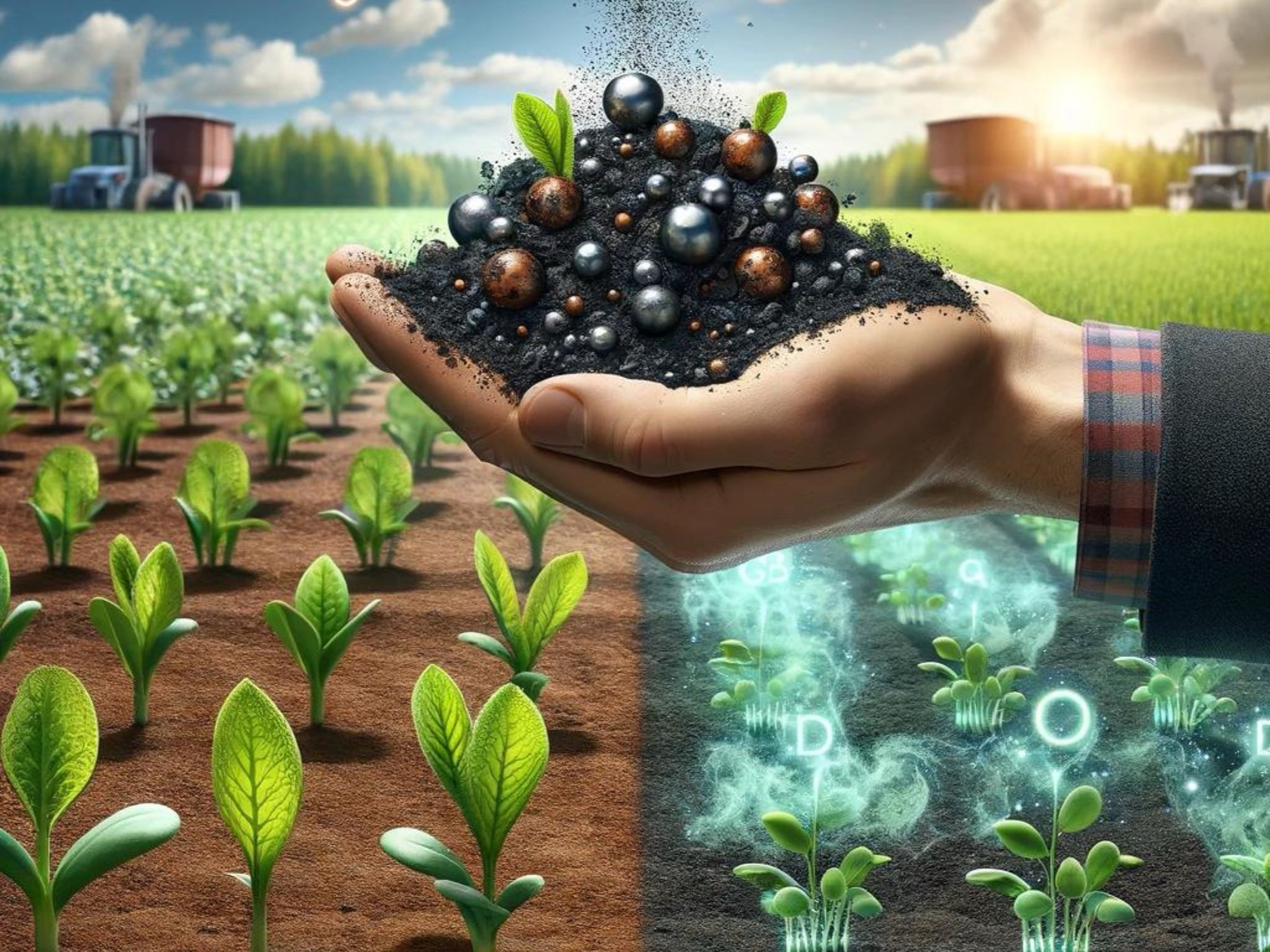
Recent studies have highlighted the environmental significance of mitigating nitrous oxide (N2O) emissions, a potent greenhouse gas and ozone-depleting substance, with a global warming potential significantly higher than CO2. In addressing this issue, research has demonstrated that biochar, a stable form of carbon produced from biomassBiomass is a complex biological organic or non-organic solid product derived from living or recently living organism and available naturally. Various types of wastes such as animal manure, waste paper, sludge and many industrial wastes are also treated as biomass because like natural biomass these More, can effectively reduce N2O emissions from soils through a mechanism known as the “electron shuttle” process. This process involves organic molecules that can reversibly transfer electrons, thus facilitating the conversion of N2O into nitrogen (N2), a benign gas.
This study investigates the potential of enhancing the electron shuttle capability of biochar by incorporating redox-active iron (Fe). The modified biochar demonstrated a remarkable increase in its ability to shuttle electrons, which corresponded with a drastic 92% reduction in soil N2O emissions compared to soils treated with standard biochar. This significant decrease in emissions is attributed to the increased presence of redox-active Fe, which boosts the electron transfer efficiency.
Furthermore, the use of Fe-loaded biochar not only decreased the N2O emissions but also altered the N2O to N2 emission ratio, favoring the formation of environmentally harmless N2. This shift is likely due to the enhanced expression of the nosZ-II gene, which is integral to the denitrification process that converts N2O to N2.
These findings suggest that loading biochar with redox-active materials like Fe is an effective strategy to amplify its function as an electron shuttle. This enhancement could be a critical step forward in the global efforts to mitigate greenhouse gas emissions through advanced soil management techniques. Therefore, the application of Fe-loaded biochar represents a promising, innovative approach to reduce the environmental impact of N2O significantly.



Leave a Reply