
Kopp, et al (2024) Enhancing phosphorus availabilityPhosphorus is another essential nutrient for plant growth, but it can sometimes be locked up in the soil and unavailable to plants. Biochar can help release phosphorus from the soil and make it more accessible to plants, reducing the need for chemical fertilizers. More in biocharBiochar is a carbon-rich material created from biomass decomposition in low-oxygen conditions. It has important applications in environmental remediation, soil improvement, agriculture, carbon sequestration, energy storage, and sustainable materials, promoting efficiency and reducing waste in various contexts while addressing climate change challenges. More: Comparing
sulfuric acid treatment to biological acidification approaches. J. Plant Nutr. Soil Sci. DOI: 10.1002/jpln.202300404
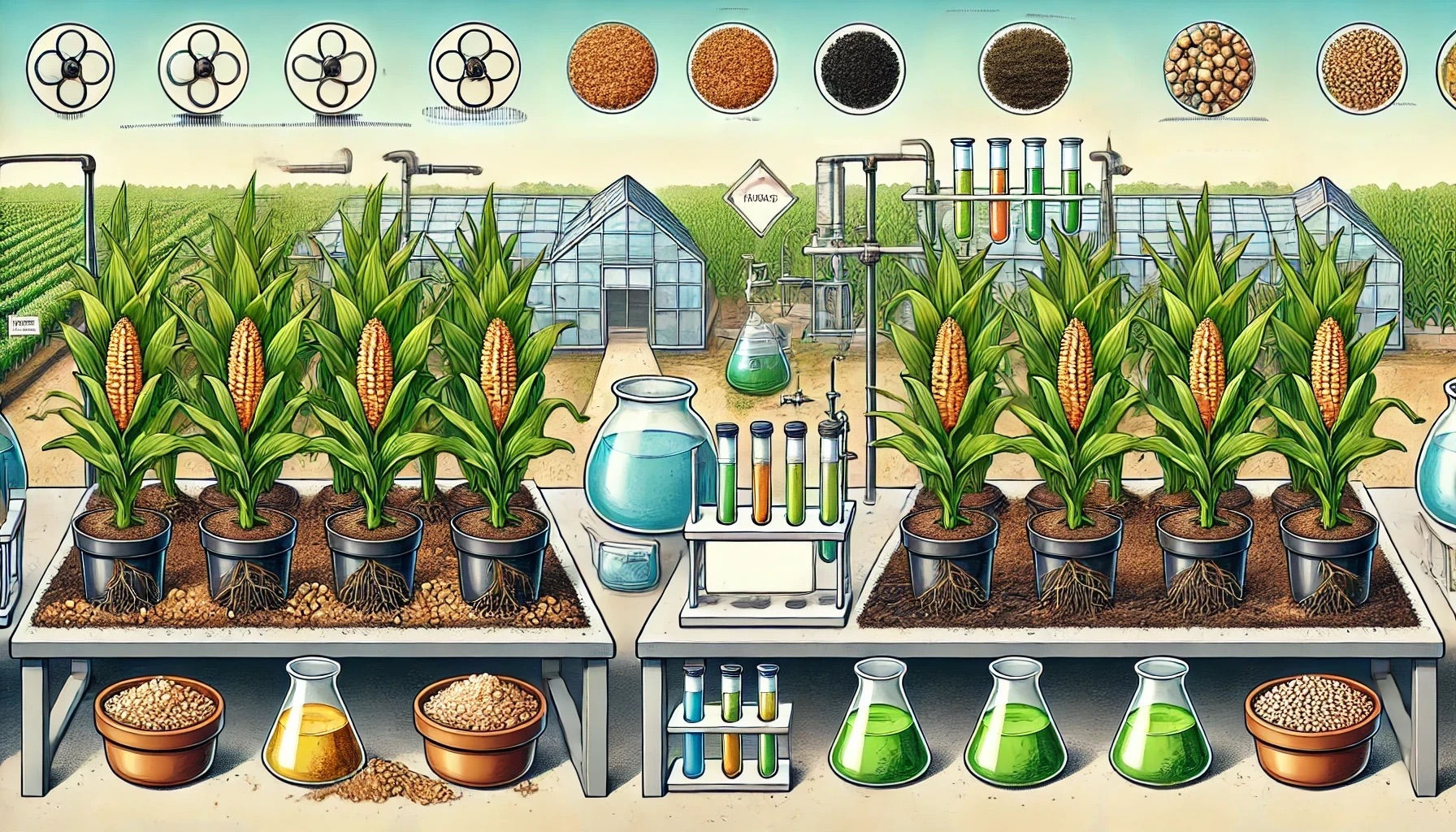
Biochar, a carbon-rich material derived from biomassBiomass is a complex biological organic or non-organic solid product derived from living or recently living organism and available naturally. Various types of wastes such as animal manure, waste paper, sludge and many industrial wastes are also treated as biomass because like natural biomass these More, has garnered attention for its potential to improve soil fertility and sequester carbon. However, the phosphorus (P) present in biochar is often not readily available to plants due to its low solubility. This study, conducted by Clara Kopp and colleagues, explores methods to enhance the P availability in biochar using sulfuric acid (SA) treatment and biological acidification approaches, comparing their effectiveness in a controlled pot experiment with maize.
The researchers used biochars made from meat and bone meal (MB-C) and digestate solids (DS-C), both known for their high P content but low solubility. To enhance P availability, biochars were treated with SA, co-fermented with lactic acid, or applied with a nitrification inhibitor (NI) to reduce rhizosphere pHpH is a measure of how acidic or alkaline a substance is. A pH of 7 is neutral, while lower pH values indicate acidity and higher values indicate alkalinity. Biochars are normally alkaline and can influence soil pH, often increasing it, which can be beneficial More. The study aimed to determine if these treatments could increase plant P uptake compared to untreated biochar.
The results showed that untreated biochars already had significant P fertilizer value, with more than 50% efficiency in replacing mineral fertilizers. However, SA treatment significantly increased P availability, nearly matching the effectiveness of commercial P fertilizers. The SA-treated biochars demonstrated increased water-extractable P and higher P uptake by maize plants, suggesting that acidification with SA is highly effective in enhancing P solubility.
In contrast, bio-acidification through lactic acid fermentation reduced the pH of biochar mixtures but did not significantly increase P uptake by plants. While the bio-acidified biochars had higher water-extractable P than untreated biochars, this did not translate to improved plant growth or P uptake. The study indicated that the application of bio-acidified biochar raised soil pH, potentially counteracting the benefits of increased P solubility. Additionally, the co-application of NIs did not significantly affect rhizosphere pH or P uptake, suggesting that this method was less effective under the conditions tested.
The findings underscore that while untreated biochars can effectively supply P to plants under certain conditions, SA treatment is more reliable in increasing P availability. Biological acidification methods, despite lowering biochar pH, did not achieve the same level of effectiveness as SA treatment. The study highlights the need for further research to optimize bio-acidification processes, including the choice of fermentation substrates and conditions, to achieve better results in enhancing biochar P availability.
This research contributes to the ongoing efforts to develop sustainable agricultural practices by improving the utilization of biochar as a P fertilizer. Enhancing P availability in biochar not only supports plant growth but also promotes P recycling and carbon sequestration, addressing key environmental and agricultural challenges. The study’s insights into the comparative effectiveness of chemical and biological treatments provide valuable guidance for future applications and research in biochar management.


![Eucalyptus Wood Waste-Derived Biochar Achieves a Ninety-Eight Percent Removal Efficiency for Benzo[ghi]perylene in Vehicle-Wash Wastewater](https://biochartoday.com/wp-content/uploads/2026/10/SCIENCE-BLOGS-2026-2026-10-19T160523.703.jpg)

Leave a Reply