
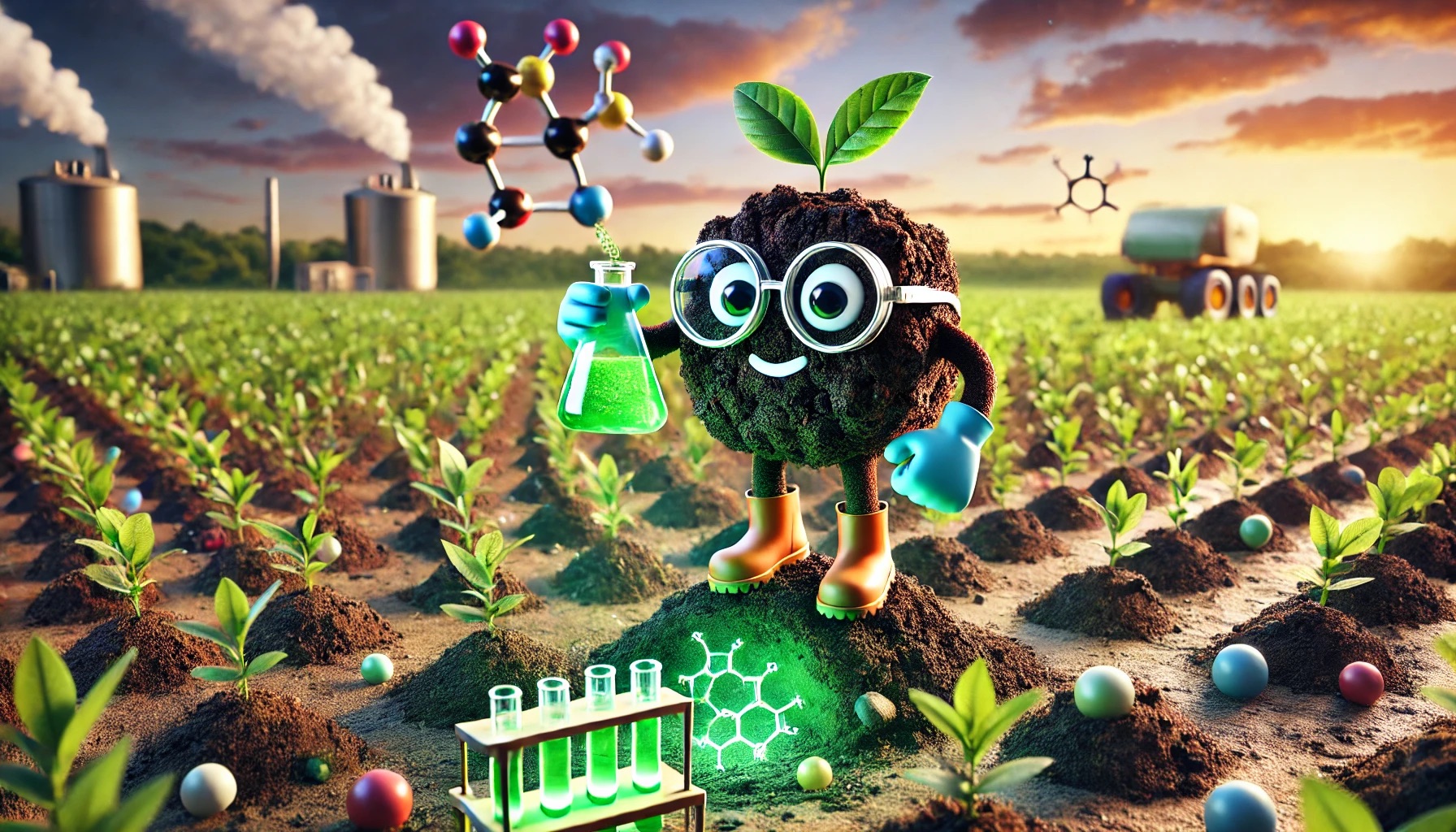

Researchers have discovered that combining biochar (BC) with sulfidated nanoscale zero-valent iron (S-nZVI) significantly enhances the degradation of nitrobenzene (NB) in soil. This study, conducted by Feilong Gao and colleagues, compares the effects of physically mixing BC and S-nZVI (S-nZVI + BC) versus chemically bonding them (S-nZVI@BC).
Biochar’s adsorption capacity plays a crucial role in improving NB degradation. In physical co-application, increasing BC concentration up to 3.5 g/L boosts NB degradation by aiding desorption, allowing better interaction with S-nZVI. However, beyond this concentration, no further improvement is noted, likely due to BC obstructing S-nZVI’s reactive sites.
Chemical co-application (S-nZVI@BC) shows even higher degradation rates, attributed to BC’s additional benefits such as enhanced anti-oxidation, hydrophobicity, electron transfer, and dispersion properties. The research highlights that the water/soil ratio and soil pHpH is a measure of how acidic or alkaline a substance is. A pH of 7 is neutral, while lower pH values indicate acidity and higher values indicate alkalinity. Biochars are normally alkaline and can influence soil pH, often increasing it, which can be beneficial More significantly impact degradation efficiency, with optimal conditions being a water/soil ratio of 3 and a pH of 5.
This study broadens the applicability of biochar in soil remediation, offering an effective method for dealing with NB contamination. The integration of BC not only aids in contaminant desorption but also improves the physicochemical properties of S-nZVI, making it a promising approach for environmental cleanup.




Leave a Reply