

Garcia-Prats, González, & Sánchez (2024) Characterization of biochars of different origin and application to the anaerobic digestion of source-selected organic fraction of municipal solid waste under batch conditions and at different dosages. Frontiers in Chemical Engineering. https://doi.org/10.3389/fceng.2024.1384495
Anaerobic digestion (AD) is a widely used technology for treating organic waste and producing biogas, particularly methane, which is a renewable energy source. However, this process faces several challenges such as low methane yield and process instabilities. This study investigates the use of biocharBiochar is a carbon-rich material created from biomass decomposition in low-oxygen conditions. It has important applications in environmental remediation, soil improvement, agriculture, carbon sequestration, energy storage, and sustainable materials, promoting efficiency and reducing waste in various contexts while addressing climate change challenges. More (BC), a carbon-rich product derived from biomassBiomass is a complex biological organic or non-organic solid product derived from living or recently living organism and available naturally. Various types of wastes such as animal manure, waste paper, sludge and many industrial wastes are also treated as biomass because like natural biomass these More, as an additive to improve AD performance when digesting the organic fraction of municipal solid waste (OFMSW).
Three different types of biochar (BC1, BC2, BC3) were produced and tested in varying doses (1%, 5%, and 10% w/w total solids) to evaluate their effects on methane production. These biochars were characterized using a suite of techniques, including scanning electron microscopy (SEM), gas chromatography (GC), and Fourier transform infrared spectroscopy (FTIR), among others. This characterization confirmed that the properties of biochar significantly depend on both the feedstockFeedstock refers to the raw organic material used to produce biochar. This can include a wide range of materials, such as wood chips, agricultural residues, and animal manure. More used and the production process.
The study findings revealed that BC3 notably increased methane production by up to 30% at a 5% addition rate, enhancing the overall efficiency of the AD process. In contrast, BC1 and BC2 decreased methane production at the lowest addition rate of 1%, highlighting the complexity of biochar’s effects on AD. A two-way ANOVA indicated that both the type and dose of biochar significantly influence methane yields, emphasizing that these factors cannot be considered independently.
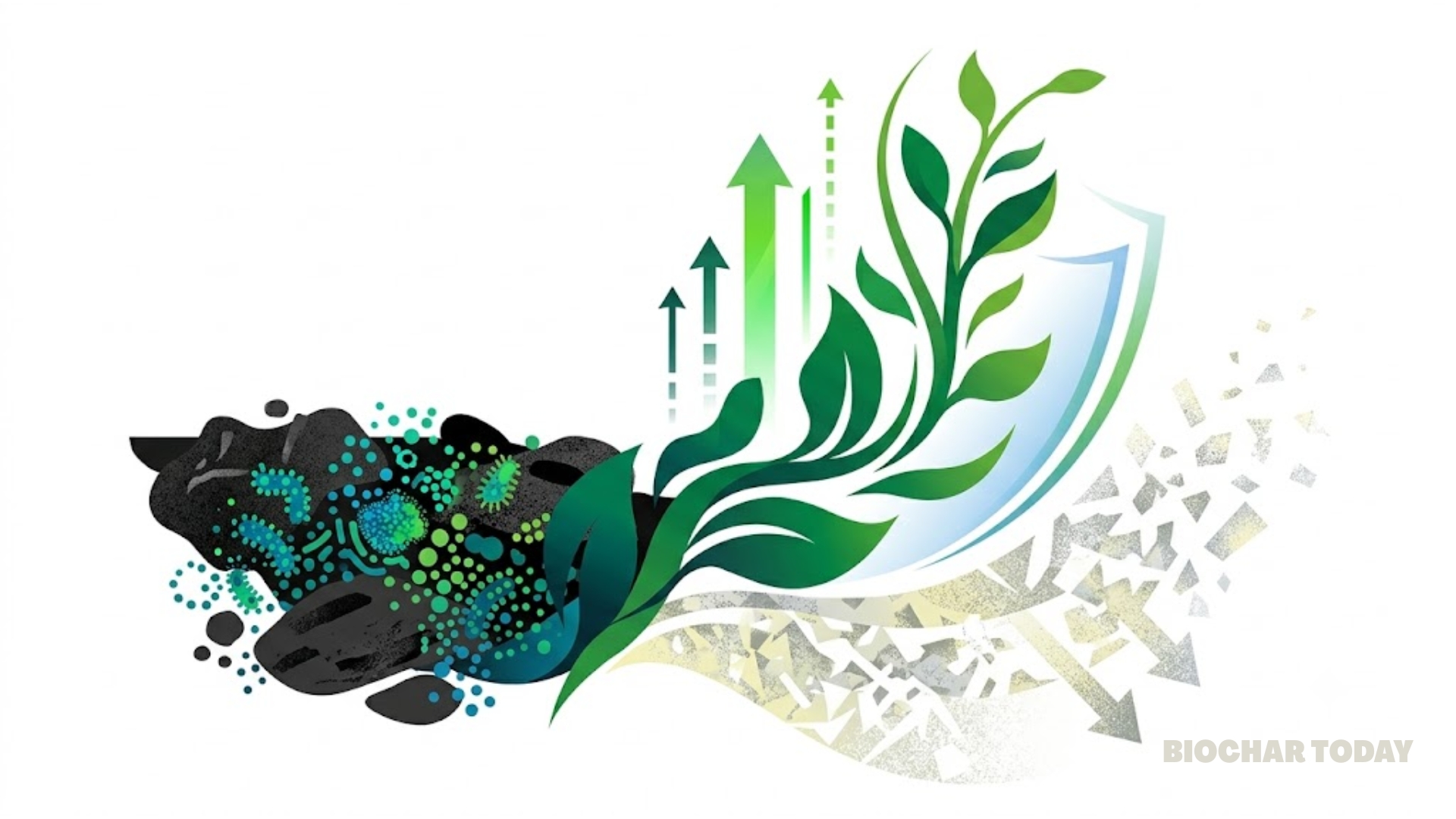
Biochar not only aids in methane production but also improves the buffering capacity of the AD system against pHpH is a measure of how acidic or alkaline a substance is. A pH of 7 is neutral, while lower pH values indicate acidity and higher values indicate alkalinity. Biochars are normally alkaline and can influence soil pH, often increasing it, which can be beneficial More fluctuations and provides a surface for microbial biofilms, which are crucial for stable and efficient digestion. Furthermore, the study discussed the economic aspects of using biochar in AD, suggesting that while the initial costs are higher than traditional additives, the increase in biogas production could make this a viable option financially.
The incorporation of biochar into AD processes could potentially mitigate common operational challenges, enhance biogas quality, and increase methane yield, making it an attractive option for waste management strategies. This study underscores the importance of tailored biochar applications based on specific feedstock and operational conditions to optimize anaerobic digestion processes. Further research is needed to refine the application protocols and confirm the long-term benefits of biochar in AD systems.



Leave a Reply