
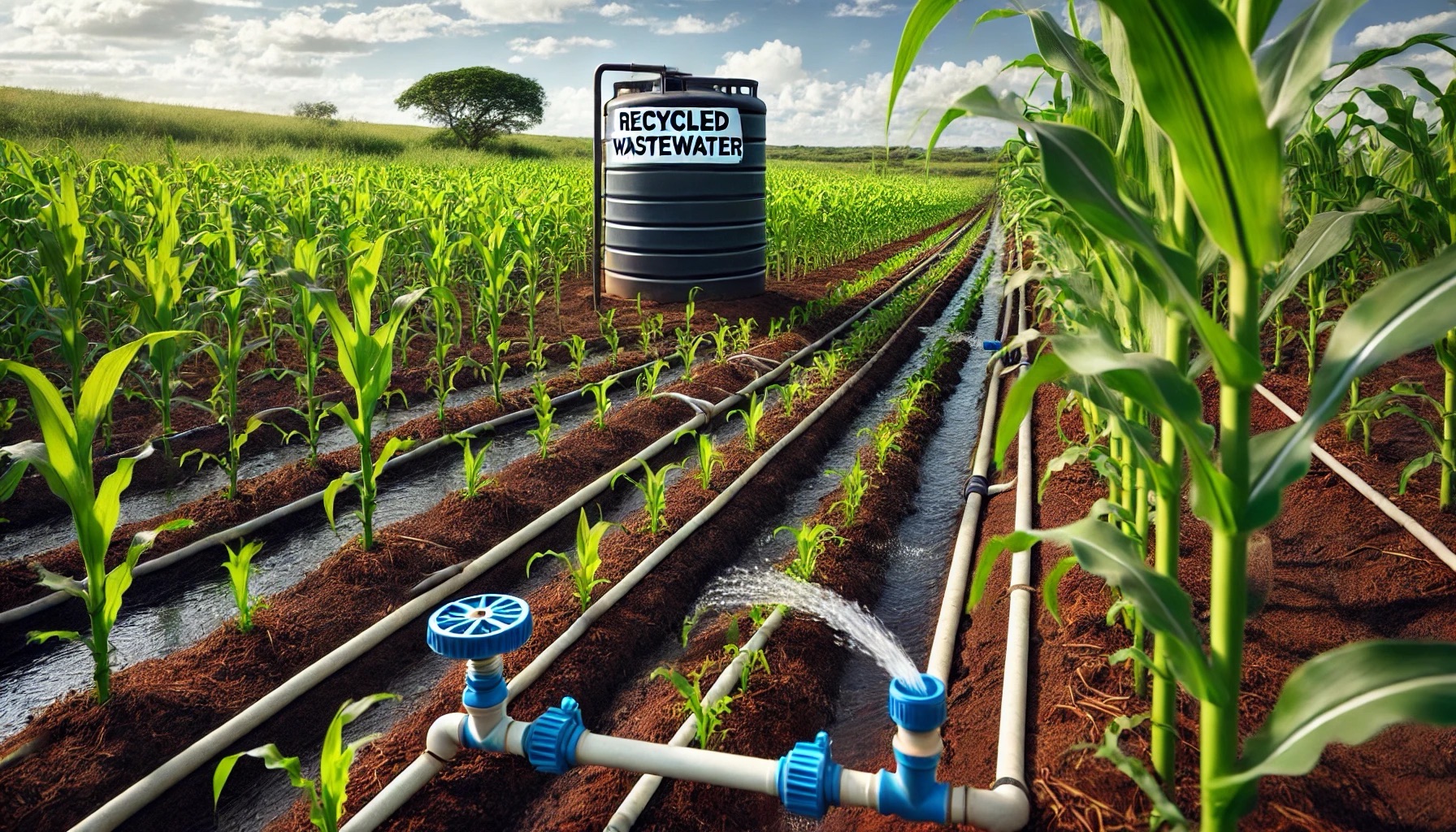
Yerli (2024) Determination of the effects of irrigation with recycled wastewater and biocharBiochar is a carbon-rich material created from biomass decomposition in low-oxygen conditions. It has important applications in environmental remediation, soil improvement, agriculture, carbon sequestration, energy storage, and sustainable materials, promoting efficiency and reducing waste in various contexts while addressing climate change challenges. More treatments on crop and soil properties in maize cultivation. Journal of Water and Climate Change. http://iwaponline.com/jwcc/article-pdf/doi/10.2166/wcc.2024.072/1446413/jwc2024072.pdf
Water scarcity is a pressing global issue, affecting over 25% of the population and 40% of the world’s land area. Agriculture, which consumes 70% of fresh water, is particularly vulnerable, necessitating the search for alternative water sources. One promising solution is the use of recycled wastewater (RWW), which not only serves as an alternative water source but also enriches soil with organic matter and nutrients, reducing the need for chemical fertilizers.
A recent study investigated the combined use of recycled wastewater and biochar in maize cultivation. Conducted over two years, the study examined the impact on crop yield and soil properties under four conditions: fresh water without biochar, fresh water with biochar, recycled wastewater without biochar, and recycled wastewater with biochar.
The study found that biochar and recycled wastewater together enhanced water productivity and irrigation efficiency. Biochar reduced the actual evapotranspiration by up to 4.5%, saving irrigation water by 3.7% and 4.1% in the two experimental years. This is attributed to the spongy and porous structure of biochar, which retains soil moisture and limits evaporation. Consequently, maize irrigated with recycled wastewater and treated with biochar showed a 13.1% to 17.3% increase in biomassBiomass is a complex biological organic or non-organic solid product derived from living or recently living organism and available naturally. Various types of wastes such as animal manure, waste paper, sludge and many industrial wastes are also treated as biomass because like natural biomass these More yield compared to crops irrigated with fresh water without biochar.
Biochar also improved soil properties significantly. The organic matter, total nitrogen, phosphorus, and potassium contents of the soil increased with the application of recycled wastewater and biochar. These enhancements are due to the rich nutrient content of recycled wastewater and the high organic matter in biochar. Furthermore, biochar increased soil porosityPorosity of biochar is a key factor in its effectiveness as a soil amendment and its ability to retain water and nutrients. Biochar’s porosity is influenced by feedstock type and pyrolysis temperature, and it plays a crucial role in microbial activity and overall soil health. Biochar More and aggregate stability, leading to better soil structure and health.
However, the study noted some concerns. The use of recycled wastewater increased soil salinity and the content of heavy metals like cadmium, chromium, and nickel. While biochar helped limit the uptake of these heavy metals by maize, cadmium levels in the crop sometimes exceeded international standards, highlighting the need for careful monitoring.
Despite these risks, the overall benefits of using recycled wastewater and biochar in maize cultivation are substantial. This combination not only boosts crop yield and soil health but also contributes to water conservation. The study concluded that biochar, when used with recycled wastewater, is a viable and sustainable practice for enhancing maize cultivation. However, ongoing monitoring of soil salinity and heavy metal content is crucial to mitigate any potential risks.
In summary, integrating recycled wastewater and biochar in agriculture offers a promising solution to water scarcity and soil degradation. This approach not only improves crop yield and soil fertility but also promotes sustainable water use, making it a valuable strategy for future agricultural practices.




Leave a Reply