
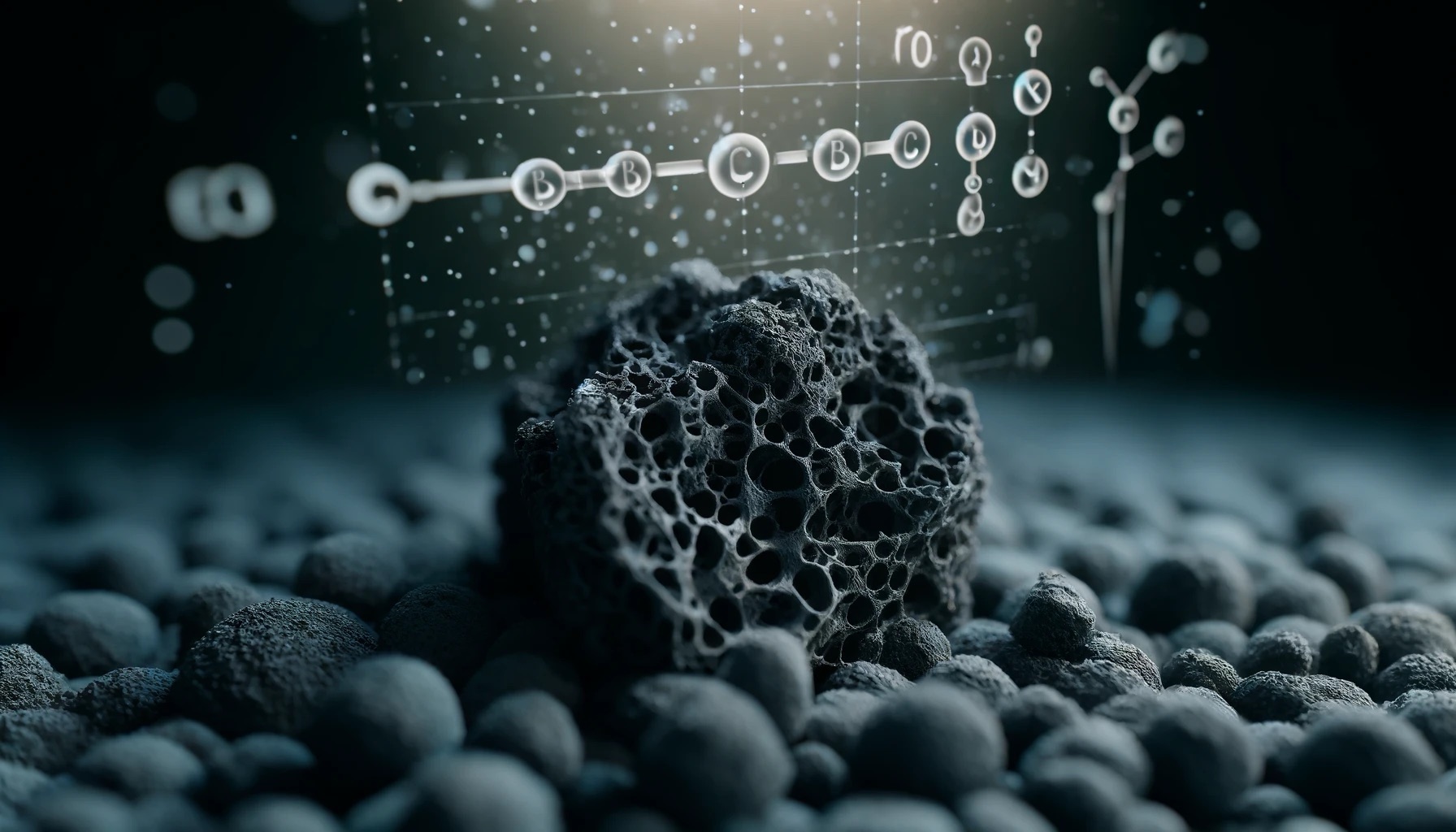
Chen, et al (2024) Enhanced CO2 capture performance of N, S co-doped biocharBiochar is a carbon-rich material created from biomass decomposition in low-oxygen conditions. It has important applications in environmental remediation, soil improvement, agriculture, carbon sequestration, energy storage, and sustainable materials, promoting efficiency and reducing waste in various contexts while addressing climate change challenges. More prepared by microwave pyrolysisPyrolysis is a thermochemical process that converts waste biomass into bio-char, bio-oil, and pyro-gas. It offers significant advantages in waste valorization, turning low-value materials into economically valuable resources. Its versatility allows for tailored products based on operational conditions, presenting itself as a cost-effective and efficient More: Synergistic modulation of microporous structure and functional groups. Fuel. https://doi.org/10.1016/j.fuel.2024.132987
Biochar, a carbon-rich material derived from biomassBiomass is a complex biological organic or non-organic solid product derived from living or recently living organism and available naturally. Various types of wastes such as animal manure, waste paper, sludge and many industrial wastes are also treated as biomass because like natural biomass these More, has become a promising solution for CO2 capture. Researchers from Shenzhen University have developed a novel N, S co-doped biochar using Enteromorpha (a type of algae) as a nitrogen source, combined with sulfur (from Na2S2O3), produced via microwave pyrolysis. This method enhances the material’s pore structure, leading to improved CO2 adsorption performance.
The study highlights that the co-doped biochar achieves up to a 55% increase in CO2 adsorption compared to previous biochar models. This improvement stems from a balanced microporous structure and the presence of functional groups, such as pyridine and oxidized sulfur, which interact with CO2 molecules through van der Waals forces and electron transfer. Microwave pyrolysis, a faster and more efficient process than conventional methods, further enhances the biochar’s porosityPorosity of biochar is a key factor in its effectiveness as a soil amendment and its ability to retain water and nutrients. Biochar’s porosity is influenced by feedstock type and pyrolysis temperature, and it plays a crucial role in microbial activity and overall soil health. Biochar More and surface area.
The optimal sulfur doping ratio was found to be 0.5:1, which maximizes CO2 capture without excessively damaging the microporous structure. The material demonstrated excellent cyclic stability, maintaining 96.89% of its adsorption capacity after 10 cycles. Overall, the study suggests that N, S co-doped biochar could serve as a cost-effective and sustainable material for large-scale CO2 capture, paving the way for further advancements in carbon capture technologies.



Leave a Reply