

Ahmed, et al (2025) Sulfur-functionalized sawdust biocharBiochar is a carbon-rich material created from biomass decomposition in low-oxygen conditions. It has important applications in environmental remediation, soil improvement, agriculture, carbon sequestration, energy storage, and sustainable materials, promoting efficiency and reducing waste in various contexts while addressing climate change challenges. More for enhanced cadmium adsorption and environmental remediation: A multidisciplinary approach and density functional theory insights. Journal of Environmental Management. https://doi.org/10.1016/j.jenvman.2024.123586
Industrial wastewater often contains toxic cadmium (Cd), a heavy metal that poses significant environmental and health risks. Traditional biochar, made from biomassBiomass is a complex biological organic or non-organic solid product derived from living or recently living organism and available naturally. Various types of wastes such as animal manure, waste paper, sludge and many industrial wastes are also treated as biomass because like natural biomass these More such as sawdust, shows promise for Cd adsorption but suffers from limited capacity due to its lack of functional groups and poor pore structure. Researchers have addressed this by chemically modifying sawdust biochar with sulfur-containing compounds to enhance its performance.
The study explored sulfur-doping using compounds like sulfuric acid, sodium sulfide, and sodium thiosulfate, increasing the sulfur content of biochar significantly. Modified biochar achieved 4.8–9 times higher Cd adsorption compared to unmodified versions, with peak capacities ranging from 20.84 to 39.38 mg/g depending on the treatment method. Notably, sulfur modification reduced the time required to reach adsorption equilibrium to just 5–10 minutes.
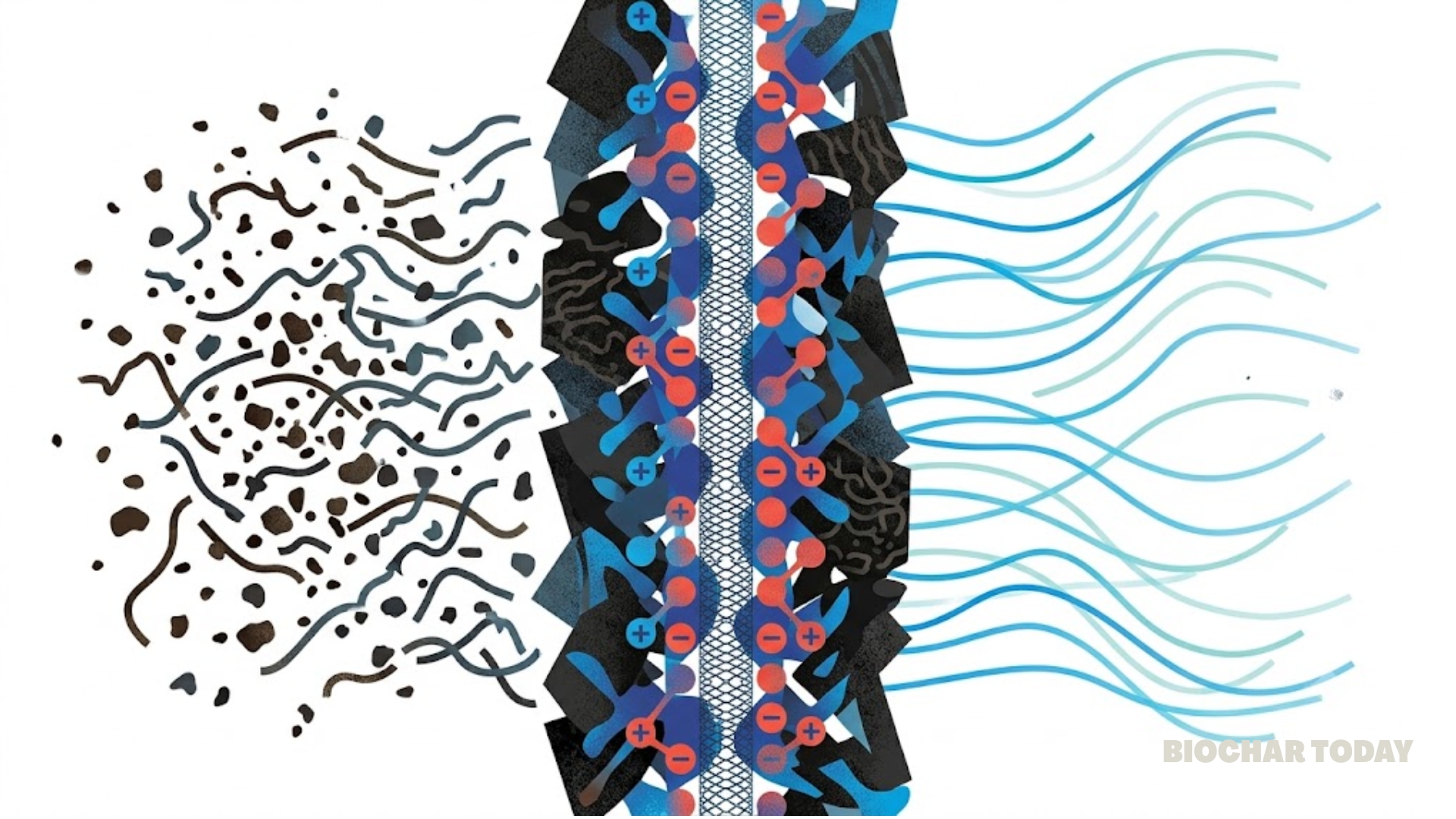
Mechanisms for the improved performance include sulfur-oxygen functional group synergy, which facilitates stronger electrostatic and chemical bonding with Cd ions. Density Functional Theory (DFT) simulations confirmed that sulfur-doping alters electronic properties, enhancing biochar’s reactivity and Cd-binding stability.
This scalable and eco-friendly method transforms sawdust, a common waste material, into a high-value product for water treatment. Beyond Cd, the modified biochar could potentially target other pollutants like mercury and arsenic, supporting sustainable resource use and environmental remediation efforts.
Future research should optimize these modifications and evaluate their effectiveness in real-world wastewater scenarios, contributing to advanced and cost-effective pollution control technologies.




Leave a Reply