
Peng, et al (2024) Mechanistic investigation of Pb2+ adsorption on biocharBiochar is a carbon-rich material created from biomass decomposition in low-oxygen conditions. It has important applications in environmental remediation, soil improvement, agriculture, carbon sequestration, energy storage, and sustainable materials, promoting efficiency and reducing waste in various contexts while addressing climate change challenges. More modified with sodium alginate composite zeolitic imidazolate framework-8. Environmental Science and Pollution Research. https://doi.org/10.1007/s11356-024-33320-y
In the battle against heavy metal pollution, the development of cost-effective, clean, and efficient methods for treatment is crucial. A recent study highlights the promising use of modified biochar in tackling this environmental challenge, specifically for the immobilization of lead (Pb2+) in contaminated water.
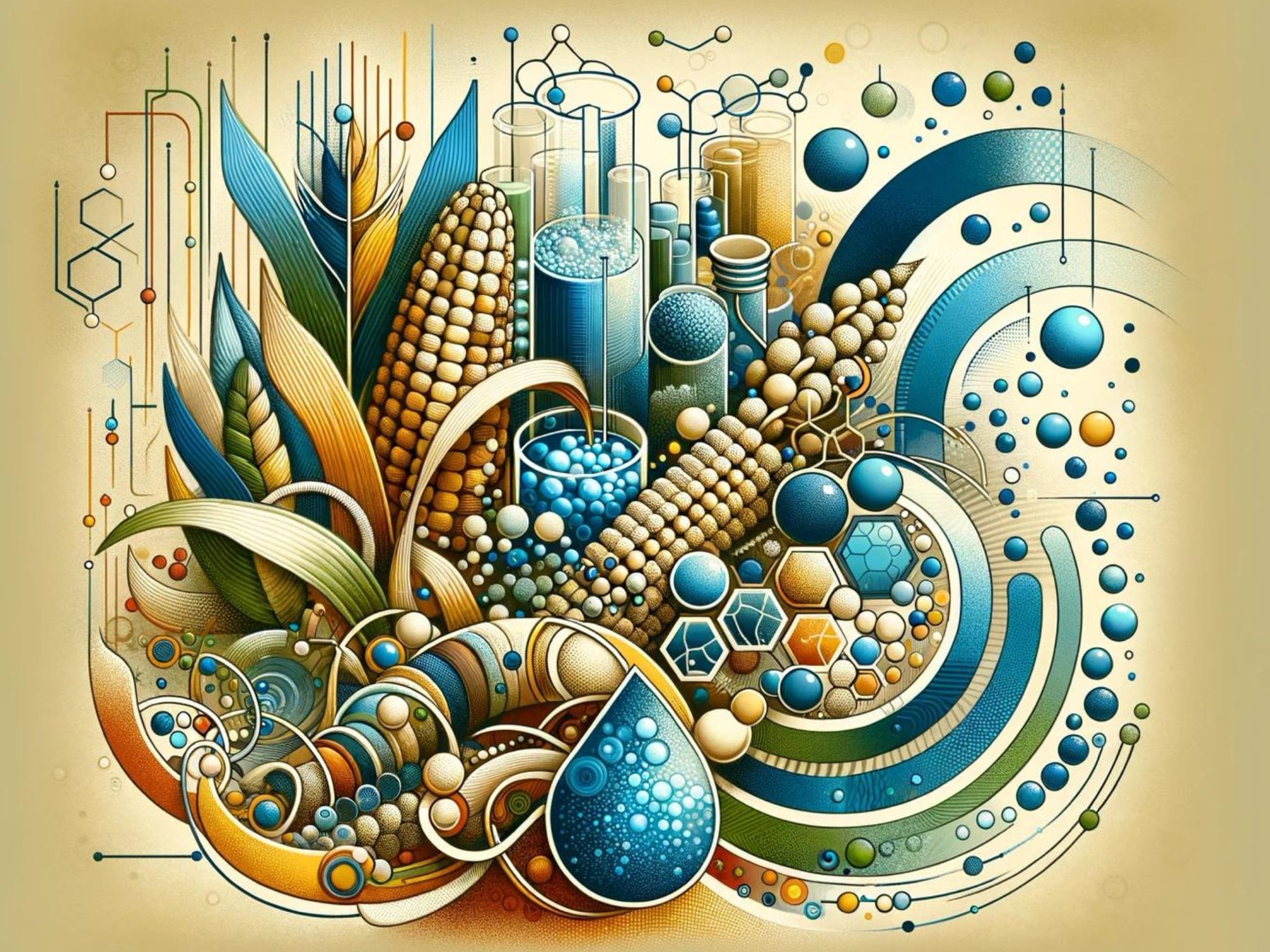
The research focused on a novel biochar composite named SA@ZIF-8/BC, which utilizes sodium alginate (SA) and zeolitic imidazolate framework-8 (ZIF-8) modified corn cob biochar. The modifications significantly enhanced the biochar’s surface area and, consequently, its ability to adsorb lead from solutions. The study revealed that this composite has a superior adsorption capacity—reaching a maximum of 300 mg g−1, which is nearly 2.4 times greater than the unmodified biochar.
Testing showed that the optimal pHpH is a measure of how acidic or alkaline a substance is. A pH of 7 is neutral, while lower pH values indicate acidity and higher values indicate alkalinity. Biochars are normally alkaline and can influence soil pH, often increasing it, which can be beneficial More for lead adsorption using this material is pH 5, where it follows the pseudo-second-order kinetic model and Langmuir isotherm model. This suggests that the adsorption process is primarily chemisorptive and occurs in a monolayer fashion. Further analysis, particularly X-ray photoelectron spectroscopy (XPS), indicated that hydroxyl and carboxyl groups within the biochar play a significant role in the adsorption process, underscoring the chemical interactions involved in lead capture.
This study indicates a significant advancement in biochar technology, offering an economically viable and effective solution for treating lead-polluted water. The findings open up new avenues for using modified biochar in environmental cleanup efforts, providing a sustainable option to address the persistent issue of heavy metal pollution in water bodies.



![Eucalyptus Wood Waste-Derived Biochar Achieves a Ninety-Eight Percent Removal Efficiency for Benzo[ghi]perylene in Vehicle-Wash Wastewater](https://biochartoday.com/wp-content/uploads/2026/10/SCIENCE-BLOGS-2026-2026-10-19T160523.703.jpg)

Leave a Reply