

Activation of peracetic acid by a magnetic biochar-ferrospinel AFe2O4 (A = Cu, Co, or Mn) nanocomposite for the degradation of carbamazepine − A comparative and mechanistic study. Chemical Engineering Journal. https://doi.org/10.1016/j.cej.2024.151932
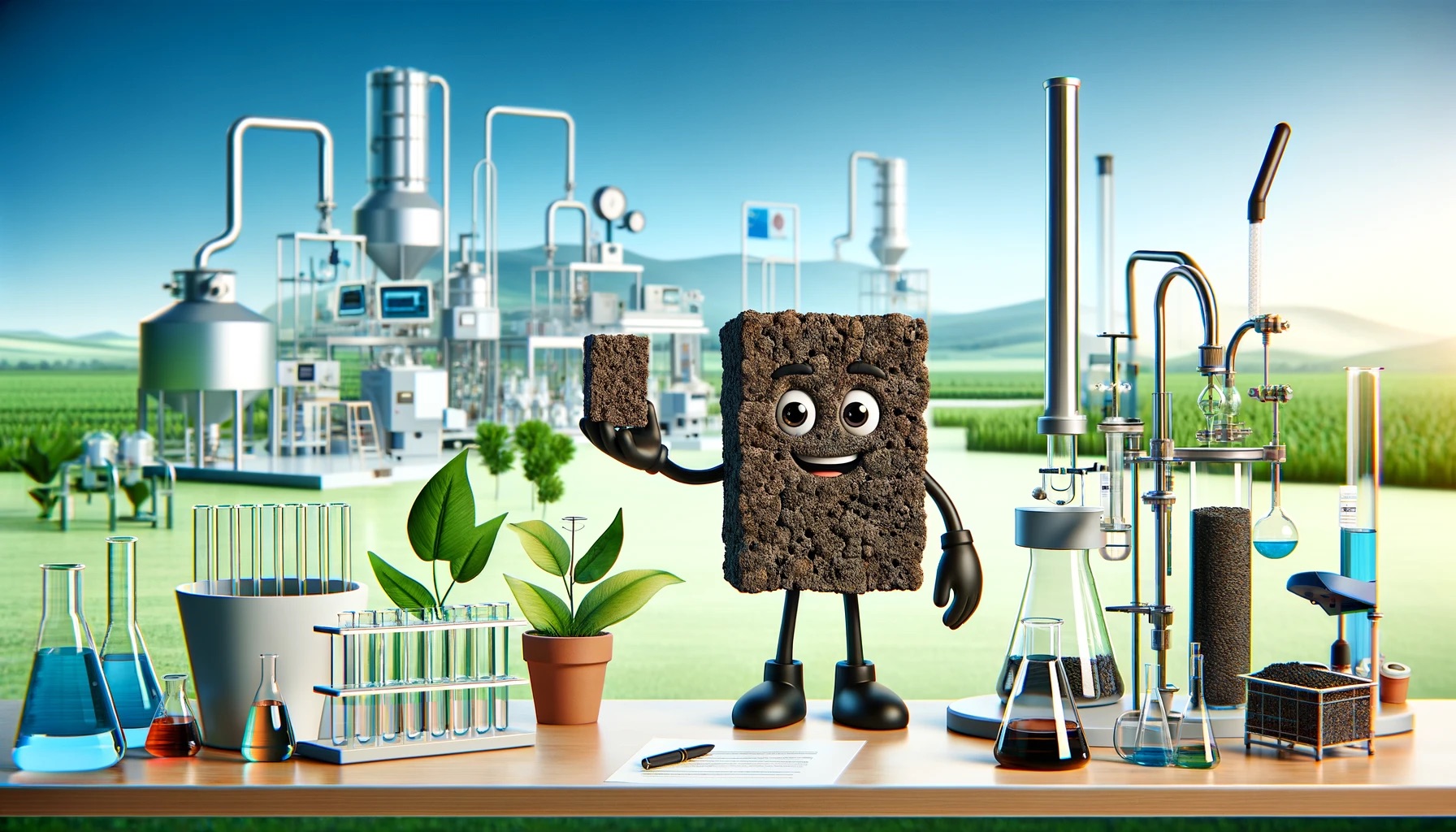
In the recent volume of the Chemical Engineering Journal, a study by Yongtao Xue and colleagues presents an innovative approach for degrading the pharmaceutical contaminant carbamazepine (CBZ) using advanced oxidation processes (AOPs) activated by magnetic biochar-ferrospinel nanocomposites. These nanocomposites (AFe2O4, with A representing Cu, Co, or Mn) were synthesized via a sol–gel/pyrolysis process to enhance the effectiveness of peracetic acid (PAA) in wastewater treatment.
The study found that among the tested nanocomposites, BC-CoFe2O4 exhibited the highest efficiency, achieving complete degradation of CBZ. Optimal conditions were identified as 0.8 mM PAA, 0.3 g/L catalyst, nearly neutral pHpH is a measure of how acidic or alkaline a substance is. A pH of 7 is neutral, while lower pH values indicate acidity and higher values indicate alkalinity. Biochars are normally alkaline and can influence soil pH, often increasing it, which can be beneficial More, and a temperature of 333 K. The mechanistic investigation revealed that CH3C(O)OO radicals are the primary species driving the degradation process, facilitated by the continuous conversion of Co(II) to Co(III).
Notably, the BC-CoFe2O4/PAA system maintained high performance even in the presence of various water matrices, such as humic acid and NaCl, indicating its robustness. This system also demonstrated selective degradation of other pharmaceuticals, including sulfamethoxazole and diclofenac.
The study’s findings underscore the potential of using biochar-supported spinel ferrite nanomaterials to address persistent organic pollutants in wastewater. The magnetic properties of these materials allow for easy separation, and their stability and efficiency make them promising candidates for real-world applications. This research paves the way for further development and scaling of PAA-based AOPs, offering a sustainable solution for enhancing water quality and safeguarding environmental health.
-
advanced oxidation processes, Biochar, carbamazepine, degradation pathways, environmental engineering, magnetic separation, Nanocomposites, peracetic acid, pharmaceutical contaminants, pollution control, radical generation, spinel ferrite, sustainable technology, wastewater treatment, water matrices



Leave a Reply