
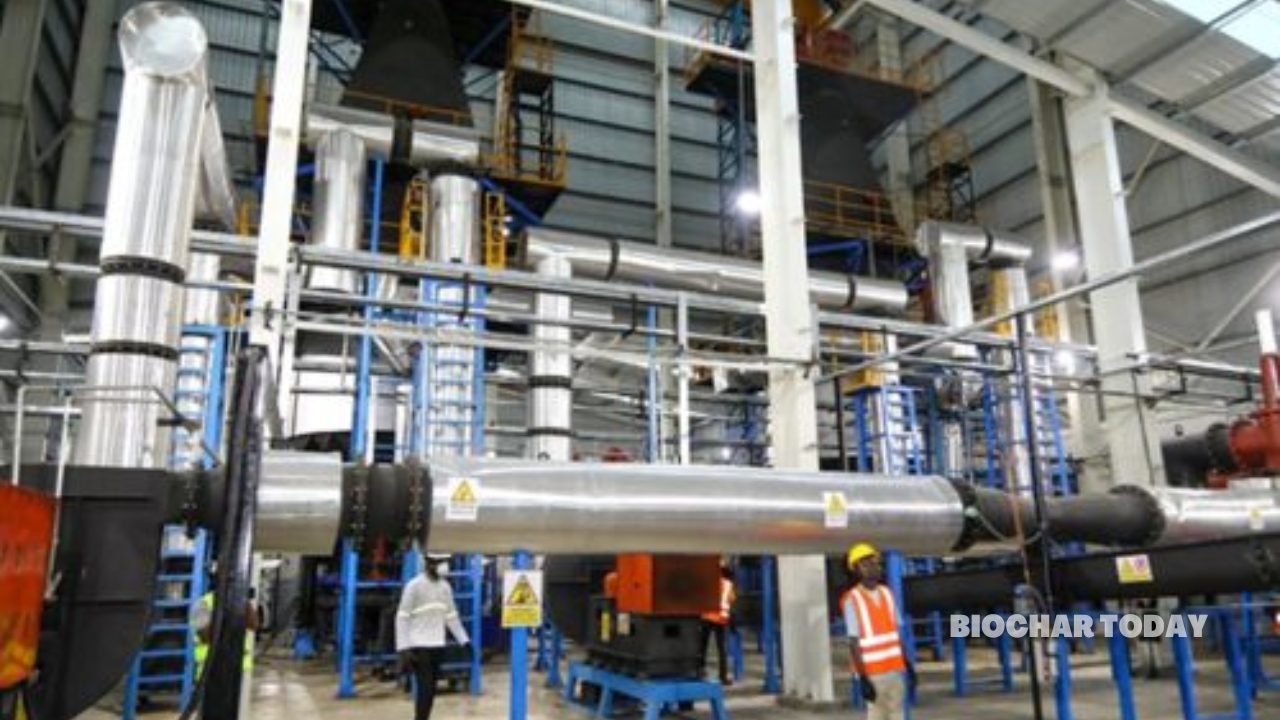
The commercial framework of the West African biomassBiomass is a complex biological organic or non-organic solid product derived from living or recently living organism and available naturally. Various types of wastes such as animal manure, waste paper, sludge and many industrial wastes are also treated as biomass because like natural biomass these More sector is shifting as agricultural processors implement large-scale thermal conversion to stabilize secondary crop residues. According to market data from Ecofin Agency, Singapore-based agribusiness Valency International, in partnership with technology firm Revata Carbon, has formalized this transition by commissioning a commercial-scale production plant in Attinguié, Côte d’Ivoire. The industrial asset utilizes localized processing by-products to manufacture standardized technical inputs for environmental and industrial applications. This development establishes a structured processing network for non-food agricultural outputs, moving domestic value chains beyond the export of primary commodities.
The operational milestone directly addresses structural bottlenecks associated with agricultural waste management and narrow revenue bases in the Ivorian cashew sector. Historically, national processing infrastructure focused exclusively on raw cashew nuts and extracted kernels, leaving vast volumes of dense cashew nut shells underutilized as low-value agricultural waste. This lack of diversification exposes local processors to international commodity price volatility while generating substantial seasonal residue accumulation that requires manual disposal. Furthermore, local agricultural systems face ongoing land degradation from soil erosion and dropping fertility levels, conditions exacerbated by the traditional mismanagement of organic agricultural by-products.
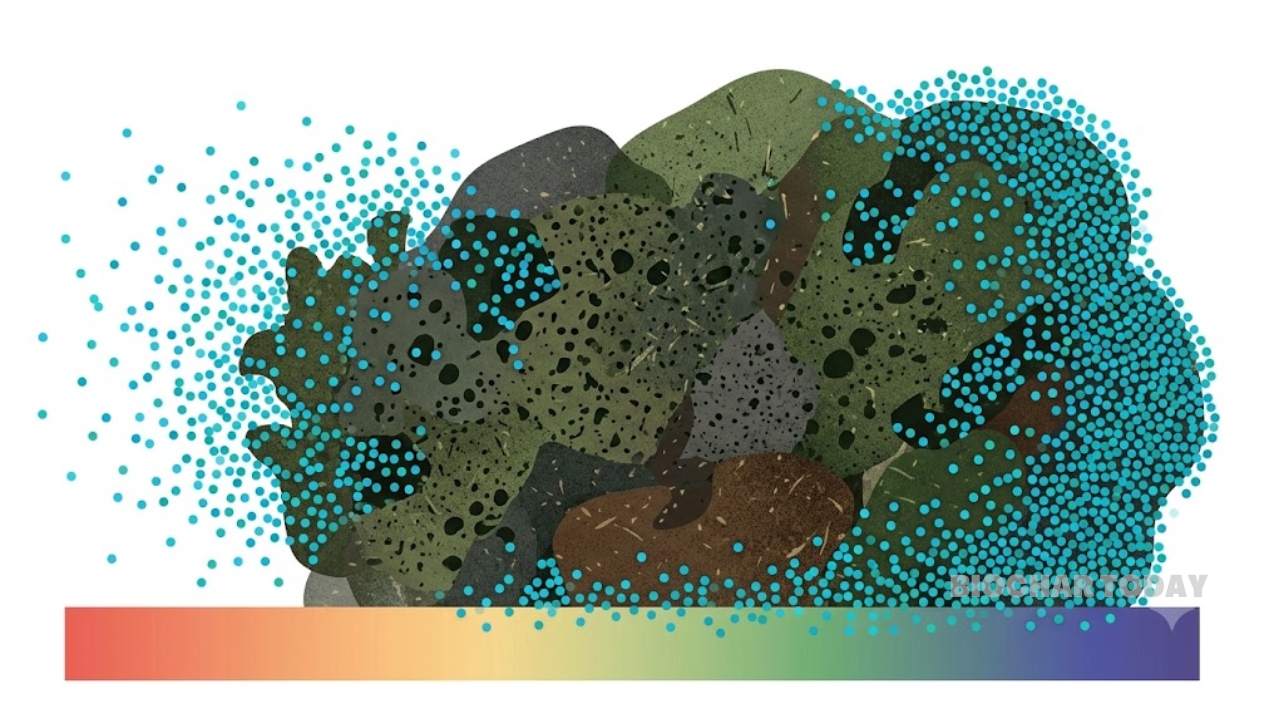
To mitigate these challenges, Valency International and Revata Carbon implemented a dedicated industrial-scale pyrolysisPyrolysis is a thermochemical process that converts waste biomass into bio-char, bio-oil, and pyro-gas. It offers significant advantages in waste valorization, turning low-value materials into economically valuable resources. Its versatility allows for tailored products based on operational conditions, presenting itself as a cost-effective and efficient More facility designed to optimize secondary waste processing. Positioned within the Attinguié industrial zone west of Abidjan, the facility utilizes controlled thermochemical conversion to process up to 20,000 metric tons of raw cashew nut shells annually. The production framework isolates and converts the fibrous feedstockFeedstock refers to the raw organic material used to produce biochar. This can include a wide range of materials, such as wood chips, agricultural residues, and animal manure. More into highly porous, stable carbon matrices without relying on volatile open-air combustion. This industrial infrastructure serves as a technological blueprint for regional biomass management, diverting raw processing waste directly into certified technical manufacturing lines.
The deployment of this processing facility introduces measurable performance metrics to Côte d’Ivoire’s agricultural economy. Initial operating data confirms an annual manufacturing output of 6,000 metric tons of technical-grade material, with corporate expansion plans targeting a scaled capacity of 100,000 metric tons by 2029. The facility provides domestic agricultural systems with a functional soil amendmentA soil amendment is any material added to the soil to enhance its physical or chemical properties, improving its suitability for plant growth. Biochar is considered a soil amendment as it can improve soil structure, water retention, nutrient availability, and microbial activity. More capable of improving water retention and reducing input chemical dependency. Economically, the facility creates a dual-revenue mechanism through localized product distribution and the generation of verified carbon dioxide removal credits, allowing operators to leverage growing global demand within the voluntary carbon market.


Leave a Reply