
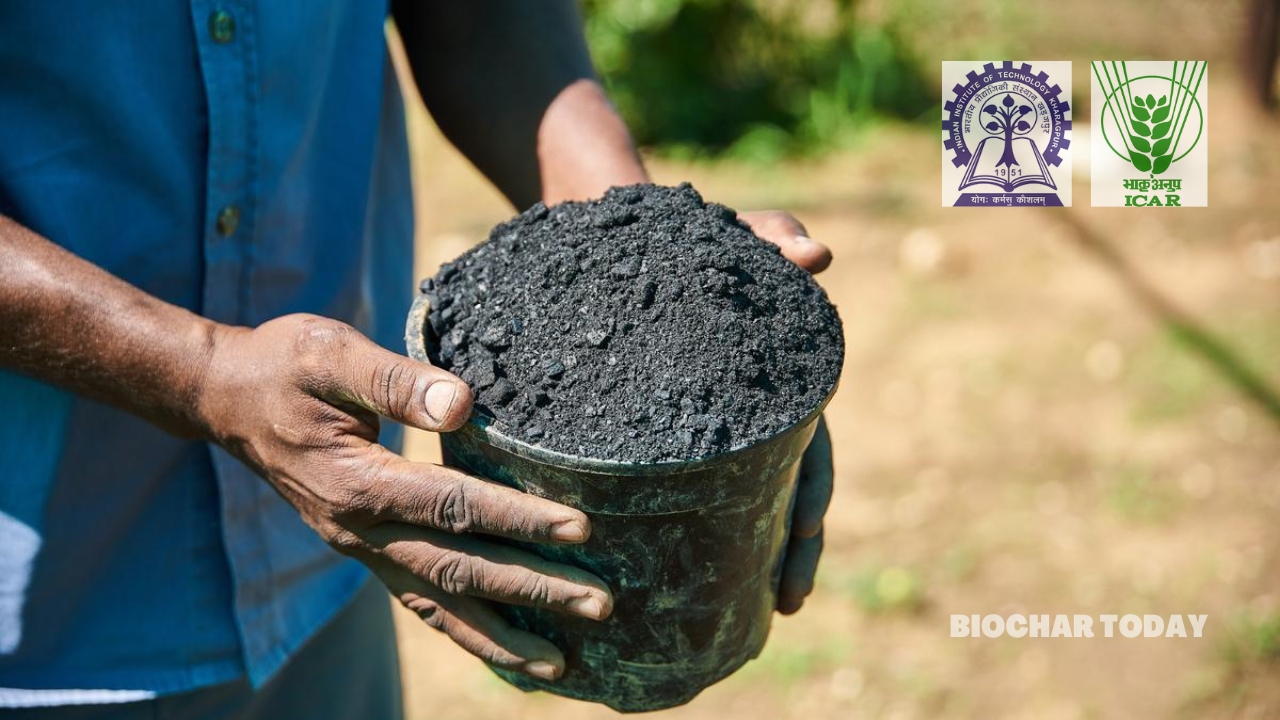
The agricultural sector in India is experiencing a strategic pivot as researchers and public institutions validate the use of pyrolyzed biomassBiomass is a complex biological organic or non-organic solid product derived from living or recently living organism and available naturally. Various types of wastes such as animal manure, waste paper, sludge and many industrial wastes are also treated as biomass because like natural biomass these More to address systemic environmental and soil degradation. According to data published in a recent report by The Hindu, field trials conducted by the Indian Council of Agricultural Research (ICAR) and engineering initiatives from the Indian Institute of Technology Kharagpur (IIT-Kharagpur) demonstrate that converting agricultural waste into stable carbon streams can mitigate regional air pollution while simultaneously restoring degraded farmlands. This systematic utilization of farm residues marks a shift toward closed-loop agricultural practices, aligning domestic soil management with international carbon-neutral mandates.
The primary challenge addressed by these institutions encompasses a dual crisis of atmospheric pollution and severe soil degradation. Nationally, the burning of seasonal crop residues releases an estimated 9 to 10 million tonnes of carbon dioxide equivalents annually, contributing heavily to severe winter smog and localized respiratory hazards. Concurrently, agricultural soils across the subcontinent are suffering from accelerating depletion; black soils in Maharashtra now exhibit organic carbon levels below 0.5%, while red soils in regions like Kerala experience rapid nutrient leachingLeaching is the process where nutrients are dissolved and carried away from the soil by water. This can lead to nutrient depletion and environmental pollution. Biochar can help reduce leaching by improving nutrient retention in the soil. More. This widespread decline in soil organic carbon stocks, estimated by the Food and Agriculture Organization at 0.3% to 0.5% annually, threatens long-term food security and diminishes agricultural climate resilience.
To counter these compounded crises, ICAR and IIT-Kharagpur have advanced scalable pyrolysisPyrolysis is a thermochemical process that converts waste biomass into bio-char, bio-oil, and pyro-gas. It offers significant advantages in waste valorization, turning low-value materials into economically valuable resources. Its versatility allows for tailored products based on operational conditions, presenting itself as a cost-effective and efficient More technologies and field-testing frameworks designed for immediate rural deployment. Engineers at IIT-Kharagpur developed the specialized KISAN kiln, a decentralized technological solution designed to enable smallholder farmers to process localized agricultural waste under low-oxygen conditions efficiently. ICAR sustained extensive field trials utilizing diverse feedstocks, including maize stalks in Maharashtra and coconut leaf stalks in Kerala, to establish optimized, localized application standards. This decentralized production framework effectively diverts raw biomass from open-air combustion into controlled thermal conversion, producing a highly porous, stable carbon matrix suitable for direct soil amendmentA soil amendment is any material added to the soil to enhance its physical or chemical properties, improving its suitability for plant growth. Biochar is considered a soil amendment as it can improve soil structure, water retention, nutrient availability, and microbial activity. More.
The quantified outcomes of these structural interventions demonstrate substantial improvements across both ecological and economic metrics. ICAR field trials confirm that application of the resulting material enhances soil water-holding capacity by 10% to 25% and boosts overall crop productivity by 10% to 30%, notably within highly nutrient-deficient soils. Furthermore, the material qualifies as a persistent carbon dioxide removal technology under international VM0042 accounting methodologies. By generating an estimated 2 to 2.8 tonnes of carbon dioxide equivalent credits per tonne of output, the deployment of systems like the KISAN kiln allows smallholders to access international carbon registries, potentially yielding an additional 3,000 to 5,000 rupees per tonne of waste at standard market valuations.





Leave a Reply