
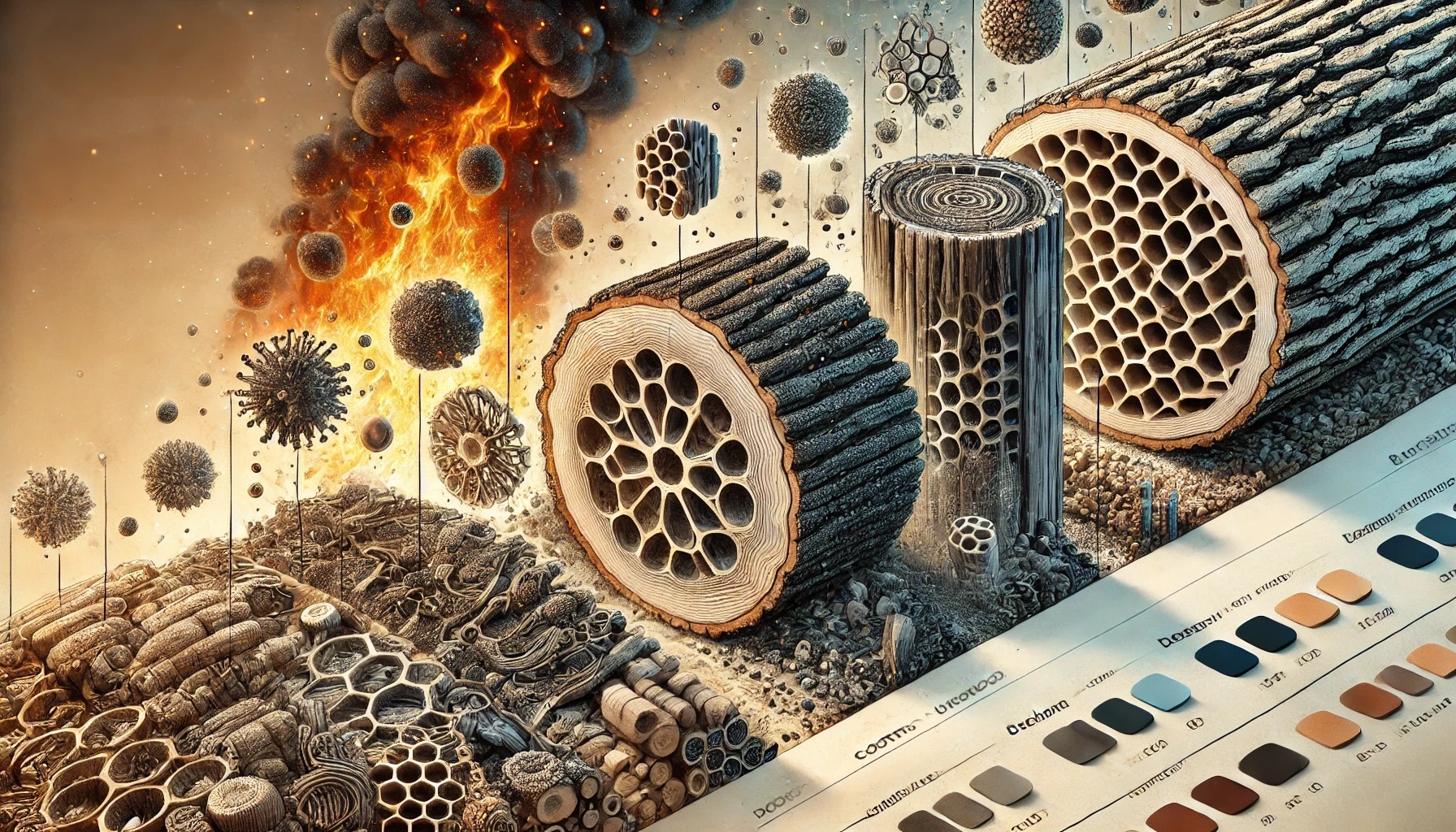
Muretta, et al (2024) Effects of lignin syringyl to guaiacyl ratio on cottonwood biocharBiochar is a carbon-rich material created from biomass decomposition in low-oxygen conditions. It has important applications in environmental remediation, soil improvement, agriculture, carbon sequestration, energy storage, and sustainable materials, promoting efficiency and reducing waste in various contexts while addressing climate change challenges. More adsorbent properties and performance. Scientific Reports. https://doi.org/10.1038/s41598-024-70186-z
The study investigates the impact of lignin composition, specifically the syringyl to guaiacyl (S/G) ratio, on the properties of biochar produced from Populus trichocarpa (cottonwood). Two genetic variants of cottonwood, with S/G ratios of 1.67 and 3.88, were pyrolyzed at 700°C to assess differences in biochar yield and adsorptive performance.
Results showed that the S/G ratio significantly influenced biochar properties, particularly specific surface area and oxygen content. The biochar with a lower S/G ratio (1.67) exhibited an 11% increase in surface area, while biochar with a higher S/G ratio (3.88) had enhanced oxygen content. These differences were especially pronounced in demineralized biochar samples, where water leachingLeaching is the process where nutrients are dissolved and carried away from the soil by water. This can lead to nutrient depletion and environmental pollution. Biochar can help reduce leaching by improving nutrient retention in the soil. More was used to reduce naturally occurring potassium, an element known to influence pyrolysisPyrolysis is a thermochemical process that converts waste biomass into bio-char, bio-oil, and pyro-gas. It offers significant advantages in waste valorization, turning low-value materials into economically valuable resources. Its versatility allows for tailored products based on operational conditions, presenting itself as a cost-effective and efficient More reactions.
Ammonia adsorption performance, a key measure of biochar’s practical utility, was tested through breakthrough analysis. Biochars with an S/G ratio of 3.88 had longer breakthrough times, suggesting that oxygenated surface groups, rather than surface area alone, drive adsorption efficiency. In comparison, biochar outperformed a commercial activated carbonActivated carbon is a form of carbon that has been processed to create a vast network of tiny pores, increasing its surface area significantly. This extensive surface area makes activated carbon exceptionally effective at trapping and holding impurities, like a molecular sponge. It is commonly More reference in ammonia adsorption.
Overall, this research highlights the importance of lignin composition in determining biochar characteristics and suggests that optimizing the S/G ratio could improve biochar’s adsorptive performance for applications like pollution control and carbon sequestration.



Leave a Reply