
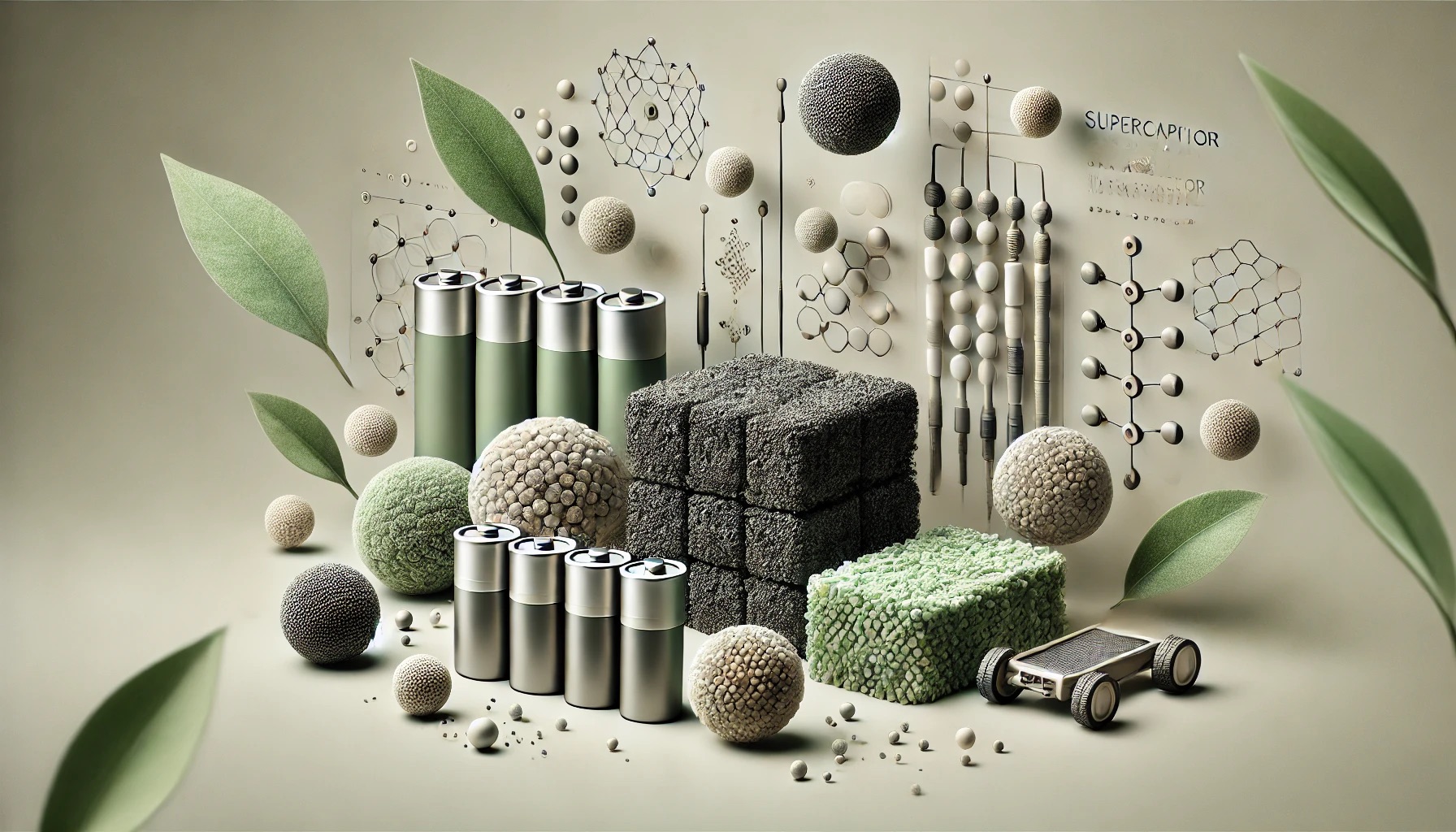
Salimi, et al (2024) Customizing BiocharBiochar is a carbon-rich material created from biomass decomposition in low-oxygen conditions. It has important applications in environmental remediation, soil improvement, agriculture, carbon sequestration, energy storage, and sustainable materials, promoting efficiency and reducing waste in various contexts while addressing climate change challenges. More Formulations: Enabling Sustainable and High-Performance Electrochemical Energy Storage Devices. ACS Sustainable Resource Management. https://doi.org/10.1021/acssusresmgt.4c00359
Researchers Salimi et al. explore how biochar, a carbon-rich material derived from biomassBiomass is a complex biological organic or non-organic solid product derived from living or recently living organism and available naturally. Various types of wastes such as animal manure, waste paper, sludge and many industrial wastes are also treated as biomass because like natural biomass these More, can be optimized for use in electrochemical energy storage devices, such as batteries and supercapacitors. As energy systems shift towards renewables, biochar offers a sustainable, versatile material option, with a high surface area and favorable conductivity properties critical for efficient energy storage.
The study outlines five key strategies for enhancing biochar’s performance in energy storage. These include region-specific biomass sourcing, cost-effective production techniques like optimized pyrolysisPyrolysis is a thermochemical process that converts waste biomass into bio-char, bio-oil, and pyro-gas. It offers significant advantages in waste valorization, turning low-value materials into economically valuable resources. Its versatility allows for tailored products based on operational conditions, presenting itself as a cost-effective and efficient More, sustainable electrode design, tailored biochar formulations, and comprehensive life cycle and techno-economic assessments. By adjusting biochar’s surface chemistry and structure, researchers can target specific storage devices, maximizing properties like conductivity and porosityPorosity of biochar is a key factor in its effectiveness as a soil amendment and its ability to retain water and nutrients. Biochar’s porosity is influenced by feedstock type and pyrolysis temperature, and it plays a crucial role in microbial activity and overall soil health. Biochar More.
Biochar’s role varies across energy storage technologies. For lithium-ion and sodium-ion batteries, carbon-based biochar facilitates efficient lithium cycling at the anode. In supercapacitors, biochar’s porous structure enables rapid charge and discharge, supporting high-power applications. Researchers also explore novel uses, like incorporating biochar into next-gen batteries that exclude rare metals.
Overcoming challenges in biochar consistency and production costs is essential for wider adoption. Salimi et al. emphasize that interdisciplinary collaboration can bridge the gap between laboratory innovations and market-ready biochar solutions, driving sustainable energy systems while utilizing waste biomass effectively.




Leave a Reply