
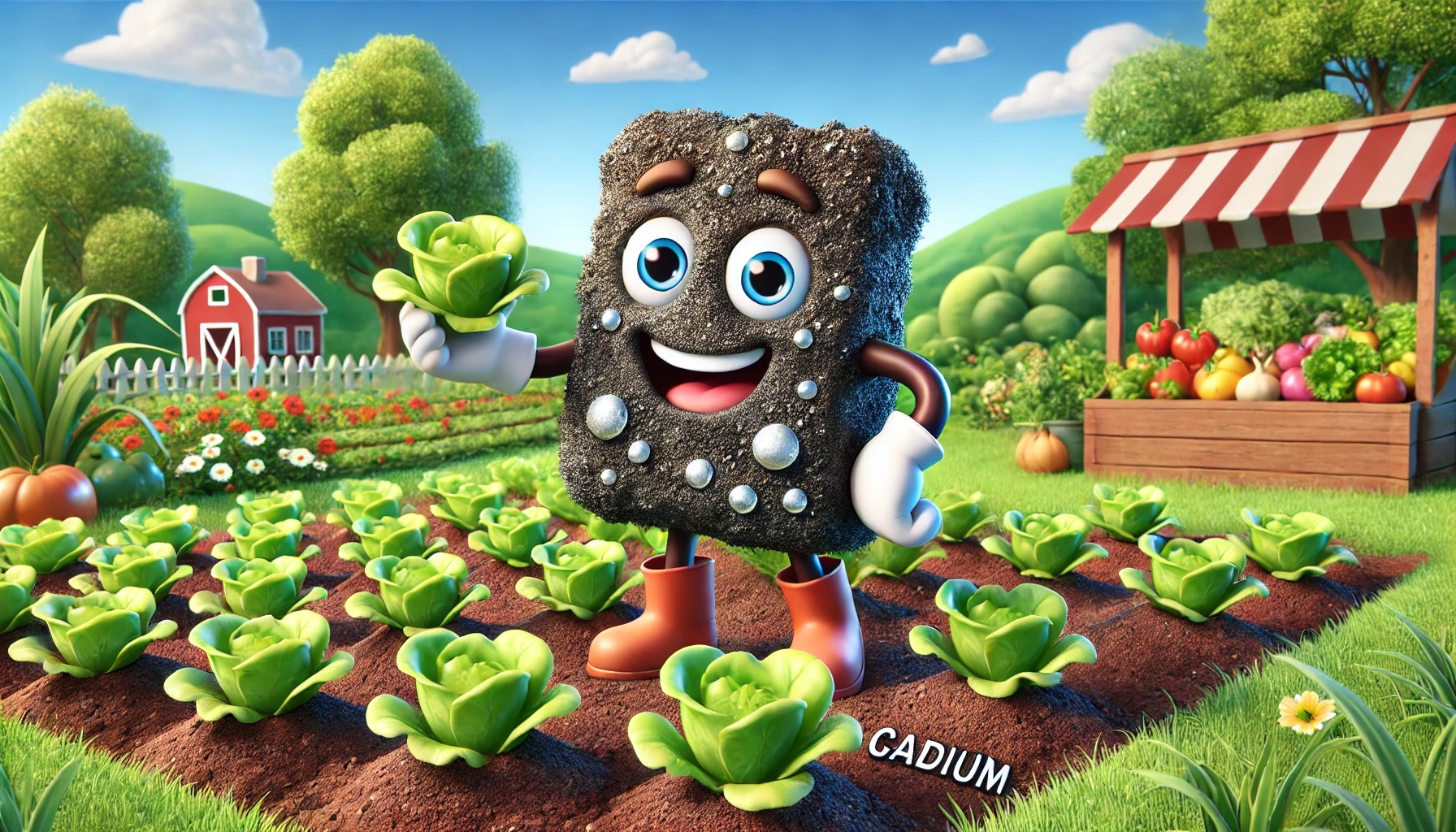
Su, N., Wang, K., Zhang, Z. et al. Urease-producing bacteria combined with pig manure biocharBiochar is a carbon-rich material created from biomass decomposition in low-oxygen conditions. It has important applications in environmental remediation, soil improvement, agriculture, carbon sequestration, energy storage, and sustainable materials, promoting efficiency and reducing waste in various contexts while addressing climate change challenges. More immobilize Cd and inhibit the absorption of Cd in lettuce (Lactuca sativa L.).Environ Sci Pollut Res (2024). https://doi.org/10.1007/s11356-024-34241-6
Recent research has investigated how combining urease-producing bacteria with pig manure biochar (PMB) can reduce cadmium (Cd) contamination in soil and its absorption by vegetables. The study focused on the bacteria strain TJ6 and its interaction with PMB to immobilize Cd. Over 56 days, a soil leachingLeaching is the process where nutrients are dissolved and carried away from the soil by water. This can lead to nutrient depletion and environmental pollution. Biochar can help reduce leaching by improving nutrient retention in the soil. More experiment assessed the impact of TJ6 and PMB on Cd content and soil pHpH is a measure of how acidic or alkaline a substance is. A pH of 7 is neutral, while lower pH values indicate acidity and higher values indicate alkalinity. Biochars are normally alkaline and can influence soil pH, often increasing it, which can be beneficial More. Additionally, pot experiments evaluated the effect on Cd absorption and microbial activity in lettuce.
Results indicated that PMB significantly enhanced TJ6’s ability to adsorb Cd, promoting the formation of CdS and CdCO3, which reduced Cd content by 71.1% and increased soil pH and urease activity. The combination of TJ6 and PMB improved lettuce dry weight and decreased Cd uptake.
The study found three key mechanisms behind these positive effects. First, TJ6 and PMB increased the soil’s organic matter and NH4+ content. Second, they transformed available Cd into less harmful forms, reducing Cd in the leachate. Third, they altered the rhizosphere microbial community, boosting the presence of bacteria and fungi like Stachybotrys, Agrocybe, Gaiellales, and Gemmatimonas, which aid plant growth and organic matter decomposition.
Fungal communities, in particular, were more responsive to TJ6 and PMB, playing crucial roles in organic matter breakdown and Cd immobilization. This research offers a theoretical basis for safely using pig manure in Cd-contaminated soils and provides practical methods and bacterial resources for heavy metal soil remediation.



Leave a Reply