
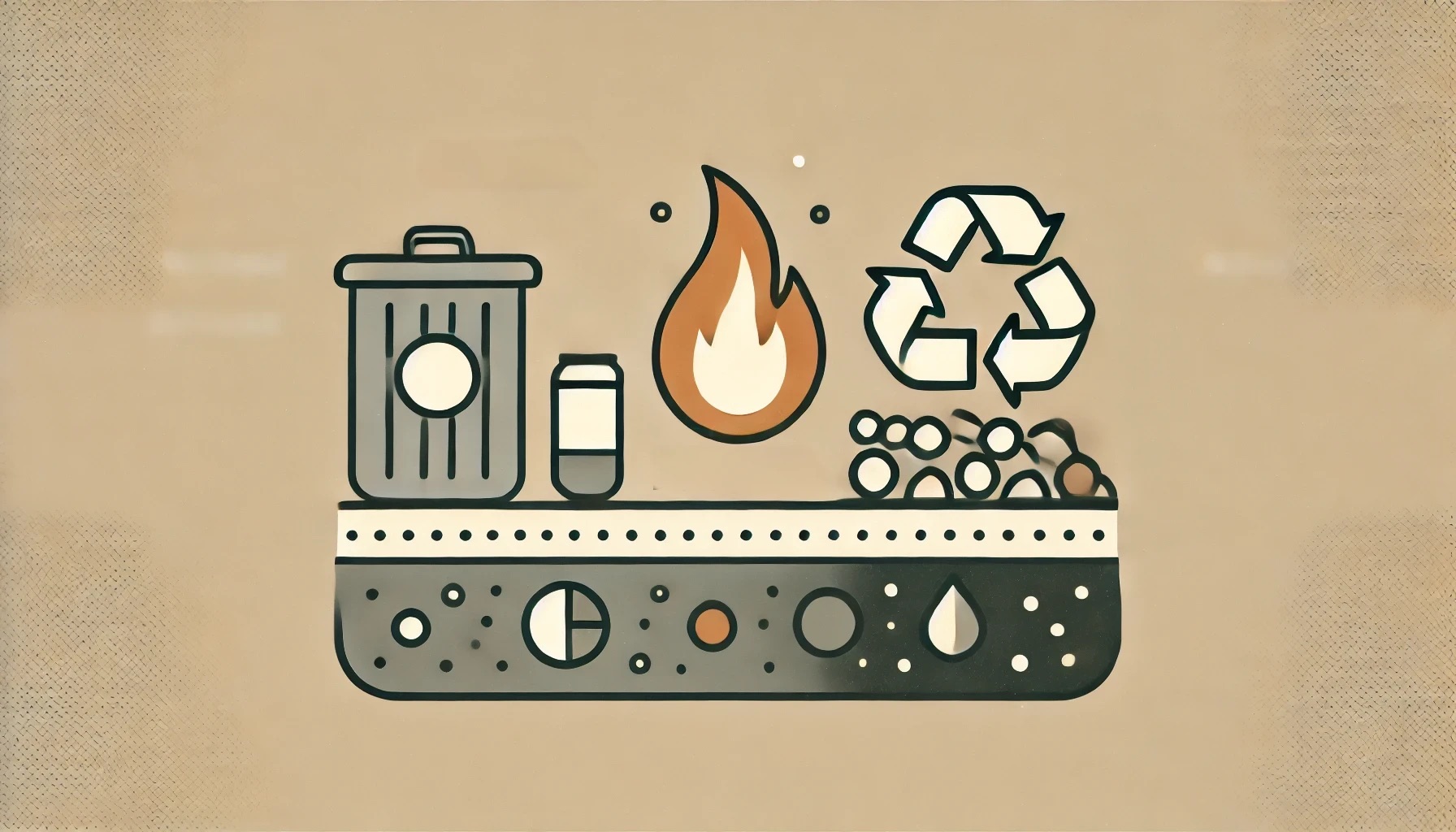
Embaye, et al (2024) Assessment of heavy metals distribution and environmental risks in biocharBiochar is a carbon-rich material created from biomass decomposition in low-oxygen conditions. It has important applications in environmental remediation, soil improvement, agriculture, carbon sequestration, energy storage, and sustainable materials, promoting efficiency and reducing waste in various contexts while addressing climate change challenges. More from co-pyrolysis of sewage sludge and mixed municipal waste. Process Safety and Environmental Protection. https://doi.org/10.1016/j.psep.2024.11.101
The disposal of sewage sludge (SS) and mixed municipal waste (MMW) presents environmental challenges due to their heavy metal (HM) content and associated risks. A recent study explores co-pyrolysis, a thermal process converting these materials into biochar, as a sustainable solution. Researchers analyzed the distribution of HMs in biochar and leachate and evaluated ecological risks.
PyrolysisPyrolysis is a thermochemical process that converts waste biomass into bio-char, bio-oil, and pyro-gas. It offers significant advantages in waste valorization, turning low-value materials into economically valuable resources. Its versatility allows for tailored products based on operational conditions, presenting itself as a cost-effective and efficient More concentrated HMs in SS biochar but reduced their leachate levels due to enhanced stability. Blending SS with MMW lowered HM concentrations in biochar and leachate, particularly selenium (Se), whose leachingLeaching is the process where nutrients are dissolved and carried away from the soil by water. This can lead to nutrient depletion and environmental pollution. Biochar can help reduce leaching by improving nutrient retention in the soil. More decreased from 1.54% to 0.12%. The ecological risk of key metals like mercury (Hg) and cadmium (Cd) dropped significantly—by 86.6% and 41.23%, respectively—while the cumulative risk index declined by nearly half. Co-pyrolysis with higher MMW ratios also mitigated risks associated with zinc (Zn), cadmium, and copper (Cu), improving biochar’s suitability for agriculture.
The study highlights that a 50% MMW blend offers optimal HM immobilization, reducing the environmental risks of SS disposal. Biochar from this process shows promise as a soil enhancer with improved stability and nutrient content. However, further research is needed to optimize pyrolysis conditionsThe conditions under which pyrolysis takes place, such as temperature, heating rate, and residence time, can significantly affect the properties of the biochar produced. More, including higher temperatures and the use of acid leaching agents.
This work underscores co-pyrolysis as a viable method for sustainable waste management, mitigating environmental hazards while promoting resource recovery. It supports global efforts to turn waste into valuable materials and reduce ecological risks.


Leave a Reply