
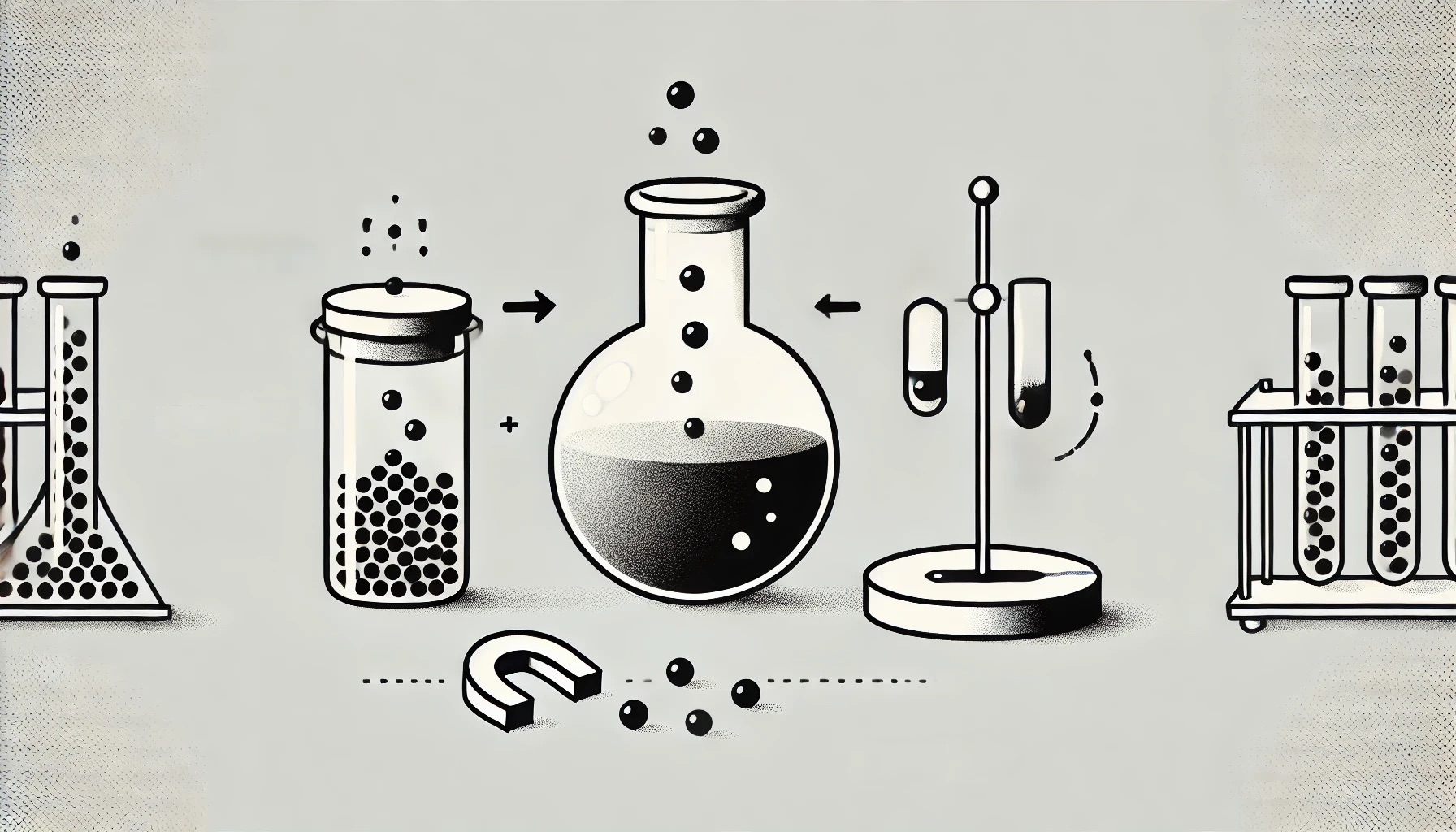

A recent study published in Industrial Crops and Products explores a new method for biodiesel production using carbon-based magnetic nanoparticles (C-MNPs). The researchers, led by Zhongbiao Tan, utilized agricultural waste, specifically rice straw, to create nano-biochar. This biocharBiochar is a carbon-rich material created from biomass decomposition in low-oxygen conditions. It has important applications in environmental remediation, soil improvement, agriculture, carbon sequestration, energy storage, and sustainable materials, promoting efficiency and reducing waste in various contexts while addressing climate change challenges. More was used as the core for C-MNPs, which were then employed to immobilize Candida antarctica lipase B (CalB), a key enzyme in biodiesel synthesis.
The C-MNPs demonstrated superparamagnetic properties, making them easy to recover using a magnetic field. These particles had a small diameter of 13–17 nm, providing a high surface area for effective enzyme immobilization. The immobilized lipase (CalB@C-MNPs) showed high catalytic activity, enabling efficient transesterification of soybean oil into biodiesel. The conversion efficiency was 83.1% under optimal conditions, and even after eight reuse cycles, the enzyme retained 79.7% of its activity.
This method offers several advantages over traditional biodiesel production, including lower energy consumption and the potential for higher yields. The use of nano-biochar from agricultural waste also addresses sustainability concerns. The C-MNPs’ reusability and ease of recovery further reduce production costs, making this approach a promising candidate for industrial biodiesel production.
This innovation highlights the potential of biochar and enzyme immobilization in developing cleaner, more efficient biofuel technologies.



Leave a Reply