
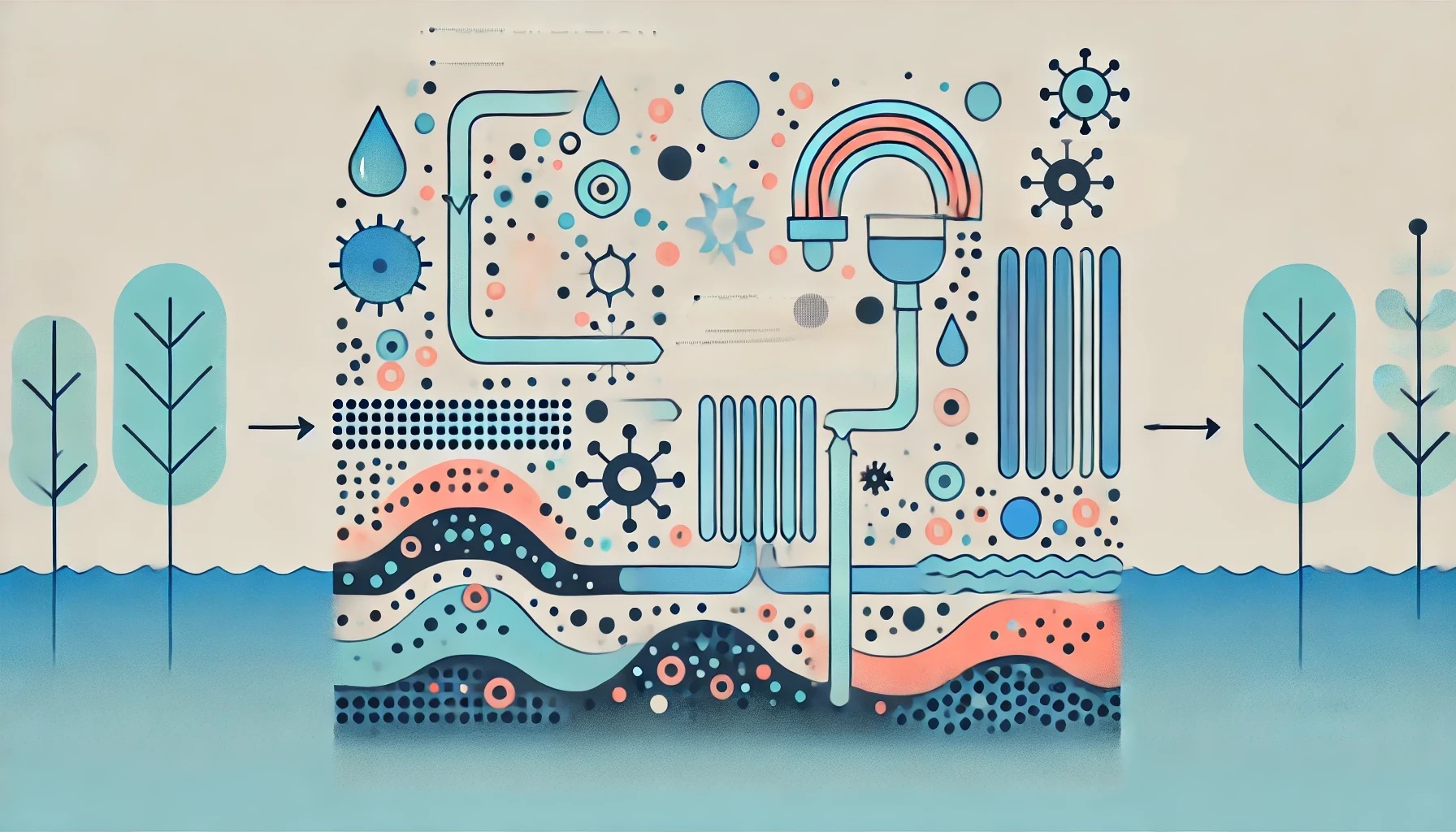

A recent study explores an innovative approach to improve ultrafiltration (UF) by using ε-polylysine (EPL)-modified biochar. UF membranes, commonly used for water treatment, often face a dilemma: they either suffer from membrane fouling or fail to completely remove pathogens, especially viruses. Fouling typically requires frequent cleaning and risks allowing pathogens to escape.
The study, published in Separation and Purification Technology, demonstrates that EPL-modified biochar offers a solution to this issue. Biochar, a porous carbon material, has been enhanced with EPL to increase its adsorption and antimicrobial properties. This modified biochar improves the filtration of viruses and bacteria by creating flexible, reversible layers of organic matter (NOM) and pathogens, effectively reducing fouling and pathogen retention.
The key mechanism lies in EPL’s ability to adapt its structure when interacting with different types of NOM. This flexibility enables it to trap both viruses and bacteria more efficiently, forming a “cake layer” that can be easily removed during cleaning, thus avoiding the buildup of irreversible fouling. The research showed significant removal of viruses (∼6 log reduction) and bacteria (∼7 log reduction), providing an effective barrier against waterborne pathogens.
This breakthrough has potential applications in water treatment systems, offering a more sustainable way to ensure water quality while reducing the risk of pathogen leakage.



Leave a Reply