
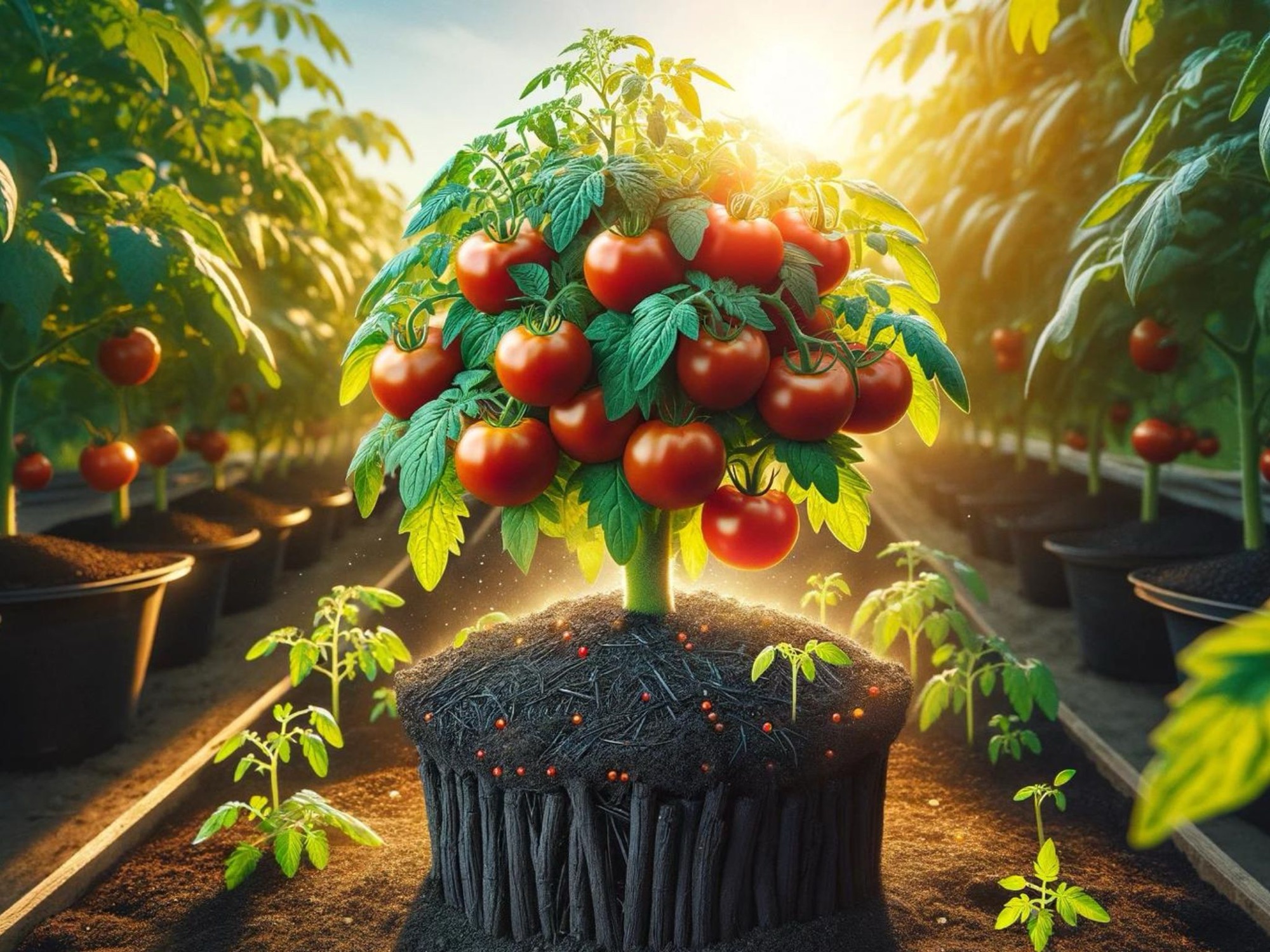
Kayes, et al (2024) Effects of biocharBiochar is a carbon-rich material created from biomass decomposition in low-oxygen conditions. It has important applications in environmental remediation, soil improvement, agriculture, carbon sequestration, energy storage, and sustainable materials, promoting efficiency and reducing waste in various contexts while addressing climate change challenges. More and chitosan on morpho-physiological, biochemical and yield traits of water-stressed tomato plants. International Journal of Horticulture, Agriculture and Food Science (IJHAF). https://dx.doi.org/10.22161/ijhaf.8.2.1
Researchers at Sher-e-Bangla Agricultural University in Dhaka have demonstrated promising results in enhancing the resilience of tomato plants to water stress by employing biochar and chitosan. Published in the International Journal of Horticulture, Agriculture, and Food Science, their study explores the effects of these natural amendments on the morpho-physiological, biochemical, and yield traits of tomatoes under varying water conditions.
Tomatoes, significantly affected by drought, particularly during critical growth stages like flowering and fruit expansion, can experience severe drops in productivity and quality. The study introduced three levels of water availability—control (80% field capacity), moderate stress (60%), and severe stress (40%)—and tested the individual and combined effects of chitosan and rice husk biochar.
Findings revealed that water stress severely reduced plant height, leaf area, and chlorophyll content, essential for healthy growth and yield. However, the application of biochar and chitosan not only mitigated these adverse effects but also improved the overall plant health and productivity. Plants treated with both biochar and chitosan showed significantly higher resilience, maintaining better hydration, enhanced nutrient uptake, and increased chlorophyll production, crucial for sustaining growth under drought conditions.
Furthermore, the combined use of these amendments resulted in a remarkable improvement in yield and fruit quality. The treated plants produced more fruits with higher vitamin C and total soluble solid content, which are indicative of better nutritional quality.
The success of this study suggests a sustainable approach to agriculture in drought-prone areas, highlighting the effectiveness of natural amendments like biochar and chitosan in enhancing crop resilience to water stress, thereby supporting better crop yield and quality. The research advocates for wider application and further studies to explore the potential benefits across different climatic conditions and crop varieties.





Leave a Reply