
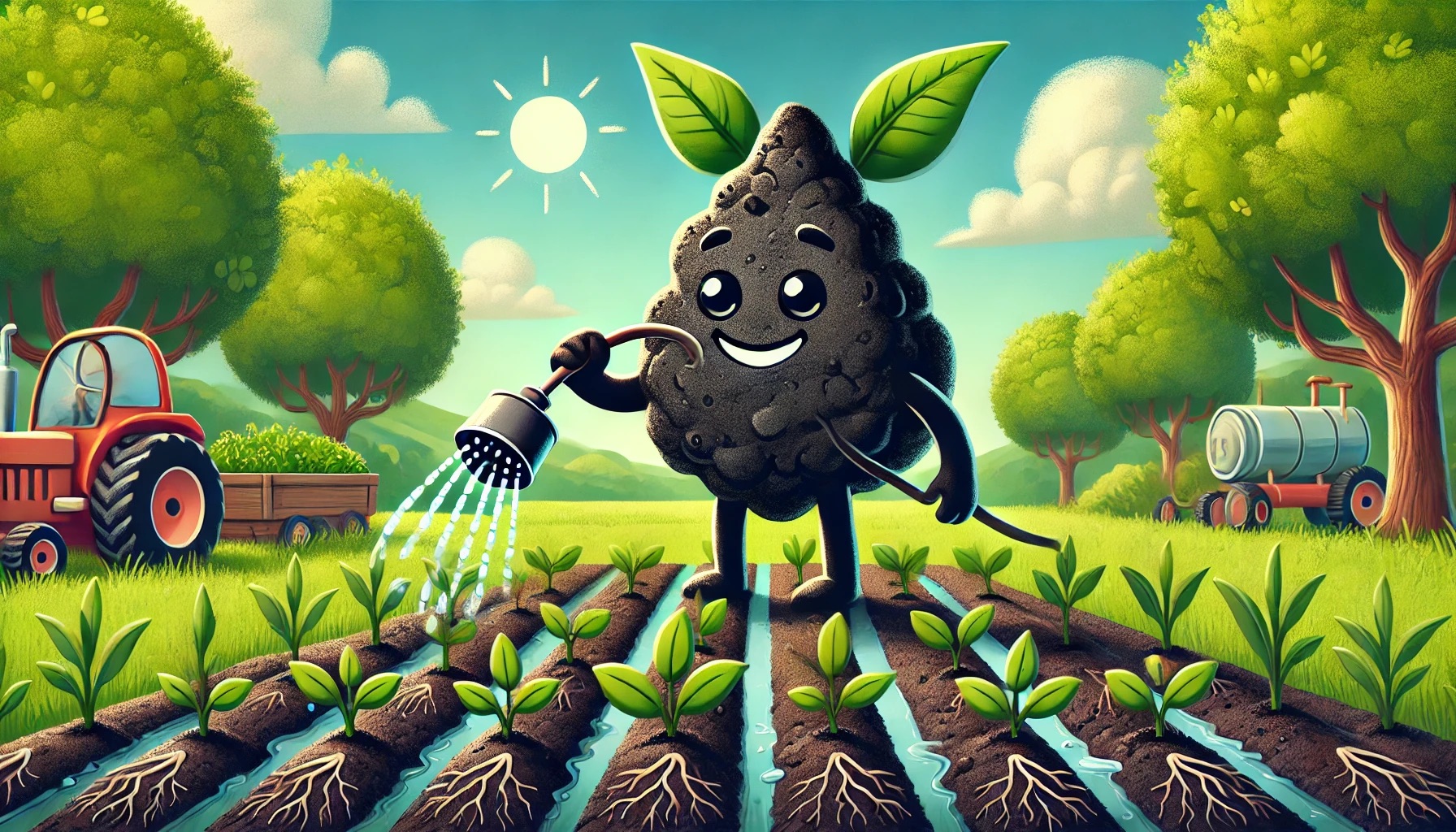

Saline soils pose significant challenges to agriculture, with high salt content and poor structure limiting crop growth and water management. A new study highlights the transformative potential of biochar in addressing these issues by enhancing soil hydrological function through improved pore structure.
Biochar, a carbon-rich byproduct of biomassBiomass is a complex biological organic or non-organic solid product derived from living or recently living organism and available naturally. Various types of wastes such as animal manure, waste paper, sludge and many industrial wastes are also treated as biomass because like natural biomass these More, improves soil quality when mixed into the soil. Researchers tested its effects in saline clay loam soils with different application rates: 7.5, 15, and 30 tons per hectare. Results showed that increasing biochar application significantly enhanced soil aggregate stability and altered pore structures. Specifically, it reduced small pores (<50 µm) while increasing larger, interconnected pores (>300 µm).
These structural changes had profound effects on soil hydrology. At the highest biochar rate (30 t/ha), saturated hydraulic conductivity improved by 46%, and plant-available water increased by 27%. The least limiting water range, which measures optimal water conditions for crops, rose by 40%. Additionally, biochar reduced soil compaction and penetration resistance, creating a more favorable environment for plant roots.
Advanced imaging techniques like CT scans revealed the mechanisms behind these benefits. Biochar promoted the formation of elongated and connected pores, facilitating better water infiltration, retention, and aeration. This study underscores the value of biochar in enhancing soil productivity, particularly in challenging saline environments, and offers a promising strategy for sustainable agriculture.
By improving soil structure and water dynamics, biochar represents a powerful tool for restoring degraded lands and boosting crop yields.



Leave a Reply